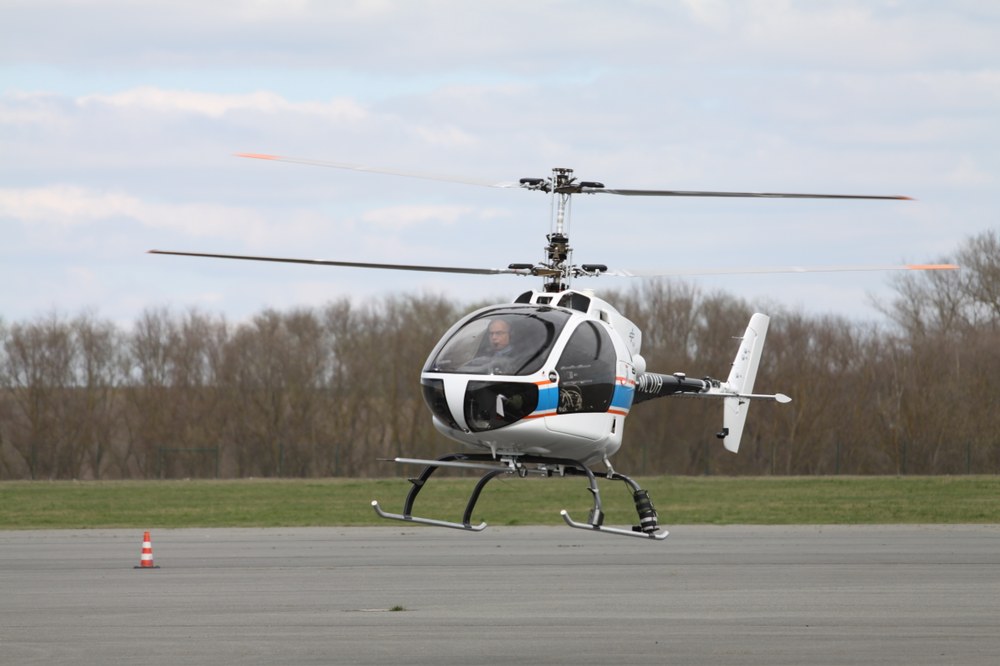
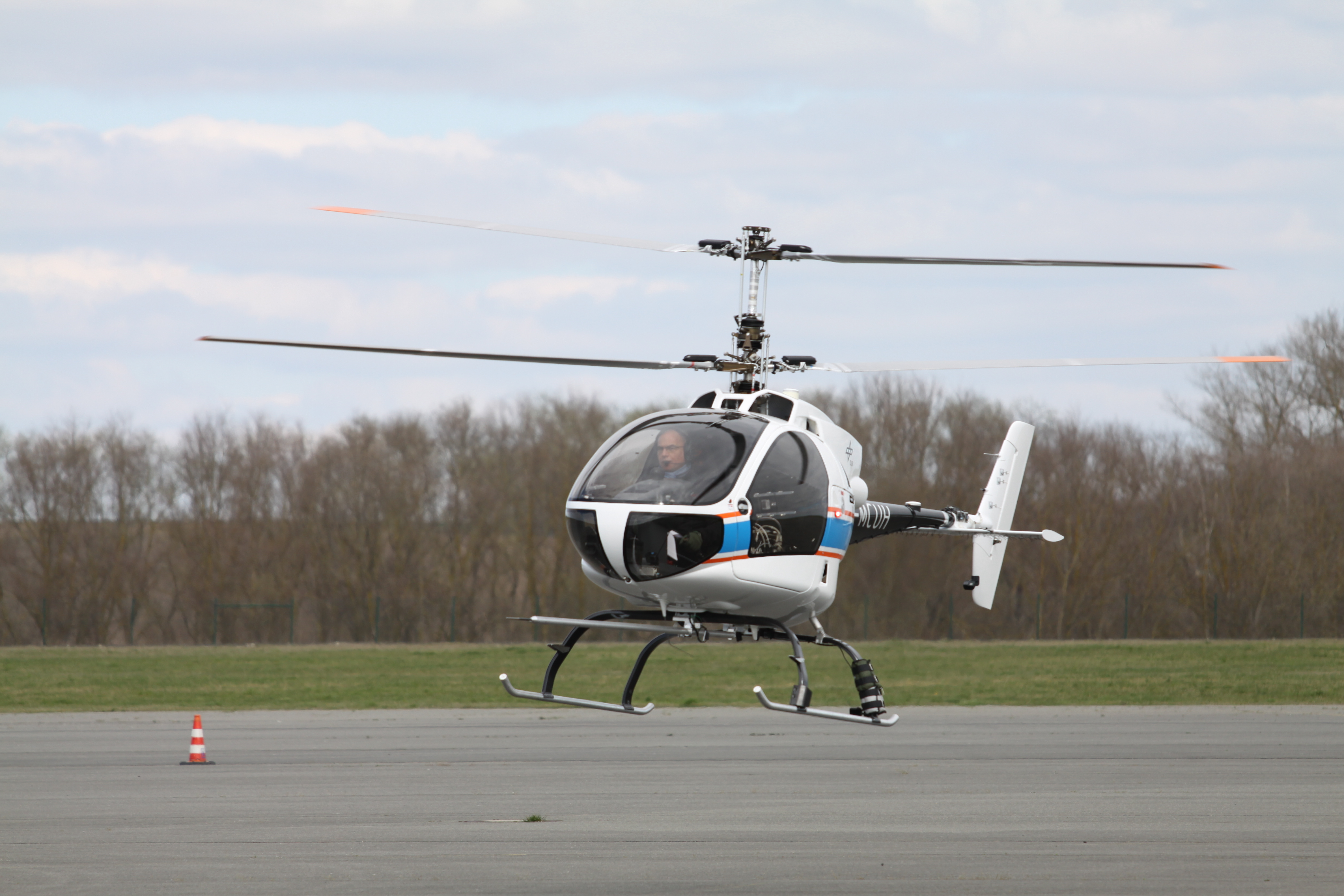
Within the 6th Aviation Research Programme (LuFo VI-1) of the BMWK (Federal Ministry for Economic Affairs and Climate Action), the Helicopter Department of the Institute of Flight Systems was involved in the MIND (Modular Intelligent Data Acquisition) project. The aim of the project between Safran Data Systems GmbH (project leader), Vectoflow GmbH, edm aerotec GmbH and DLR was to develop and verify a modular, airworthy data acquisition and processing system, including testing with DLR's own coaxial UL research helicopter (UL - ultralight). The first use case for the system were flight tests for the optimisation of the tail boom (incl. horizontal and vertical stabilizers) together with the manufacturer of the UL helicopter edm aerotec.
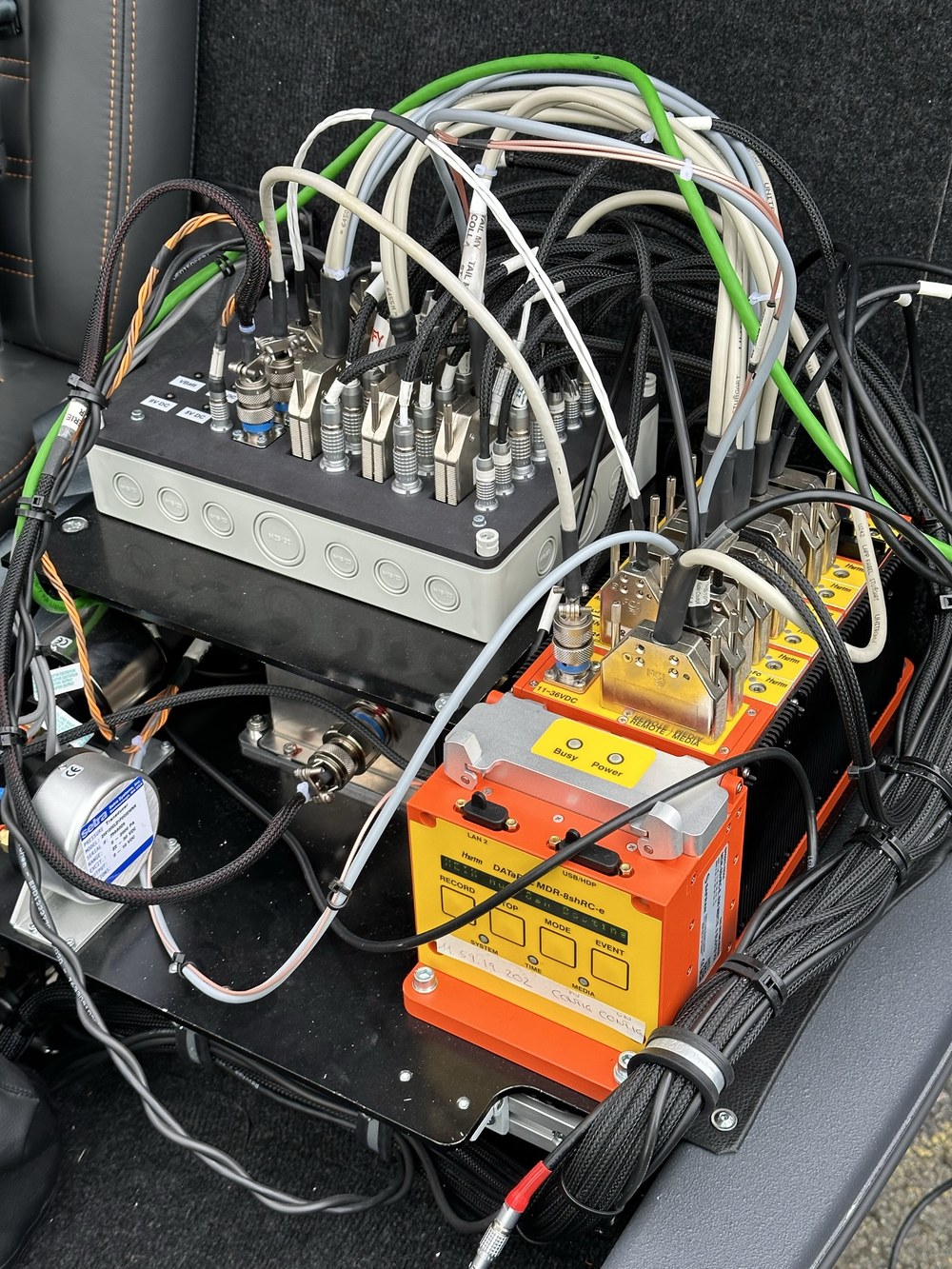
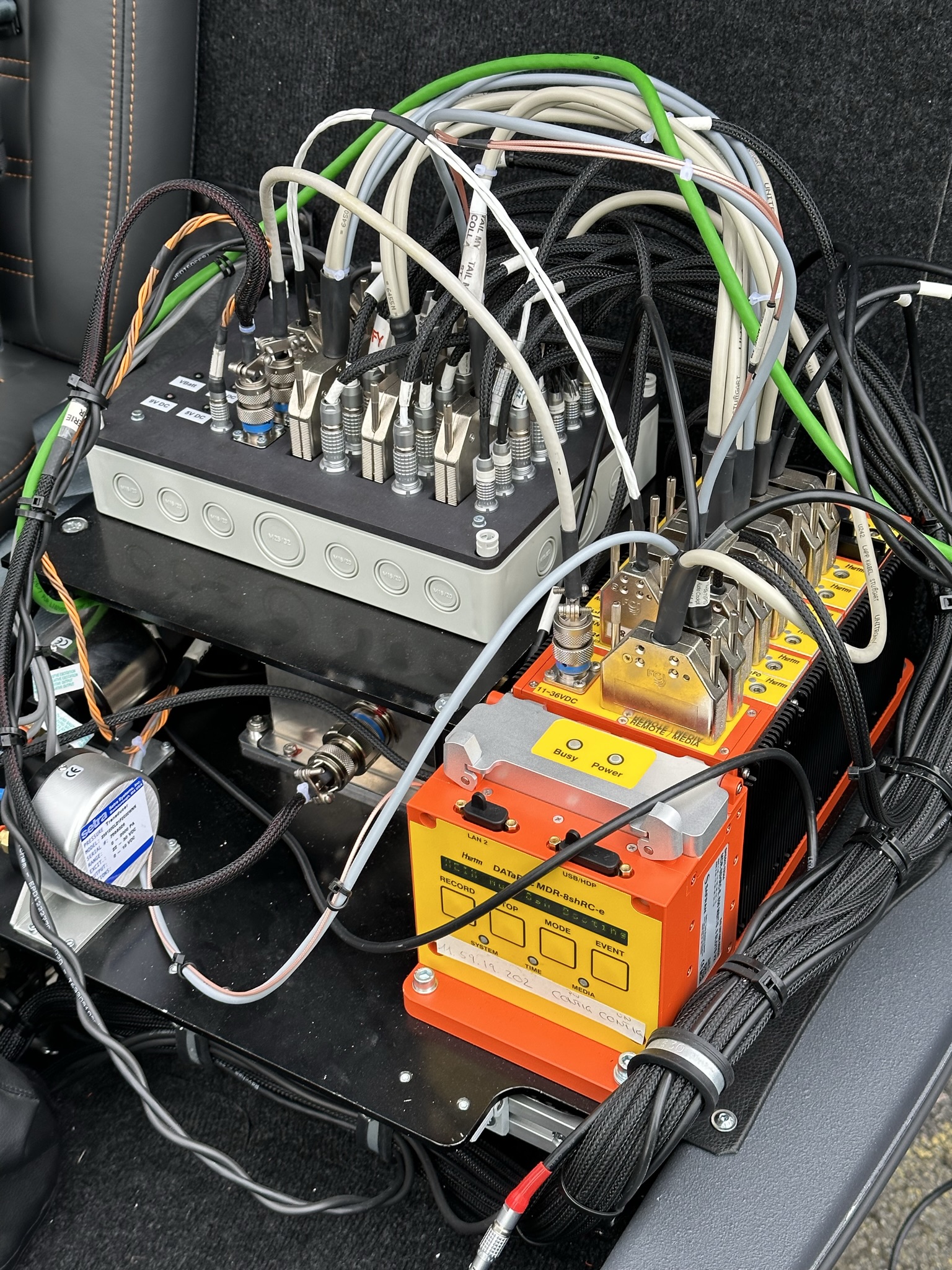
Safran Data Systems GmbH developed a new type of on-board processing module (OBP) and innovative, bidirectional software input and output interfaces as part of the project. Vectoflow GmbH provided and tested 3D-printed, innovative flow probes. The DLR (Institute of Flight Systems, Helicopter Department and Institute of Aerodynamics and Flow Technology, Helicopter Department) developed functions for intelligent data processing, conducted flight tests to validate the developed methods and optimised the aerodynamics and flight mechanics of the tail boom (incl. horizontal and vertical stabilizers) using their numerical simulation capabilities.
As part of the project, not only Safran's data acquisition and processing system was installed in the CoAX, also a nose boom and flow and pressure measurement probes were installed on the tail fin. Via an adapter board, the data acquisition system in MIND also accessed the numerous sensors of DLR's own instrumentation, including IMU data (Inertial Measurement Unit), strain gauges for recording tail boom moments and control forces, angle sensors for recording the control travel, etc. All recorded measurement data (including flow measurement data, pressures, video data, etc.) was recorded in a time-synchronised manner using the Safran data acquisition system.
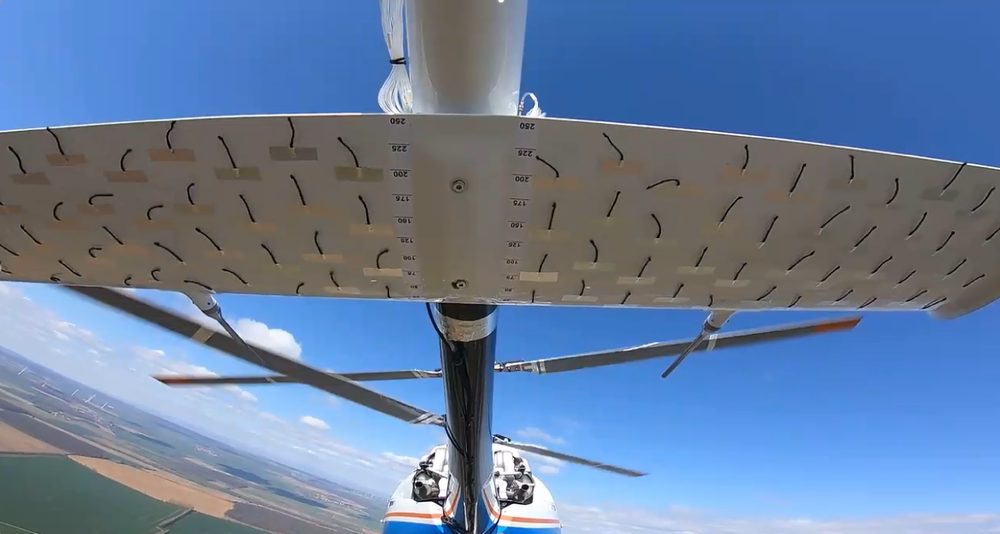
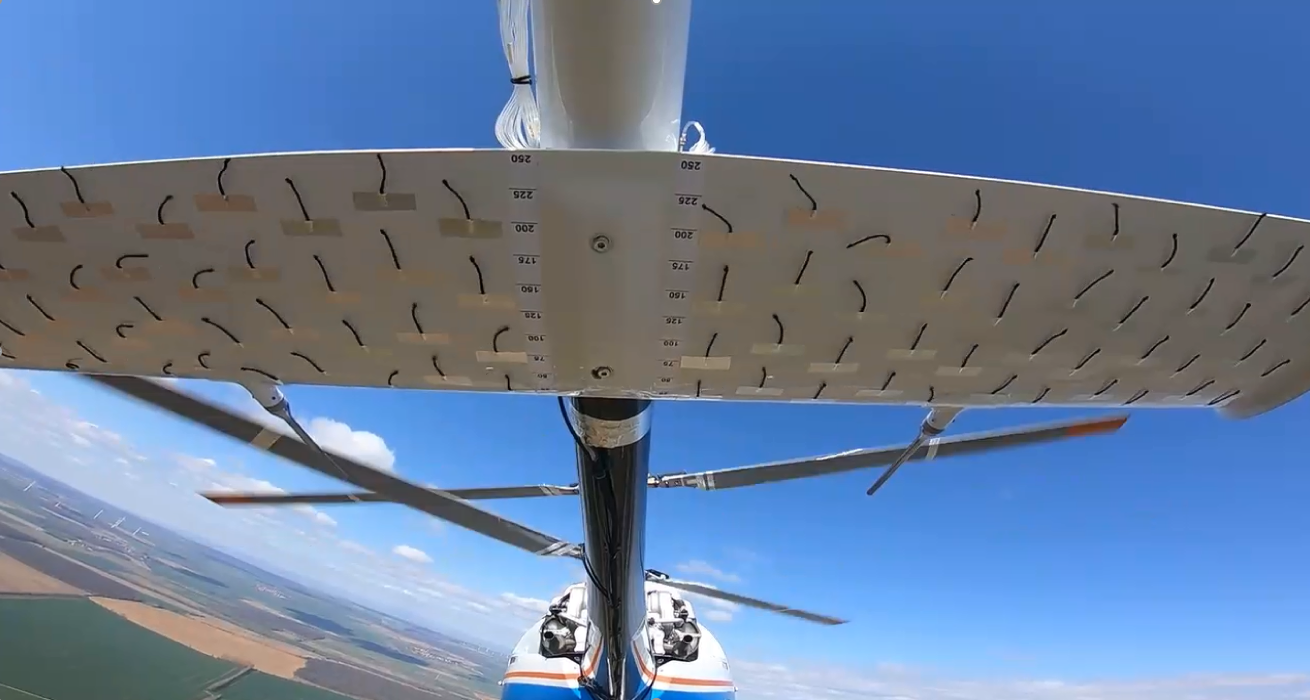
In addition, woolen threads were glued to the horizontal stabilizer and filmed in flight with two cameras. The data obtained about the flow behaviour around the horizontal stabilizer was used to validate the CFD calculations.
Aeromechanical simulations were used to optimise the tail unit and identify potential for improvement. DLR also demonstrated online functions for structural monitoring (Health and Usage Monitoring System). The system was able to identify anomalies in the tail boom oscillation online and triggerd a warning accordingly. A function for online wind estimation was implemented and tested by DLR on the new SAFRAN hardware.