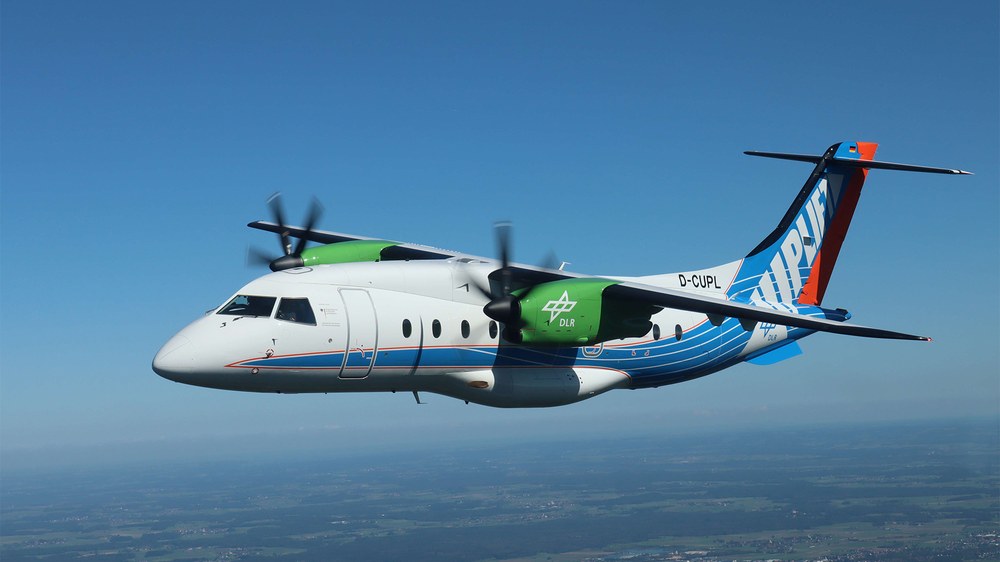
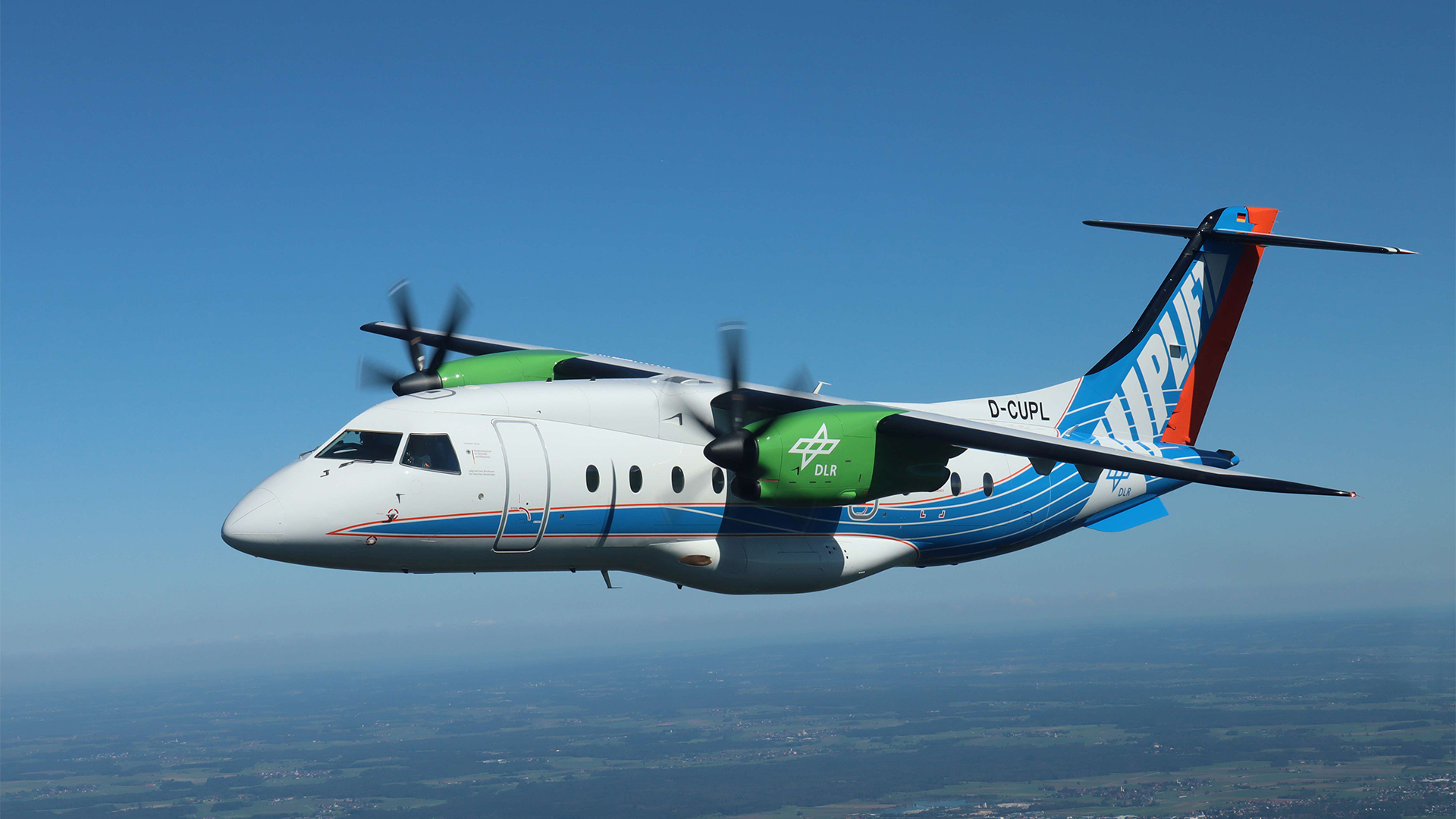
As part of the UpLift project, DLR is equipping a Dornier 328 aircraft for use as a flying test laboratory. The DLR research aircraft is used as an airborne test platform for climate-compatible aviation technologies.
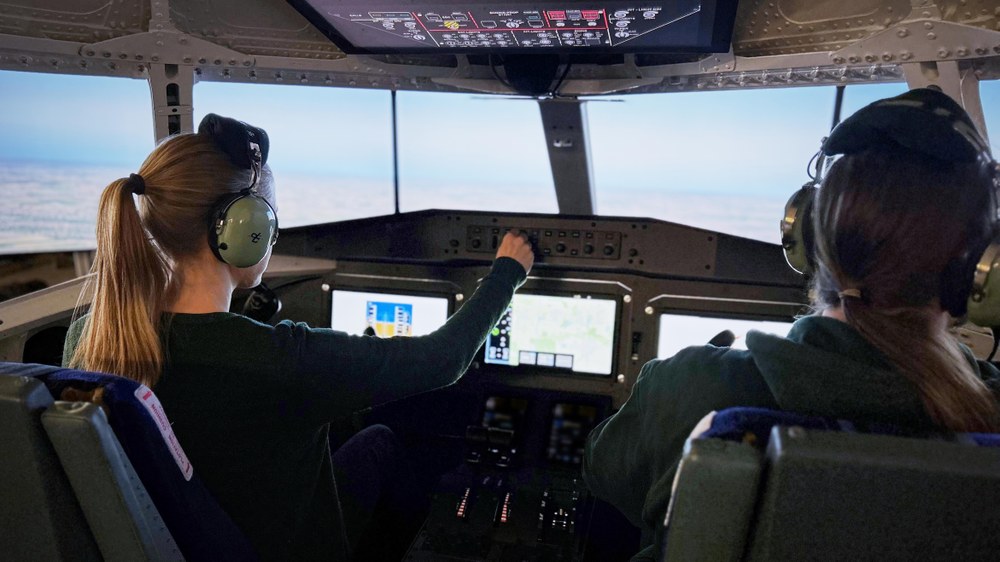
The D328 cockpit simulator expands the AVES (Air Vehicle Simulator) centre at DLR's Braunschweig site. Pilots can use it to carry out comprehensive ground-based tests of aircraft interfaces to prepare effectively for flight tests with the Dornier 328.
The joint research project SPICE aims to improve existing de‑icing systems for turboprop aircrafts and replace them with novel, more effective, and energy‑optimized electrical Ice Protection Systems (IPS). A typical turboprop aircraft with its de-icing system activated consumes around 20% more fuel (up to 40 kg of kerosene during a 30-minute hold). Furthermore, fuel consumption increases by up to 7.5% due to residual ice build-up after a flight in icing conditions. The use of innovative, more efficient electric de-icing systems, which are also to be activated in a more targeted manner, can result in a direct saving of CO2 emissions. The use of anti-icing coatings, which drastically reduce ice build-up, can reduce the required heating power by a further 90%. To ensure more targeted activation of the systems, new anti-icing systems also rely on optimized detection of icing and more precise monitoring of their effectiveness.
Through a holistic approach, the collaboration between Deutsche Aircraft (DAG), German Aerospace Centre (DLR), TU Braunschweig (TUBs), Fraunhofer IFAM will develop, optimize and integrate the Ice Protection System into a representative airfoil. The system will be tested for future use in regional aviation.
The research project is planned to spread over two LuFo VII-1calls, with a final flight test and validation of the developed technologies on the DLR's UpLift D328 flying testbed(D-CUPL) in a second phase.
As part of the first project phase (LuFo VII-1), the partners will specify system requirements based on typical flight and icing conditions, water droplet impingement limits on aircraft surfaces will be analyzed to characterize and predict the expected ice shapes and their effects on the aircraft’s flight characteristics and performance. At the same time, ice‑phobic materials will be assessed for their ability to support and complement the performance of an active ice protection system. The analytical results, including (super-)hydrophobic surfaces, will be evaluated in an icing wind tunnel as the project progresses. The tests will consider the requirements of different wing surfaces regarding erosion and different type of occurring ice types (glaze, rime, runback, etc.). Ice accretion simulations will be performed with and without the IPS to estimate the effects on overall energy savings, efficiency, and performance benefits. The IPS analysis results will subsequently be validated in an icing wind‑tunnel test campaign. Additionally, the project will address icing detection methods that can enable more targeted activation of ice‑protection countermeasures, thereby further reducing energy consumption.
Sub-project MELANGE
In the sub-project MELANGE, the results from the consortium partners are scaled up from the system and component levels to the aircraft level. This enables the existing flight simulation to be refined, thereby allowing the quantification and evaluation of changes and improvements in flight performance and characteristics during the operation of novel de-icing systems in icing conditions. The simulation models will be implemented in the D328 Uplift flight simulator at DLR site Braunschweig to enable pilot evaluation, with the aim of significantly reducing energy consumption whilst maintaining consistent aircraft characteristics. In parallel, novel ice detection and ice protection system monitoring methods are being investigated, enabling the de-icing system to be activated in an even more deliberate and thus more energy-efficient manner. The main objectives of the sub-project are:
1. Verification of the use of novel, more efficient electric de-icing systems in flight simulation
2. Monitoring of their effectiveness using dedicated software (for indirect ice detection) based on existing aircraft avionics
MELANGE
Akronym
MELANGE (Modellierung und Erkennung von Flugzeugvereisung bei Anwendung neuartiger Gegenmaßnahmen)