Copernicus Sentinel-1
Copernicus Sentinel-1
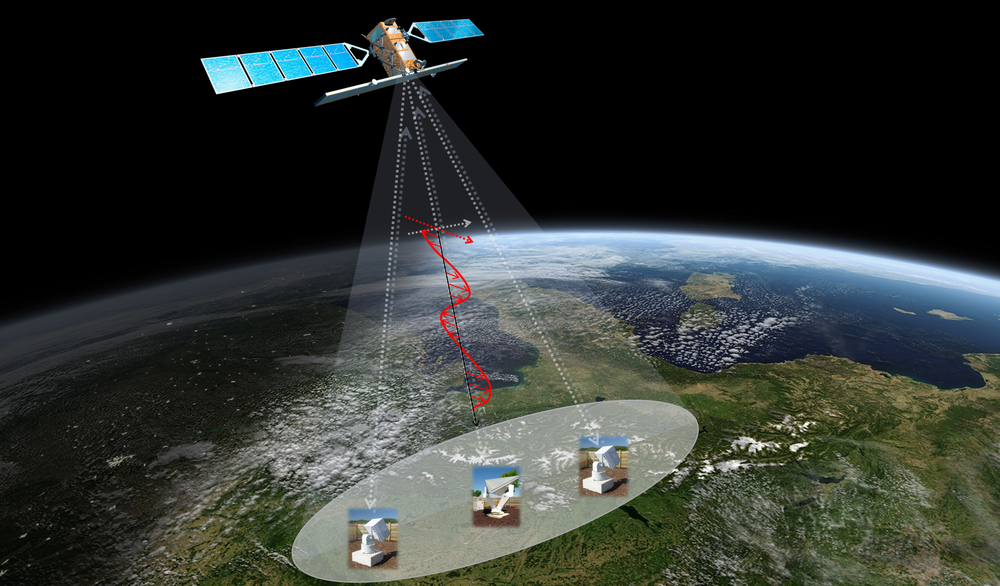
The Copernicus Sentinel-1 mission consists of a two-satellite constellation. Each satellite is equipped with a C-band synthetic aperture radar (SAR) instrument, providing recurring imagery of Earth’s surface day and night, regardless of weather conditions. In the framework of ESA’s Copernicus program, the Microwaves and Radar Institute developed the overall SAR system calibration and validation concept for the mission’s radar instruments, successfully executed independent calibration campaigns during each satellite’s commissioning phase, and is now responsible for the end-to-end SAR system calibration of the next iteration, Sentinel-1 Next Generation (NG).
Sentinel-1, ESA’s flagship radar mission for Earth observation, was developed and constructed by a consortium of around 60 companies led by Thales Alenia Space and Airbus Defence and Space for the Copernicus program. The Institute has made decisive contributions to this effort by providing crucial support and transferring know-how to ESA and the space industry.
Sentinel-1C and -1D, the successors of the Sentinel mission’s initial A and B units, were launched in 2024 and 2025, respectively, with the aim of providing enhanced continuity for Sentinel-1 data acquisition over the next decade. The two Sentinel-1 satellites orbit 180° apart, enabling their C-band SAR instruments to image the entire Earth every six days.
This global monitoring program helps us manage our environment, understand and address the effects of climate change, and protect our everyday lives. A variety of land, ocean, and emergency services benefit from the mission, including:
- monitoring of Arctic sea-ice extent
- routine sea-ice mapping
- surveillance of the marine environment, including oil-spill monitoring and ship detection for maritime security
- monitoring land surface for motion risks
- mapping for forest, water, and soil management
- mapping to support humanitarian aid and crisis situations.
Ongoing support from our DLR SAR Calibration Center
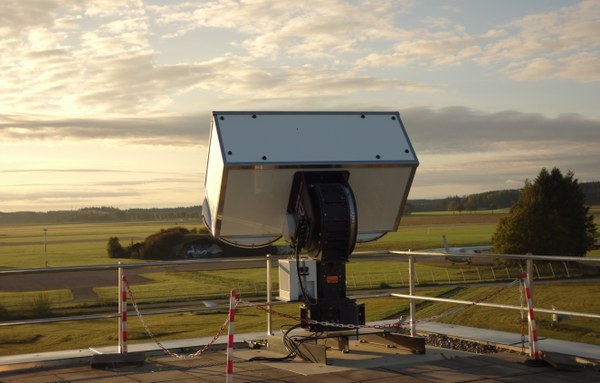
As a prerequisite for any of these applications, a precise end-to-end calibration of both SAR systems has to be established, linking recorded images to geophysical quantities. For achieving and maintaining this calibration, ESA crucially relies on the expertise and support from our Institute’s DLR SAR Calibration Center.
In the early 2010s, the Institute developed and implemented the SAR system calibration concept for Sentinel-1A and -1B. Ensuing independent SAR system calibration campaigns were performed under direct ESA contracts for these first two Sentinel-1 units during their respective in-orbit commissioning. Based on the success of these campaigns, ESA tasked the Institute with supporting the long-term monitoring of the calibration performance for the A and B units. Moreover, the Institute was commissioned to adapt the calibration approach for the successive Sentinel-1C and -1D units. As for Sentinel-1A and -1B, our DLR SAR Calibration Center then executed successful independent SAR system calibration campaigns for both Sentinel-1C in 2025 and Sentinel-1D in 2026. These campaigns further strengthened the Center’s position as the world’s leading authority in SAR system calibration.
The DLR SAR Calibration Center’s achievements in defining and implementing calibration concepts for Sentinel-1, as well as executing independent calibration campaigns for all four first-generation Sentinel-1 units, have resulted in the Institute’s ongoing involvement in ensuring the SAR performance of the mission also during routine operations. Within the framework of the Sentinel-1 SAR Mission Performance Cluster, the Center continues to be responsible for radiometric calibration and monitoring.
In parallel, development of the successor mission, Sentinel-1 Next Generation (NG), is already well underway. Slated for launch in the early 2030s, it will feature a range of novel technologies to support an even larger suite of applications. The mission’s preliminary design review is currently scheduled for Q3/2027. Once again, the DLR SAR Calibration Center is responsible for developing and implementing the follow-on mission’s end-to-end SAR system calibration concept, ensuring that the mission will be able to deliver an improved SAR performance as planned for this next-generation system.