First-time testing of the complete communication chain between the LUNA test site, the local control room, and the DLR aerospace medicine research facility :envihab.
How reliably does communication work under moon-like conditions?
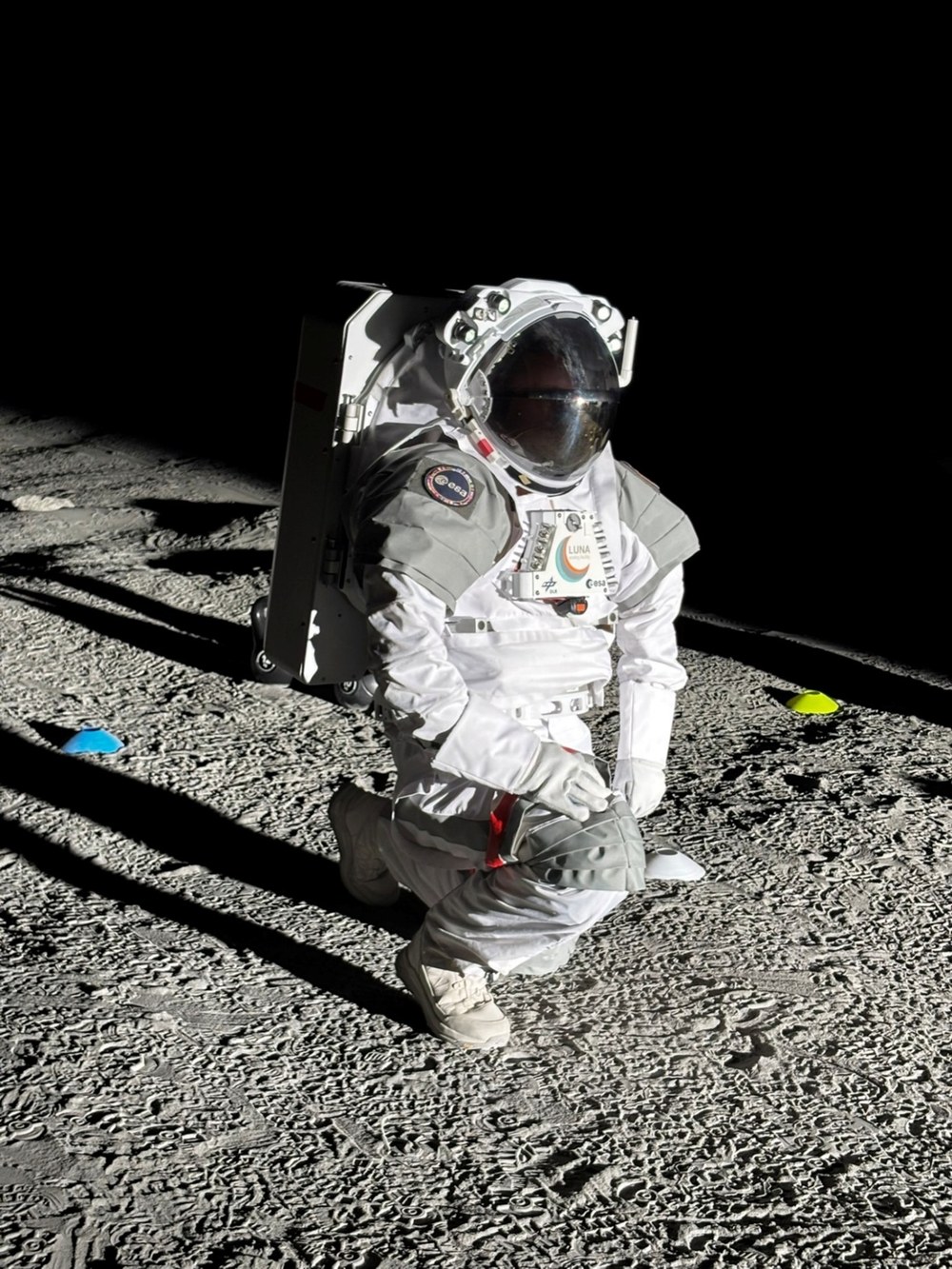
This central question was at the heart of a three-day test campaign at the LUNA test facility in Cologne. For the first time, a joint ESA and DLR team tested the complete communication chain between the LUNA test site, the local control room, and the DLR aerospace medicine research facility :envihab, while a test subject in a spacesuit completed a specially designed obstacle course in lunar regolith.
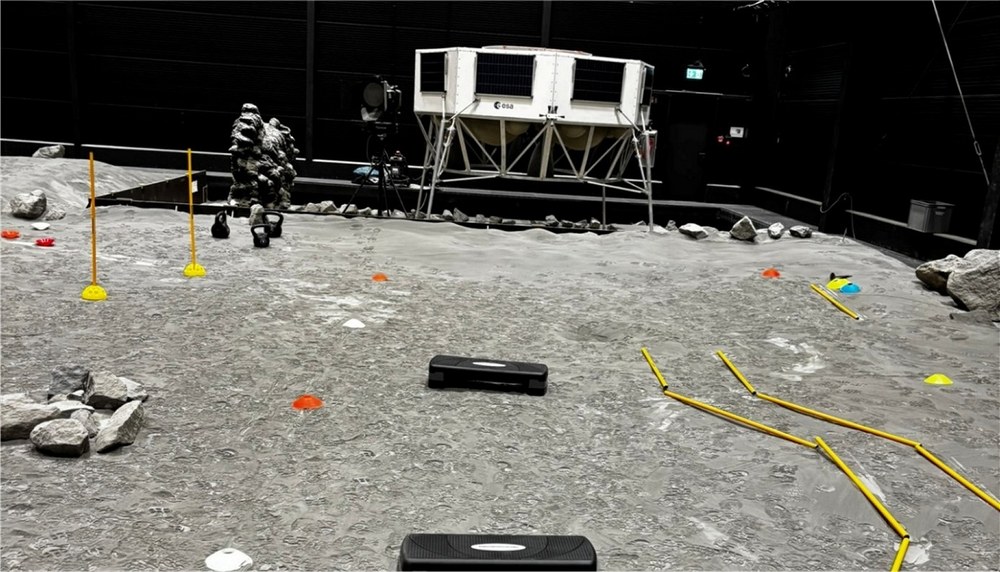
The goal was to realistically test communication processes, the spatial arrangement of the course modules, and the interaction between human, spacesuit, and lunar regolith – as preparation for future studies using a so-called gravity offloading system that will simulate the Moon’s lower gravity. Activities at LUNA were transmitted via video directly to the console at :envihab, enabling verbal instructions and guidance through audio communication from :envihab.
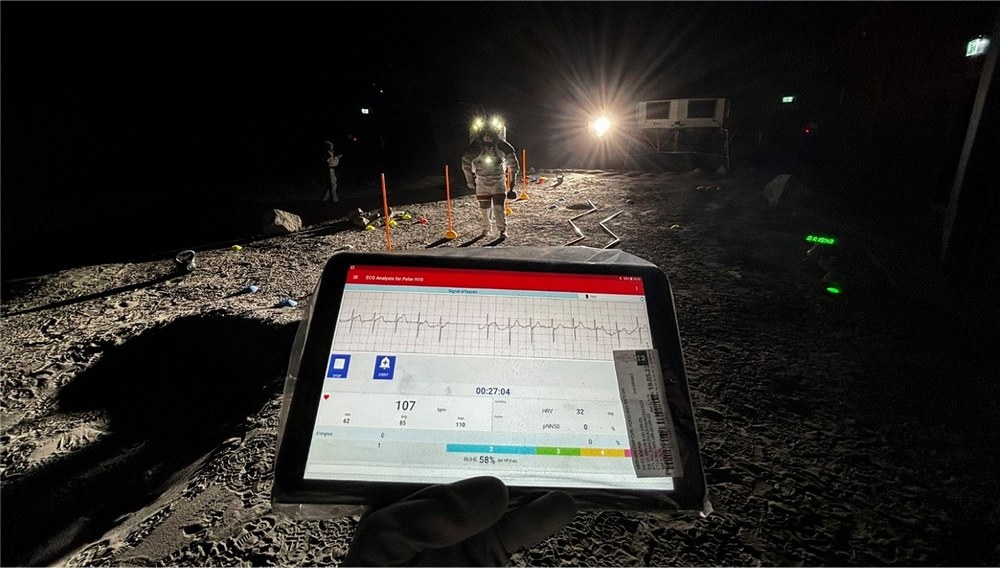
The procedure was deliberately structured step by step: On the first day, the focus was on setup, safety briefing, and initial dry runs without the spacesuit. The main objective was to verify that communication between the LUNA site, the local control room, and :envihab worked smoothly. The second day marked the decisive step: The complete course was tackled in the spacesuit for the first time. Six different tasks – from a curved “S-path,” a light-dark passage simulating low sun angles, and a slalom with weights to kneeling and tool-handling tasks – were completed safely and successfully. On the third day, a clear learning effect emerged: procedures became more routine, times shorter, and the team acted noticeably more in sync. In parallel, temperature and heart rate inside the suit were monitored live.
“Such tests are indispensable,” explains explains Dr. Timo Frett, the scientist responsible for the obstacle course. “They enable standardized comparisons of different suits and training strategies under mission-relevant tasks.” Only in practical use do details become visible that are easily overlooked on paper – such as cable routing, light angles, restricted visibility in the suit, or questions of wearing comfort. At the same time, the shared understanding grows of what works under realistic conditions and where adjustments are needed.
Particularly valuable was the collaboration across institutional boundaries: The teams from LUNA, :envihab, and the on-site staff quickly developed clear roles, coordinated procedures, and a shared “mental picture” of future test campaigns. This foundation is crucial as the experiments become more complex in the coming months. This was significantly supported by the preparation and involvement of the ground control team at GSOC in Oberpfaffenhofen, which contributed the perspective of mission control and thus ensured a realistic test environment.
Next steps already planned include integrating the gravity offloading system, further standardizing the course, and improving the suit, communication, and workflows. The successful first test run shows: LUNA is ready for the next steps toward realistic preparations for future lunar missions.