Nautical Solid Oxide Fuel Cells: Testing and Demonstration
The EU funded HELENUS project demonstrates the applicability, scalability and fuel-flexibility of highly efficient solid oxide fuel cells (SOFCs) in various large ship applications - thereby enabling a significant step towards decarbonisation and emissions reduction from shipping.
Project duration: Juni 2022 - July 2027
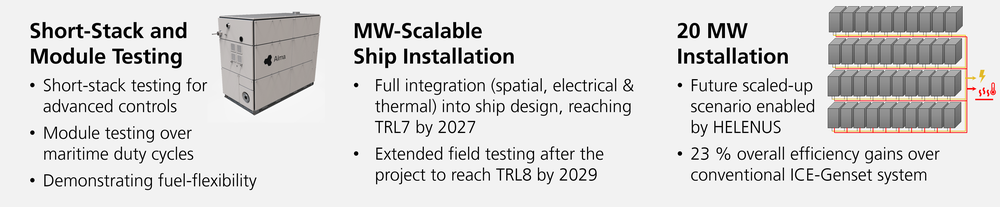
The HELENUS project will develop and demonstrate a High Efficiency Low Emission Nautical SOFC on a large ocean-going cruise vessel. This 200kW TRL 7 SOFC solution will create a blueprint for scaling up the system up to 20 MW in future ship builds. Operating in cogeneration mode, the SOFC will simultaneously produce both power and heat, unlocking up to 23% efficiency gains in a scaled-up system. HELENUS will also demonstrate the fuel-flexibility of SOFCs with alternative renewable fuels over various maritime duty cycles. Through collaboration between key stakeholders from all sections of the maritime value chain, HELENUS will pave the way towards climate-neutral shipping.
The maritime industry is responsible for 90 % of global trade and 2.5 % of global greenhouse gas emissions, as well as 13 % of the EU's transport emissions. To address this, the International Maritime Organisation (IMO) aims for a 50% reduction in GHG emissions by 2050 from 2008 levels. The European Commission's Fit for 55 initiative sets even higher goals, targeting a 55% reduction by 2030 and 90% by 2050 from 1990 levels. Achieving these targets requires adopting advanced energy technologies, renewable fuels, and energy-saving measures like onboard electrification.
The HELENUS consortium includes a wide range of stakeholders, from technology developers to field implementers, to drive innovation and commercialization. This project will pave the way to a decarbonized maritime future, enhancing innovation and significantly boosting the EU maritime industry's competitiveness.
Scale-up plan for solid-oxide fuel cells
Credit:
Alma Clean Power
Expected Impact
Commercialisation of SOFC products with an output of several megawatts for use at sea, including ship newbuilds
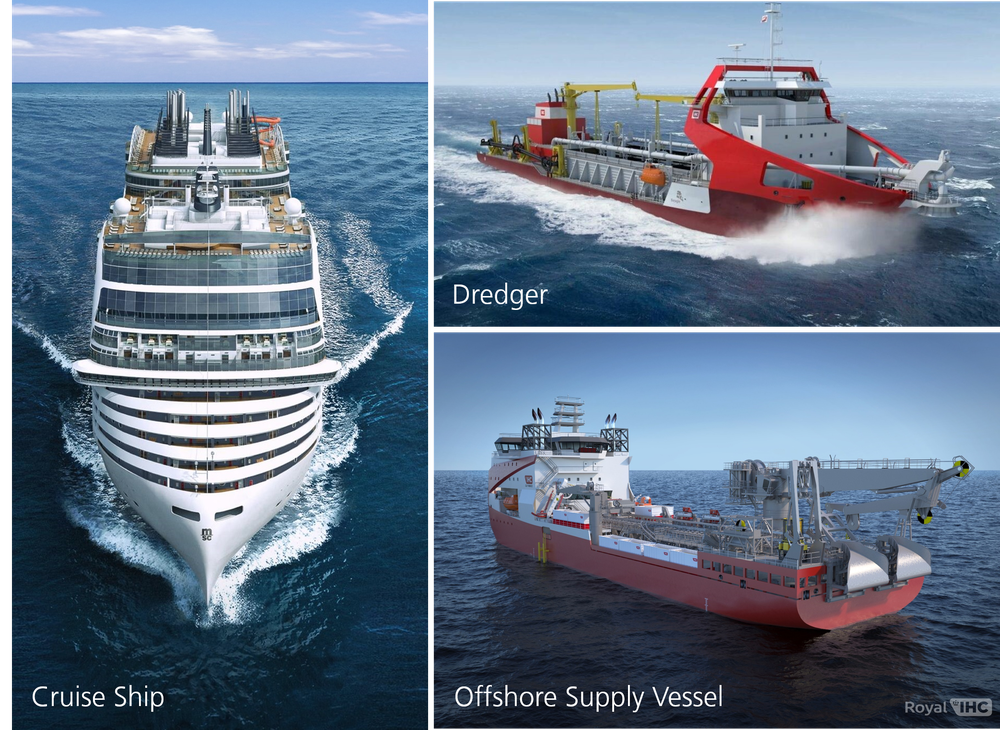
Expand the use of SOFC technology in other forms of water transport, including inland and ocean shipping
Accelerate the transition of the maritime sector to renewable and carbon-neutral fuels and thus facilitate decarbonisation
Develop of a solid technological basis for classification societies to create and evaluate class rules for the integration of SOFC systems on large ships
Provide a sound technological basis for policy makers, regulators and classification societies to adopt appropriate regulations to promote the deployment of clean energy systems
Ensure the competitiveness of the European maritime industry by promoting the development and introduction of clean propulsion technologies
Create a need for new qualified jobs for the operation of SOFC systems on ships and in harbours
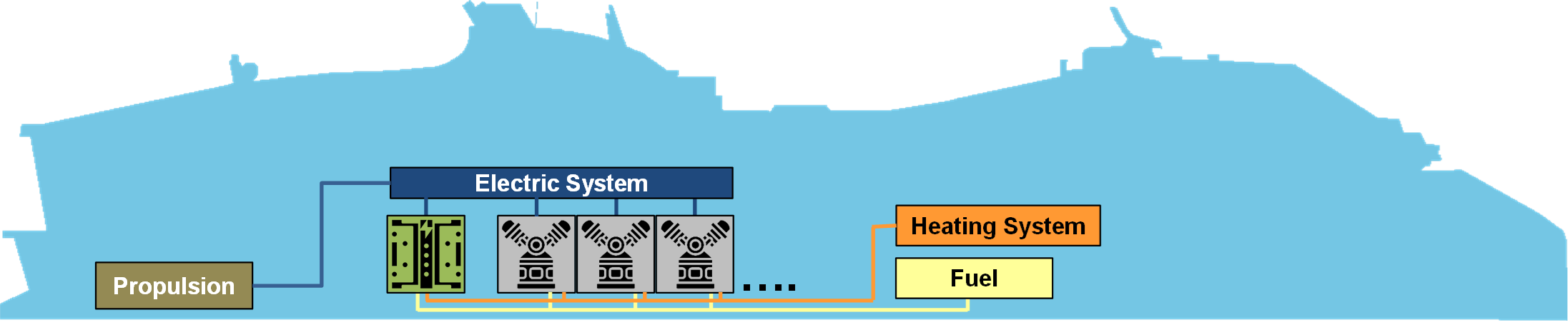
Full integration of SOFC in the machine area onboard cruise ship
The HELENUS project is trialling a 500 kW solid oxide fuel cell (SOFC) on an MSC World Europa-class cruise ship. This SOFC will be fully integrated into the ship's structure and will generate both electricity and heat, resulting in significant fuel savings compared to conventional combustion engines.
HELENUS
Your consent to the storage of data ('cookies') is required for the playback of this video on Quickchannel.com. You can view and change your current data storage settings at any time under privacy.
HELENUS
The HELENUS project is trialling a 500 kW solid oxide fuel cell (SOFC) on an MSC World Europa-class cruise ship. This SOFC will be fully integrated into the ship's structure and will generate both electricity and heat, resulting in significant fuel savings compared to conventional combustion engines.