DeWaTra
Harmonised modelling approaches for the
Decarbonisation of waterborne transport
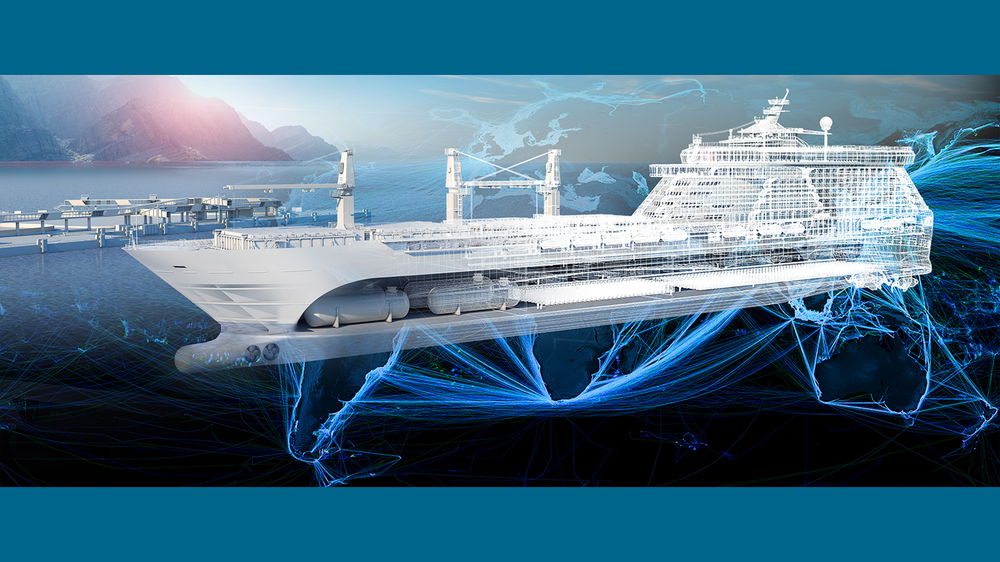
At the DLR Institute of Maritime Technologies and Propulsion Systems, system-based modelling approaches are being developed that analyse the energy requirements and emissions of ships in a life cycle-oriented manner and combine physical, data-driven and measurement-based methods. These approaches are incorporated into the European DeWaTra network in order to strengthen methodological harmonisation and create an evidence-based decision-making basis for the maritime energy transition.
The decarbonisation of waterborne transportation requires scientifically robust and harmonised assessment methodologies. Technological options such as alternative fuels, wind-assisted propulsion systems or energy-efficiency measures must be evaluated under consistent assumptions in order to generate comparable and evidence-based conclusions.
At the DLR Institute of Maritime Technologies and Propulsion Systems, we develop system-level modelling approaches to analyse ship energy demand and emissions. Our work focuses on methodological consistency, reproducibility and comparability across technological pathways. Decarbonisation is not a single-technology question; it requires integrated assessment of propulsion systems, onboard energy systems and operational behaviour.
Our methodological framework combines physics-based models, data-driven approaches, discrete-event power prediction and onboard measurement data. In addition, AIS-based emission pattern analysis contributes to strengthening the quantitative foundation for sustainability assessments in shipping.A central element of our work is the life-cycle perspective. Technological and economic implications are analysed not only during operation but across the entire system lifetime. This enables more comprehensive evaluation of environmental performance and system efficiency.
We contribute these approaches within the European network DeWaTra – Decarbonising Waterborne Transportation, a COST Action (European Cooperation in Science and Technology, Action CA23159). COST supports bottom-up research and innovation networks and promotes structured scientific exchange across Europe.
DeWaTra brings together partners from seven core participating countries: Greece, the Netherlands, Portugal, Romania, Spain, Turkey and the United Kingdom (at project start), alongside additional contributors from other European countries, including Germany. Leading organisations within the Action include Associação do Instituto Superior Técnico para a Investigação e Desenvolvimento, DNV, the European Association of Universities in Marine Technology, Università degli Studi di Napoli Federico II, Liverpool John Moores University, Istanbul Technical University, the National Technical University of Athens, the University of Strathclyde, the University of Nicosia, Chalmers University of Technology and the University of Zagreb.
Within this framework, scientific exchange addresses optimisation of hull design, implementation of energy-saving devices, alternative fuels, wind-assisted propulsion concepts and artificial neural network–based prediction of fuel consumption and emissions.
In addition to methodological harmonisation, the Action contributes to European capacity building by strengthening collaboration and supporting the next generation of researchers in the waterborne sector.
In the long term, the harmonised modelling approaches developed within this framework aim to improve the comparability of technological options, support policy-relevant assessment processes and contribute to evidence-based decision-making in the maritime energy transition. Future perspectives include the transfer of selected methods into application-oriented tools and potential onboard integration scenarios.