
New Measurement Campaign demonstrates the Benefits of Advanced Condition Monitoring for Ships

Lars Fischer, Zoll
- The DLR Institute of Maritime Energy Systems is working with partners to develop innovative methods for condition monitoring and predictive maintenance of maritime systems.
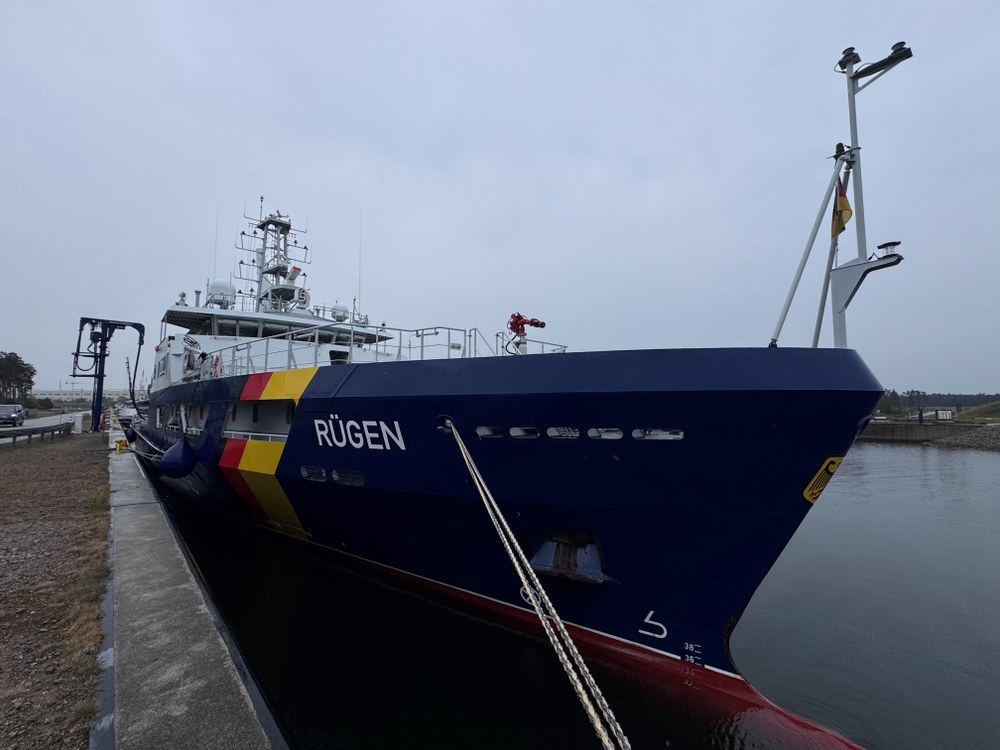
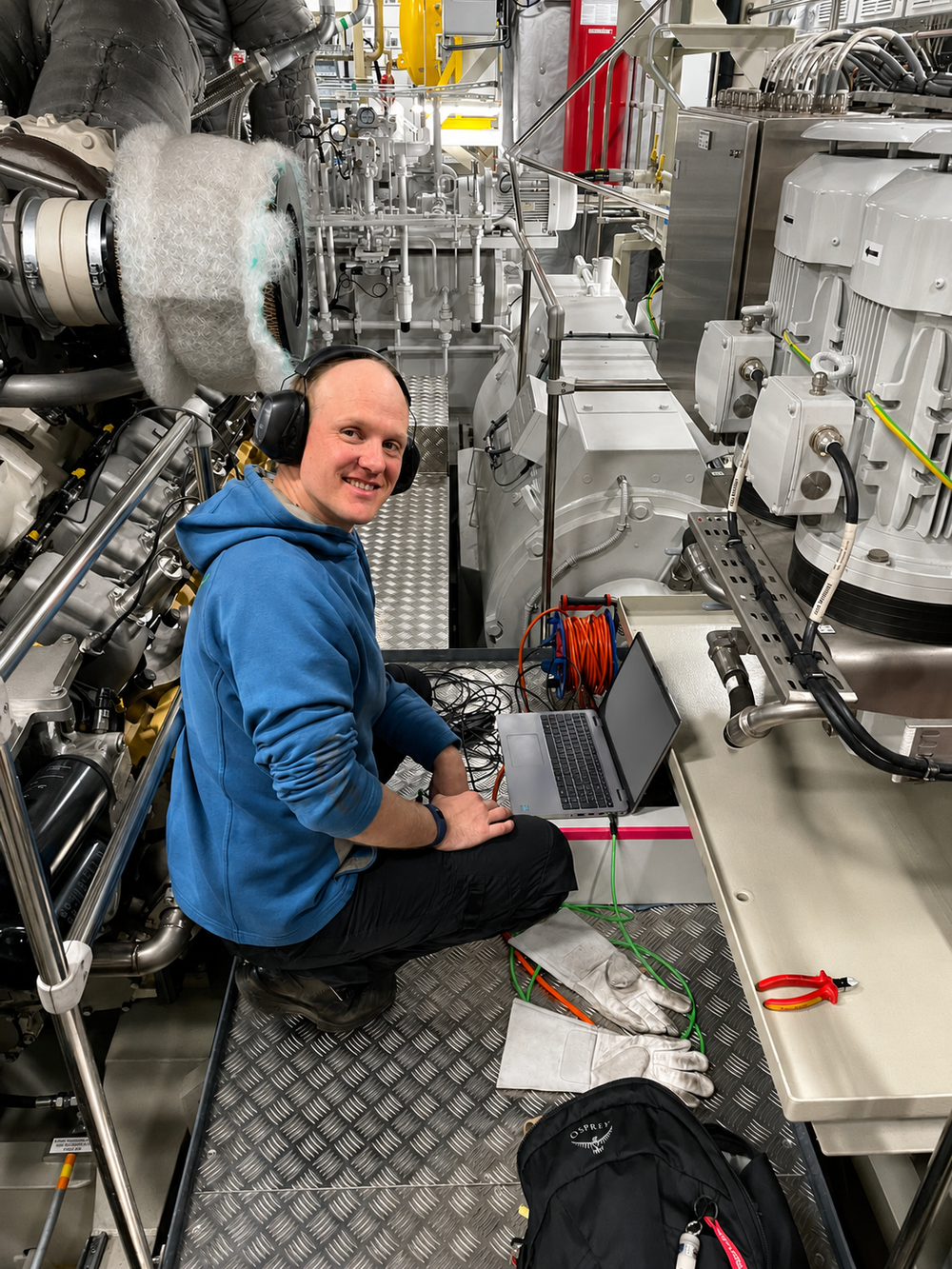
- A measurement campaign on board the customs vessel Rügen demonstrated the potential of the specially developed monitoring system, which was used to identify the causes of vibrations and derive targeted measures to improve comfort, stability and operational safety.
- The combination of modern vibration analysis, AI-supported data evaluation and digital twins lays the foundation for safer, more economical and, in future, autonomous maritime systems.
Unplanned downtime is one of the biggest challenges in maritime operations. It disrupts schedules, creates additional workload for crews and generates enormous costs. Recent studies estimate that unplanned downtime costs the global maritime industry around $1.4 trillion every year.
The key question is therefore not how to repair failures faster, but how to prevent them in the first place.
At the DLR Institute of Maritime Technologies and Propulsion Systems, we develop technologies, integrate them into maritime systems and validate them under real operating conditions. Condition monitoring is a key element of this approach. By continuously monitoring system behaviour, we can identify anomalies at an early stage - long before they develop into technical failures.
Together with the Water Customs Department represented by Chief Engineer Lars Fischer, Technical Superintendent Torsten Krambeer and Media Relations Manager Ina Wegner, Prof. Dr.-Ing Andreas Schwung of the Südwestfalen University of Applied Sciences, Prof. Dr.-Ing João Paulo Javidi da Costa of the Hamm-Lippstadt University of Applied Sciences, Prof. Dr.-Ing Sabah Badri-Höher of HAW Kiel, Sascha Wührl of the University of Applied Sciences Flensburg as well as M.Sc. Florian Schlieker and Department Head of Ship Integration Dr. Martin Bergström of the DLR, we are advancing innovative solutions for condition monitoring and predictive maintenance of maritime systems and components.
A recent measurement campaign on board the customs vessel Rügen demonstrates the potential of this approach. Using an in-house developed monitoring system, we were able to identify sources of unwanted vibrations and trace them back to their origin. Based on these findings, targeted measures have already been developed to improve onboard comfort, stability and operational reliability.
To achieve this, the project combines advanced vibration monitoring with sophisticated data analytics, including:
- Advanced vibration and time-frequency analytics
- Multidimensional signal processing and sensor fusion
- Physics-informed Digital Twins and hybrid AI
- Autonomous anomaly detection and predictive health monitoring
- Remaining Useful Life prediction and degradation forecasting
- Synthetic data generation and intelligent sensor optimization
Innovative methods for continuously verifying data integrity ensure that reliable insights can be generated even under demanding real-world operating conditions.
The impact goes far beyond maintenance. By detecting degradation before damage occurs, condition monitoring helps transform unpredictable failures into predictable maintenance activities. This reduces costs, increases system availability and strengthens operational reliability.
At the same time, it contributes directly to safer operations by reducing the risk of unexpected technical failures and the associated stress for crews on board.
And looking further ahead, reliable condition monitoring is one of the key enabling technologies for autonomous and unmanned shipping. After all, autonomous vessels must be able to understand the health of their own systems before humans are no longer part of the operational loop.
A particular highlight of the project is the joint development of advanced methods for early cavitation detection together with the Water Customs Department. Reliable condition monitoring is not just about maintenance. It is an important building block for safe, reliable and future autonomous maritime systems.
Kontakt
Dr. Martin Bergström
Juliane Zerbst