
Uniform standards for successful market entry
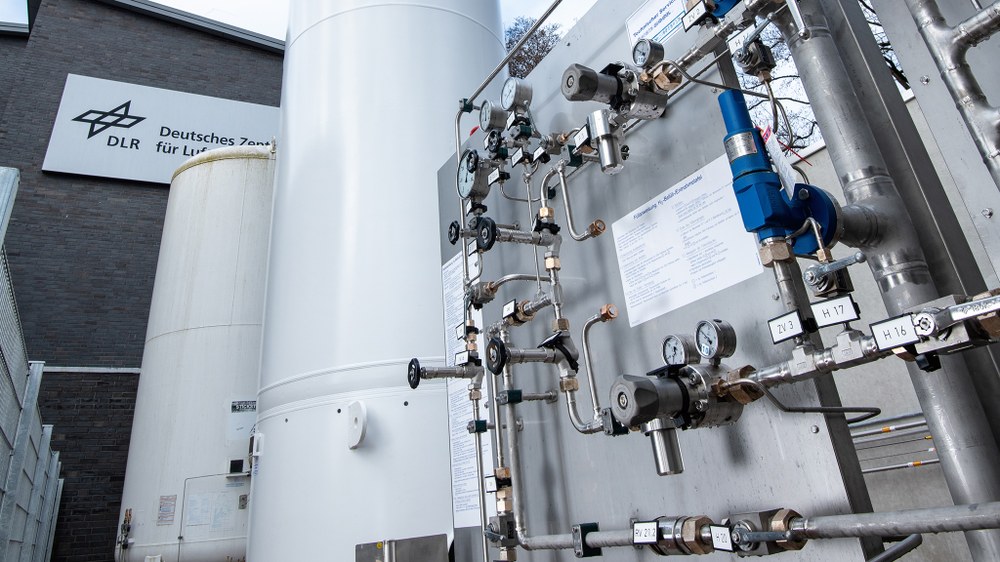


- The workshop "Approval - Certification - Standardisation in the field of Fuel Cells and Hydrogen" is co-organised by the DLR Institute of Networked Energy Systems, the Centre for Fuel Cell Technology GmbH ZBT, and the Fraunhofer Institute for Solar Energy Systems ISE.
- The event aims to sensitise industry and SMEs to standardisation issues related to new products and processes that will become relevant during the later stage of market introduction.
- The 15th edition of this annual event series will take place in Oldenburg. Registrations are open until 6th February 2026.
- Focus: Energy, Hydrogen
Workshop "Approval – Certification – Standardisation" on 24th/25th February at Oldenburg
Refuelling is made safe for humans and machines, thanks to technical standards. We have become accustomed to the fact that fuel pumps and vehicles – technically speaking – match each other. Therefore, all participating manufacturers and industries comply with the relevant standards, so that we can rely on the fuel nozzle fitting into the tank opening and the fuel being compatible with the engine. But how are uniform standards for new technologies that aren't yet on the market defined, and by whom? – The workshop "Approval – Certification – Standardisation for Fuel Cells and Hydrogen”, taking place on 24th and 25th February 2026 in Oldenburg, provides practical insights into these complex decision-making processes. Registrations are possible until 6th February 2026.
In the 15th edition of this event series, experts from industry, business, and research delve into selected key topics from approval-relevant aspects for the retrofitting of caverns for hydrogen storage to liability issues for products and product safety. In an interactive format, participants will also create their own product-specific draft standards. "Our goal is to make industry and SMEs aware of issues that will be relevant in the later course of market introduction," says Dr. Alexander Dyck, Head of Urban and Residential Technologies at the Institute of Networked Energy Systems.
Questions about standards and norms are often classified as theoretical and abstract, but they are indeed a key driver for innovation and market access – particularly in the field of hydrogen technologies. It is the result of detailed coordination processes that H2 refuelling stations and hydrogen-powered fuel cell vehicles "speak the same language" today. Dyck explains by example: "To enable the most rapid refuelling possible, vehicle manufacturers and filling station operators have defined the temperature and pressure ratios, so-called "pressure ramps." This happens within a refuelling protocol that regulates these and many more technical standards – all with the aim that we can rely on safe and smooth processes when refuelling with hydrogen."
The workshop series “Approval – Certification – Standardisation for Fuel Cells and Hydrogen” aims to foster networking among experts from research, industry, and politics as well as members of certification committees and standardisation committees. The event is co-organised by the Institute of Networked Energy Systems, the Centre for Fuel Cell Technology GmbH ZBT, and the Fraunhofer Institute for Solar Energy Systems ISE.
Further information on the program and registration can be found here (only available in German).