Research project ENERGOOD
Considering societal well-being in the transformation of the energy system
Research on the design of future energy systems usually focuses on aspects such as technological efficiency or cost minimisation. In contrast, social or common good-oriented issues are often not part of the scientific examination. However, since a viable energy supply must not only be cheap and efficient, but also equitable and ecologically compatible, the research project ENERGOOD (funded by the Federal Ministry for Economic Affairs and Energy) addresses the question of how societal well-being can be incorporated into the design of future energy system drafts. For this purpose, the impact on the common good is to be made assessable using model-based methodological approaches.
Research project ENERGOOD | |
|---|
Duration | January 2025 to December 2026 |
Funded by | German Federal Ministry for Economic Affairs and Energy |
Projektbeteiligte | - DLR Institute of Networked Energy Systems
- Wuppertal Institute
|
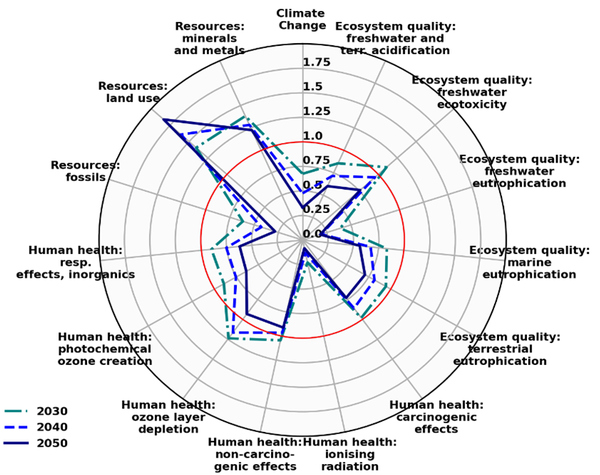
An essential element of the ENERGOOD project is therefore the development of a catalogue of quantifiable common good indicators in the energy context. These should cover dimensions such as land use, participation, and employment. Established concepts such as the ‘Better Life Index’ of the OECD or the ‘Capability Approach’ are adopted and further developed for this purpose. These indicators are then evaluated and weighted in a representative survey, creating a viable evaluation grid for common good-oriented scenarios. Over the course of the project, they will then be used in detailed energy system models as a viable evaluation grid for common good-oriented transformation scenarios. In order to also develop and evaluate alternative energy scenarios, a sufficiency-oriented energy scenario is additionally considered, where the energy demand is influenced by altered lifestyles and their ecological and social foundations.
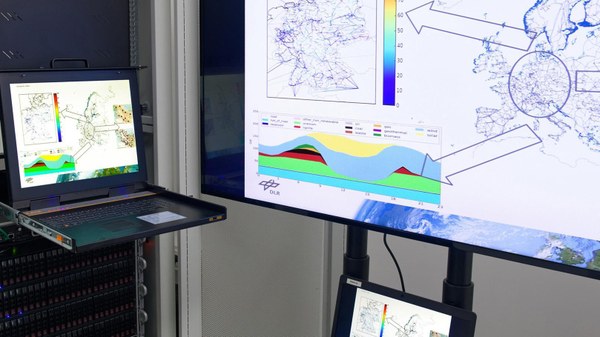
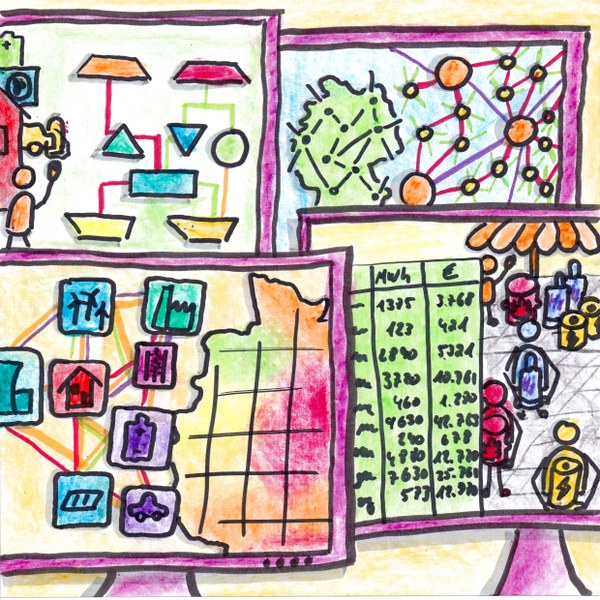
At the Institute of Networked Energy Systems, the project team uses the modelling framework REMix, developed at the German Aerospace Center (DLR), to make a direct comparison between traditionally cost minimised scenarios and scenarios optimised based on common good indicators - each for the reference and sufficiency scenarios. For this purpose, REMix is expanded by the common good indicators developed in ENERGOOD. On this basis, it is possible to analyse how different weightings of the indicators affect the overall result. Potential conflicts of objectives become transparent, such as between cost efficiency and participation, or between employment effects and land requirements. The project team uses the data to derive common good maps for Germany, showing which regions have particular opportunities or challenges in terms of societal well-being during the energy transition.
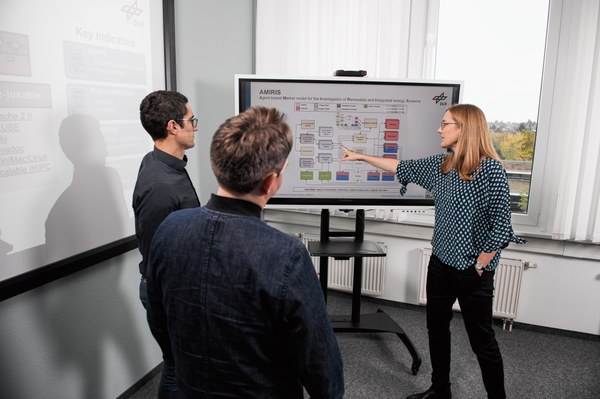
In another approach, the DLR project team analyses the effects of more common good-oriented decisions compared to more profit-oriented decisions. These analyses are based on the understanding that the development of our energy system is ultimately significantly influenced by the actual investment decisions of the actors involved in the energy transition. Against this background, the behaviour of different actors in the electricity system is simulated using the agent-based model AMIRIS, to identify economic incentives that promote investments with higher societal well-being.
The results from the ENERGOOD project will lead to concrete recommendations for action and illustrative visualisations. They are intended to support decision-making processes in politics, administration and civil society, to consider the aspects of the common good in the design of our energy system, identify conflicts at an early stage, and make societally viable decisions. For this purpose, ENERGOOD provides a novel, interdisciplinary evaluation framework based on energy system analytical methods.
Our core topics and challenges related to the ENERGOOD project: