Research project WiETrans
Knowledge integration in energy system analysis for the discursive-reflexive assessment of transformation pathways under different societal perspectives
Decision-making processes in politics and industry concerning the future development of the energy system are often based on scientific advice. This advice, in turn, primarily relies on highly developed system modelling approaches that optimise for primarily techno-economic factors. However, this approach often fails to consider different societal perspectives and a diverse range of background knowledge, including practical experience. Important implementation aspects and risks of transformation are therefore overlooked, which calls into question the robustness of conclusions drawn from the modelling. Consequently, there is a lack of well-structured participatory energy system analyses, despite existing sound knowledge of best practice in scenario studies. To achieve methodological progress in this area, the research project WiETrans (funded by the Federal Ministry for Economic Affairs and Energy) aims to develop a new instrument that can incorporate relevant qualitative and quantitative knowledge as a basis for evaluation.
Research project WiETrans | |
|---|
Duration | October 2024 bis September 2027 |
Funded by | Federal Ministry for Economic Affairs and Energy |
Project participants | - Institute of Networked Energy Systems
- IQIB – Institute for Qualifying Innovation Research and Consulting GmbH
- Friedrich-Alexander-Universität Erlangen-Nürnberg (FAU), Chair of Sustainability Transition Policy
|
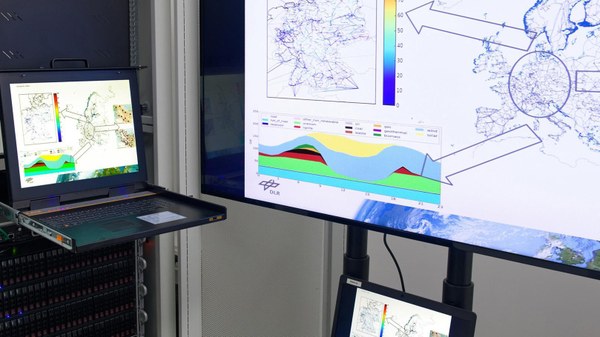
To achieve this research objective, the WiETrans project must develop new approaches to adequately consider various opportunities, roles and concerns in society. To this end, interdisciplinary relevant information must be integrated with high transparency, reduced in complexity and visualised appropriately. This will enable a multi-dimensional, discursive-reflexive evaluation of alternative options and pathways by different actors and from multiple perspectives. For this purpose, the following elements will be combined in a transdisciplinary co-design process:
1. transparent decision-support scenario model, linked to detailed analysis options
2. complexity reduction and visualisation environment, and
3. innovation lab workflow for stakeholder involvement.
The scenario model includes a balanced representation of the energy system and standardised interfaces, for example to time/spatial resolution or sectoral modelling and its results. These can relate, for example, to infrastructure needs, environmental impacts or regulatory requirements for the refinancing of new plants. Scenarios from different studies can be compared using reference technologies and assumptions. The high technical granularity ensures the precise assignment of qualitative information to requirements, boundary conditions and implementation barriers. Information is condensed and compiled into a flexibly adjustable basis for decision support using complexity reduction procedures and visualisation.
The Institute of Networked Energy Systems aims in the WiETrans project to develop a transparent decision support system for knowledge integration. This should include interfaces to various detailed analysis methods and thus create the content basis for a multi-dimensional and discursive-reflexive evaluation of alternative transformation options and pathways. Together with other project participants, the institute’s project team is also working on the connection to the visualisation environment, complexity reduction and the innovation lab workflow. In addition, the DLR researchers are involved in conducting a case study involving stakeholders.