Modelling Tool

LENS – Long-term Energy Scenario Model

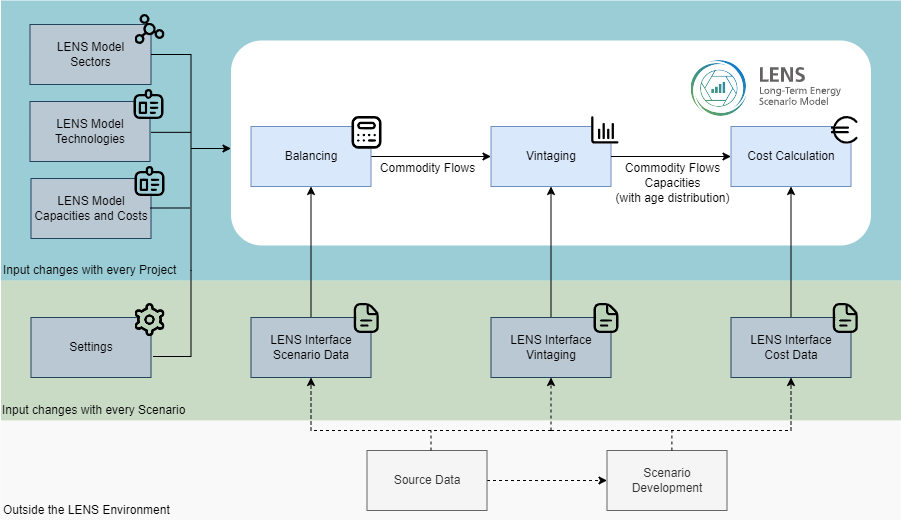
Structure of the LENS model framework. The tool is essentially a technology-based bottom-up accounting framework that can be used to quantify future energy balances in a freely definable scenario model structure and assess them in terms of various indicators.
Credit:

DLR; flaticon.com

LENS is a software tool developed at the Institute of Networked Energy Systems that can be used to quantitatively built-up and analyse complete energy scenarios. The spectrum ranges from different demand drivers and sectoral useful and final energy consumption through to primary energies, installed capacities and emissions on the supply side.

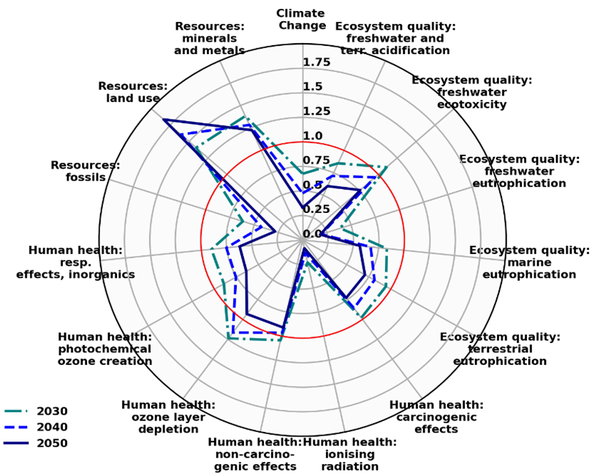
LENS possesses interfaces for linking with other models (e.g. REMix and AMIRIS), allowing the results of more complex system and market modelling to be integrated in the future. The software development took into account interfaces for further evaluation of scenarios, particularly with respect to life cycle-based environmental effects and (critical) resource demands.

LENS is used at the German Aerospace Center for both national and international bottom-up scenario analyses as well as for detailed analysis of the industrial sector. After an initial internal development phase, funded by the Helmholtz Programme's Energy System Design (ESD), first coupled stakeholder-based applications are being developed with funding from the Federal Government's 8th Energy Research Programme.

The aim is to further develop LENS into a tool for knowledge integration. This should provide complexity-reduced knowledge from various detailed modelling and analyses in a central, consistent knowledge base for the co-creation of scenarios. It is also being researched how different policy logics can be consistently translated into the scenario model and how their effectiveness for the participants can be made visible.

Contact

Energy Scenarios and Technology Assessment

Research Group
Institute of Networked Energy Systems