
Raman Spektrometer for MMX (RAX)

DLR
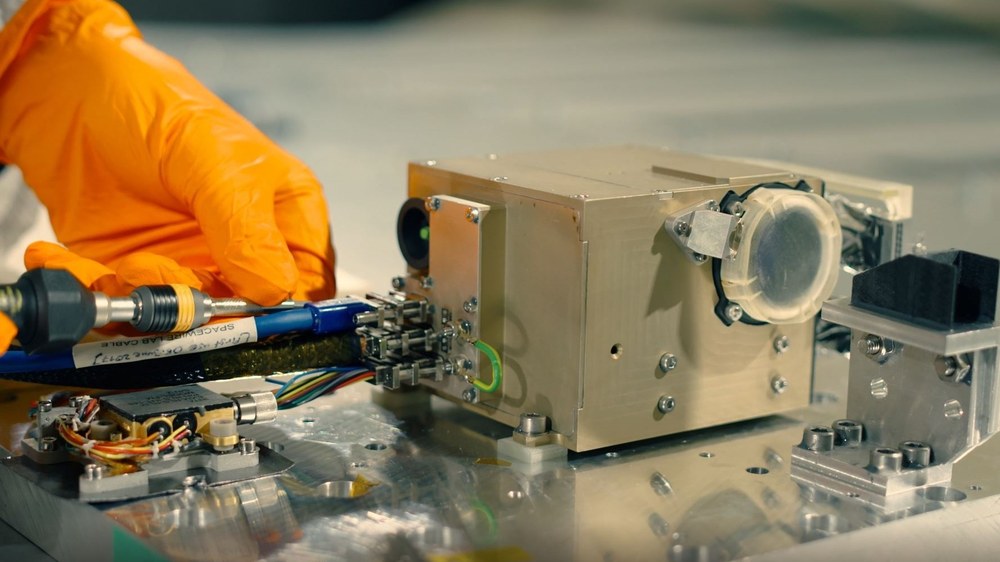
The Raman Spectrometer for MMX (RAX) is a scientific instrument for the Idefix rover of the Japanese Martian Moons eXploration (MMX) mission. The DLR Institute of Space Research (WR) led the development of the instrument and continues to lead the associated scientific team based on its many years of experience in the application of Raman spectroscopy in planetary research and the development of spectrometers for space research. RAX is a particularly compact and lightweight instrument with a total weight of 1.5 kg and will investigate the mineralogical composition of the surface of the Martian moon Phobos.
Science Goals
RAX is a particularly compact Raman spectrometer for the identification of minerals on the Martian moon Phobos. The instrument will deliver Raman spectra in a spectral range up to 4000 cm-1 with a resolution of 10 cm-1 and the measurements will contribute to unravel the question on the origin of Phobos as different minerals can be linked to the different formation processes of Phobos. For that purpose, the RAX measurements shall be compared to investigations of rocks and minerals on Mars by other instruments to the samples returned to Earth within the framework of the MMX mission.
RAX Design
The RAX instrument is a particularly small and lightweight Raman spectrometer based on a 532 nm CW laser, grating spectrometer and a CMOS sensor.
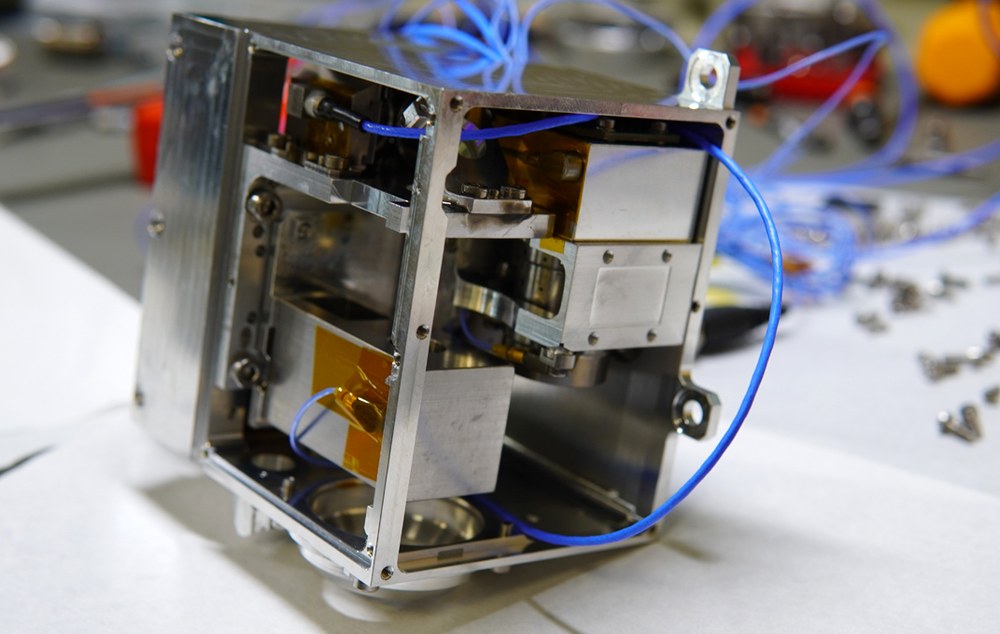
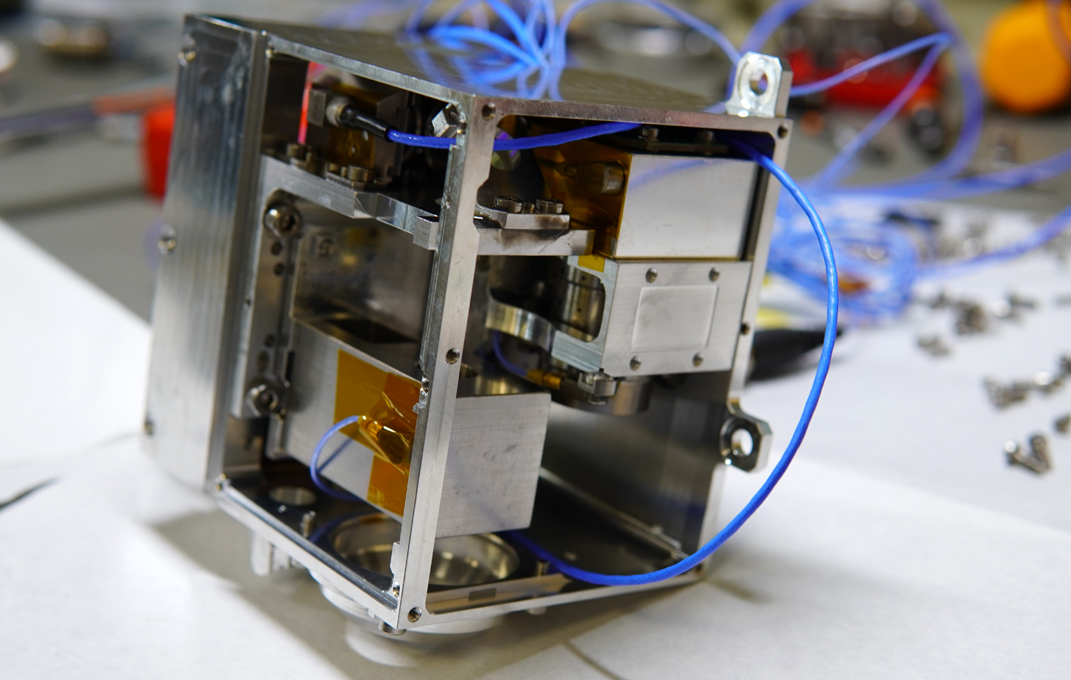
The instrument must endure the extreme diurnal environment of Phobos, such as
- extreme temperature variation (-55 to +70 ℃ for storage and -40 to +5 ℃ for operation),
- rapid diurnal cycles,
- dust (potentially contaminating optics and actuator mechanism),
- vacuum (complicating the heat distribution within the instrument),
- radiation (potentially deteriorating the transmission of optics and electronics).
- and furthermore must fit in the low-mass rover.
The RAX instrument consists of two physically separated units: the RAX laser assembly (RLA) and the RAX spectrometer module (RSM). The autofocusing subsystem (AFS), dedicated to focusing the laser on the surface of Phobos, is accommodated within the RSM. The entire RAX instrument has a volume of approximately 81 × 125 × 98 mm³ and a mass of approximately 1.5 kg. The Institute of Space Research at DLR has developed the RSM. The University of Tokyo, JAXA, and Rikkyo University, Japan are responsible for the development of AFS. The Instituto Nacional de Técnica Aeroespacial (INTA) and the University of Valladolid, Spain, who developed and built the RLS laser unit for the ExoMars mission, provided the RLA.
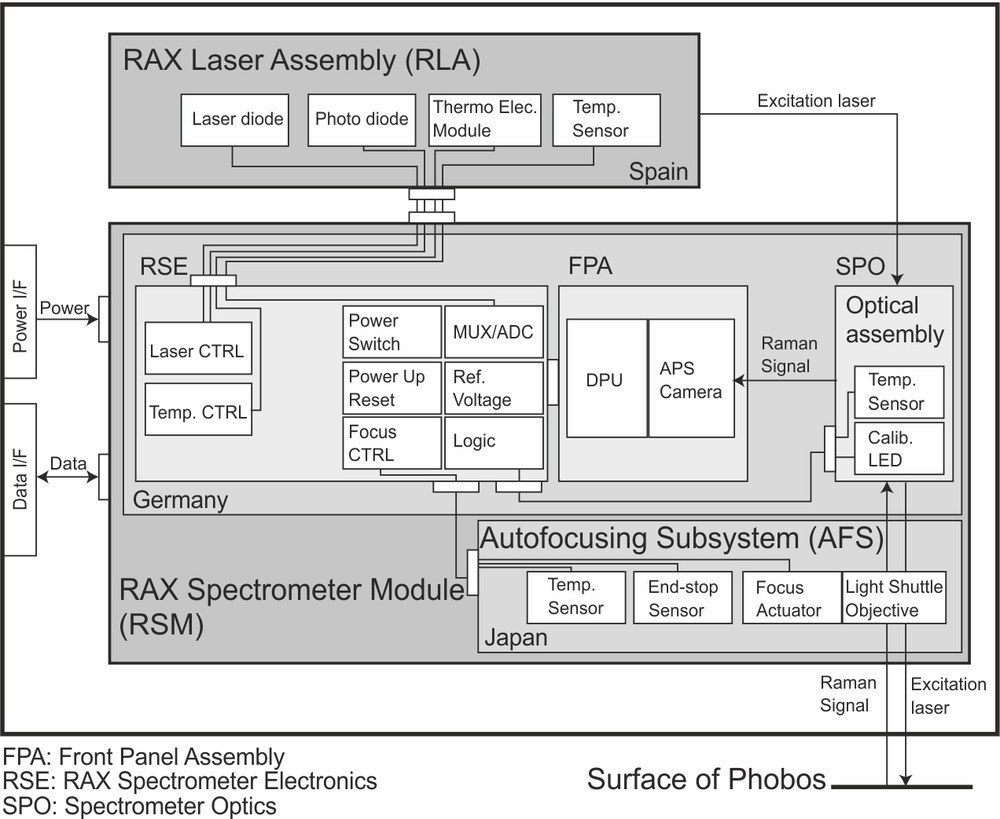
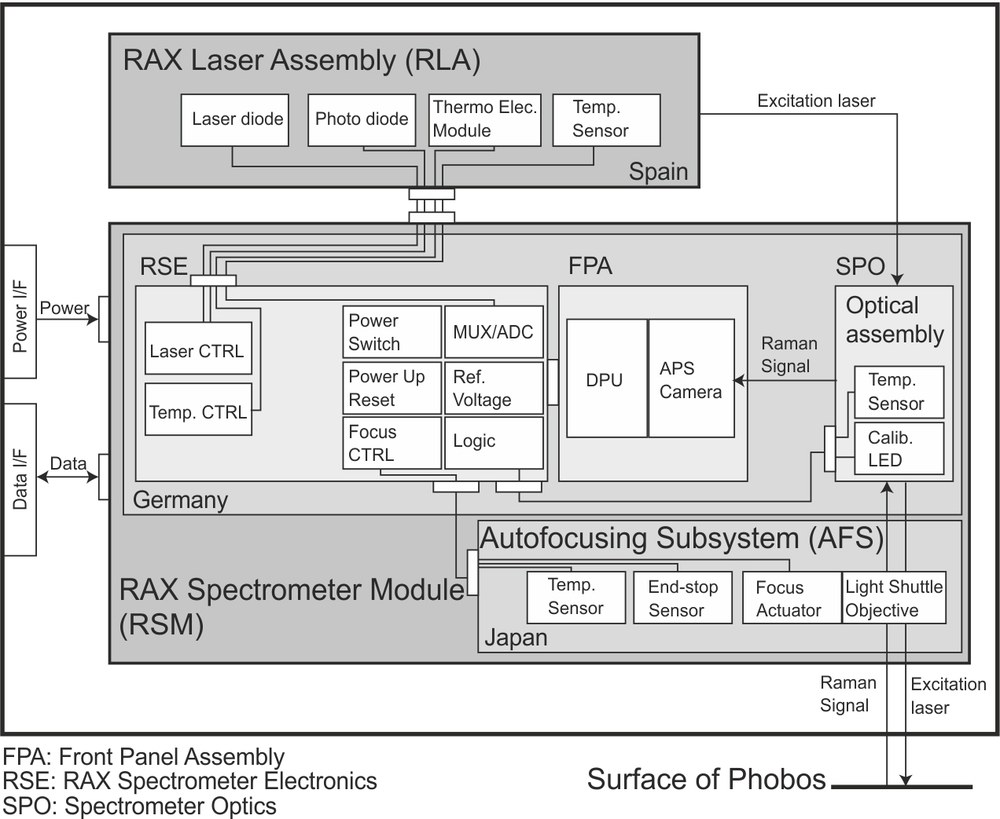
The RLA is a compact laser module that emits a 532 nm continuous-wave (cw) laser beam at a variable power of up to 35 mW and is a flight spare of the laser unit developed for the RLS instrument for the ExoMars mission. The RLA provides laser light to the RSM through an optical fiber. The collimated laser beam is focused onto the surface of Phobos through the AFS, which comprises an entrance light-shuttle objective lens (LSO) and an actuator mechanism. The scattered light is collected and collimated by the entrance objective and sent to the spectrometer module. A series of optics, such as a dichroic mirror, collimator lenses, slit, transmission grating, Raman edge filter, and camera objective lenses are mounted inside the RSM. The image from the slit is acquired using the 3D-plus CMOS sensor. The electronic set up for controlling the laser and focus actuator is accommodated in the RSM. The laser spot diameter on the sample is 50 µm to ensure a high Raman signal and no damage to the sample. The distance between the lowest tip of the LSO and the laser focus is 78 mm. By design, the stroke of the LSO and its resolution are longer than 13 mm and finer than <50 µm, respectively.
Autonomous focusing involves a two-step procedure. In the first step, the rover uses its legs to bring RAX closer to the ground until its operational distance from the investigated target is reached. Once RAX is able to achieve its optimal focus position, the fine focusing procedure begins. For this second step, the RAX laser is turned on and the AFS actuator is moved until the optimal focus position, at which the signal-to-noise ratio of potential Raman signals is maximized, is reached. To find this optimal position, a measure that combines the signal contrast on the spectrometer sensor and the amount of backscattered light from the laser are evaluated.
Partners
Japan Aerospace Exploration Agency JAXA
University of Tokyo
Rikkyo University, Japan
Instituto Nacional de Técnica Aeroespacial (INTA)
University of Valladolid, Spain