
Distributed Electric Propulsion model


Electric flying: From vision to reality
Hybrid-electric propulsion technology and innovative aircraft concepts for the air transport of the future
Emission-free, efficient, quiet and safe - in view of the increasing volume of air traffic, these are the primary goals of European aviation research. Research into electric drives plays a decisive role in this, because: Electric and hybrid-electric propulsion systems offer the potential to make air transport more sustainable, improve the carbon footprint, reduce noise and improve air quality.
Our institute is working intensively on the key technologies that will make this goal tangible. One promising solution is the concept of a hybrid-electric regional aircraft with distributed propulsion. This concept combines state-of-the-art technology with innovative aircraft design in order to fulfil the requirements of a climate-friendly and efficient aviation of the future.
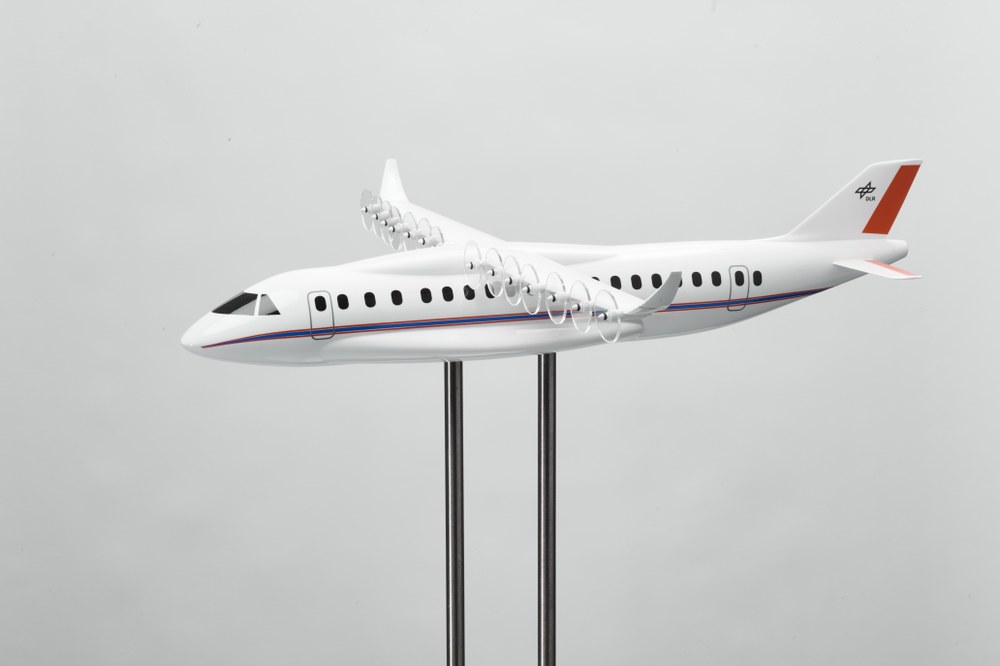
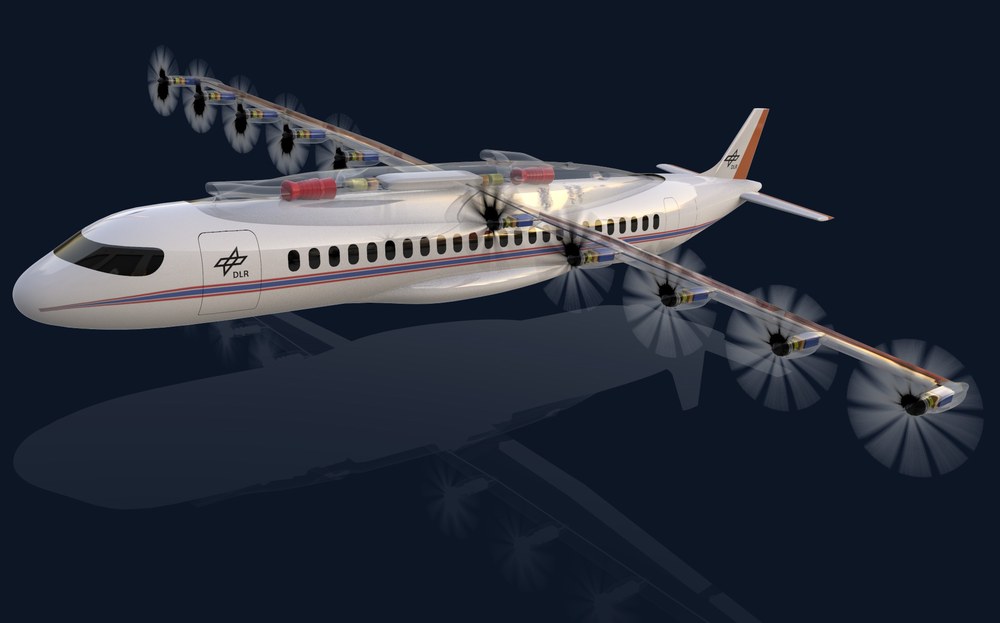
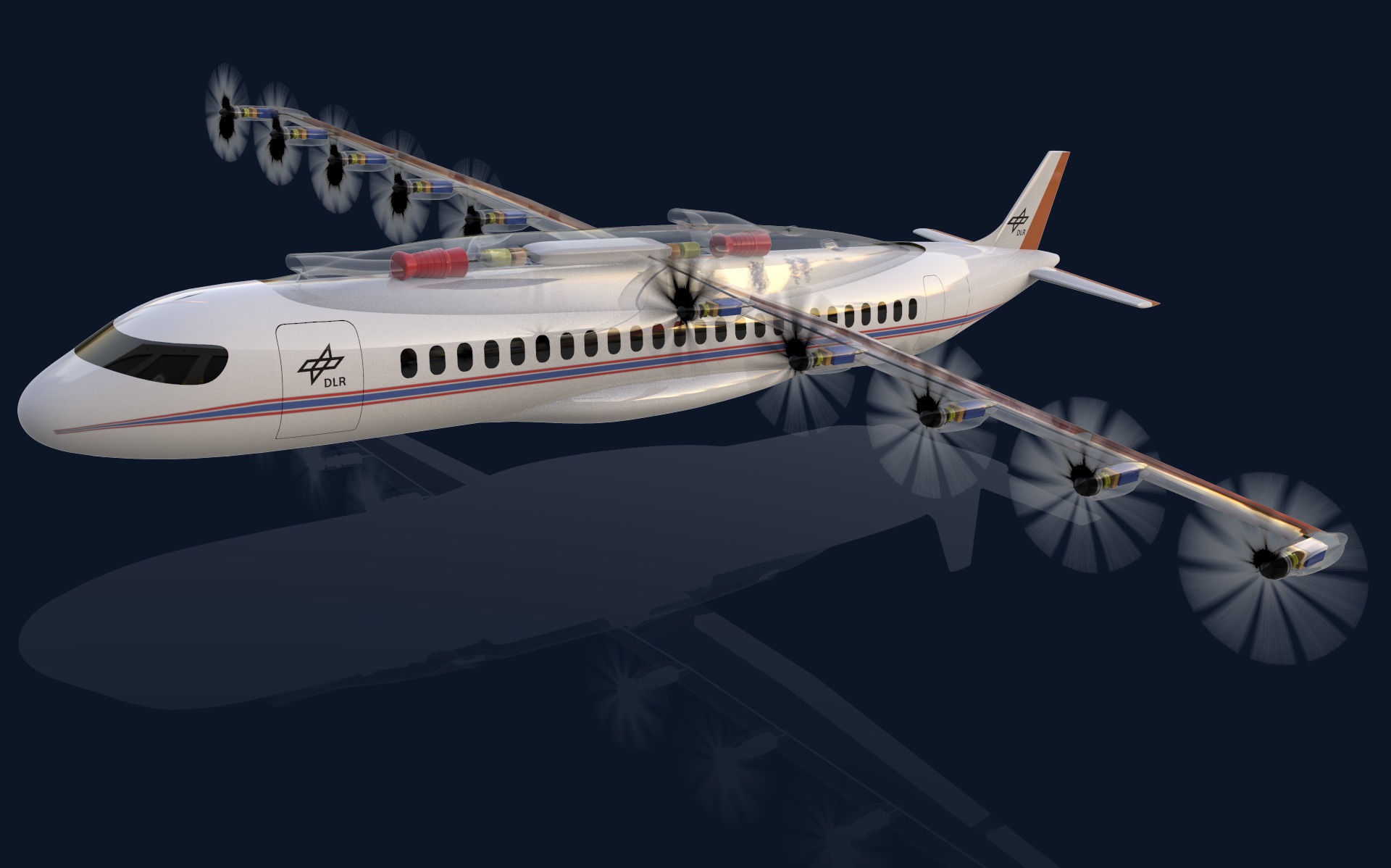
Many small propellers along the wing not only increase the lift, but also the propulsion efficiency. This configuration reduces the overall weight and drag, as the wing can be made smaller and the tail units more compact by individually controlling the drive motors.
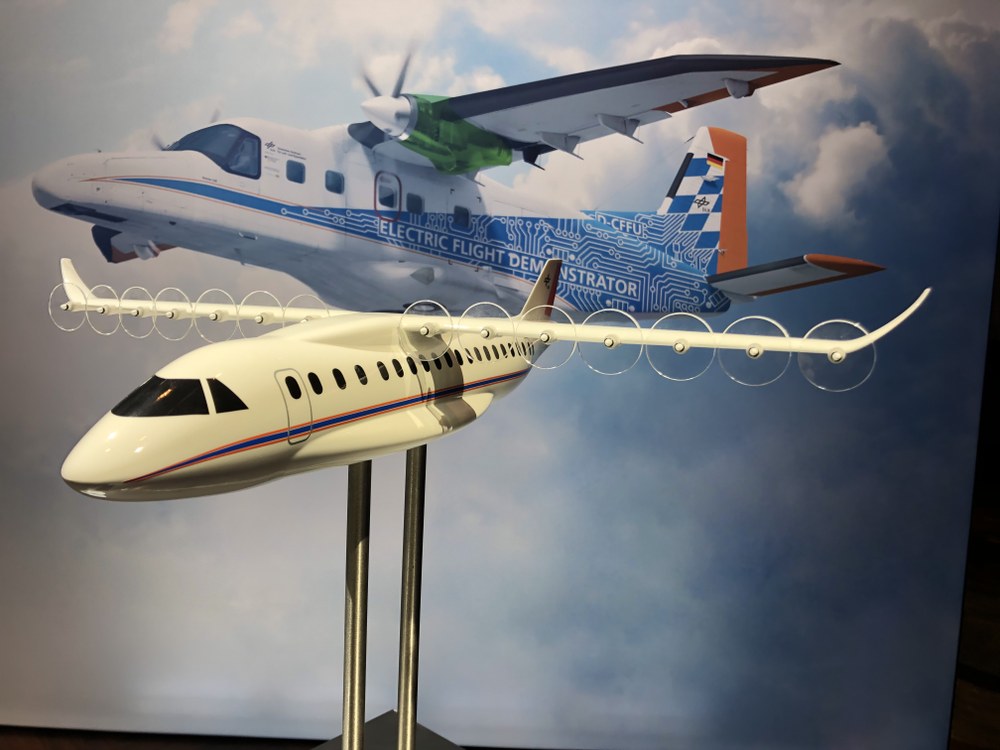
Our model of a regional aeroplane with distributed electric drives
The DEP (Distributed Electric Propulsion) model demonstrates the pioneering technology of a hybrid-electric regional aircraft. This design combines many small electric propellers along the wings, enabling optimised aerodynamics and control. Thanks to the electrical power distribution, which is realised by a hybrid system with a gas turbine or fuel cells, this concept opens up new possibilities for aviation. With a capacity of 70 passengers and a range of around 2000 kilometres, the aircraft offers a practical alternative for short to medium-haul flights.
Initial concept studies and performance assessments were carried out at the DLR Institute of Aerodynamics and Flow Technology back in 2015. This concept was also investigated as part of the national aviation research programme LuFo and the European research programme Clean Sky 2 in order to implement it step by step in reality.
Technical details on a glance
- Passenger capacity: 70 people
- Range: approx. 2000 km
- Wingspan: approx. 30 m
- Take-off mass: approx. 25 tonnes
- Propulsion power: approx. 5 MW
Dimensions of the exhibit:
- Scale of the model: 1:30
- Length: 65 cm
- Width: 65 cm
- Height: 14 cm
- Weight: 5 kg
Further Links: