
DLR-F25


The aircraft of the future will be more efficient and adaptable
The DLR research configuration DLR-F25: Highly stretched wings and modern load control for climate-friendly aviation
If you look at today's aircraft wings, it quickly becomes clear that they could be more efficient if their wingspan were larger. Longer, slimmer wings reduce drag and therefore energy consumption. However, a larger wingspan also brings challenges. The structure is much more flexible, which means that the wing flexes much more during cruising flight. This "flexibility" of the wing in turn has a detrimental effect on aerodynamic performance. In addition, gusts and manoeuvres generate further loads on the structure, which lead to a higher structural weight.
Another challenge is the "sluggishness" of the roll motion due to the large wingspan. Added to this is the reduced efficiency of the trailing edge flaps for load and manoeuvre control, which is due to the "softness" of the wing.
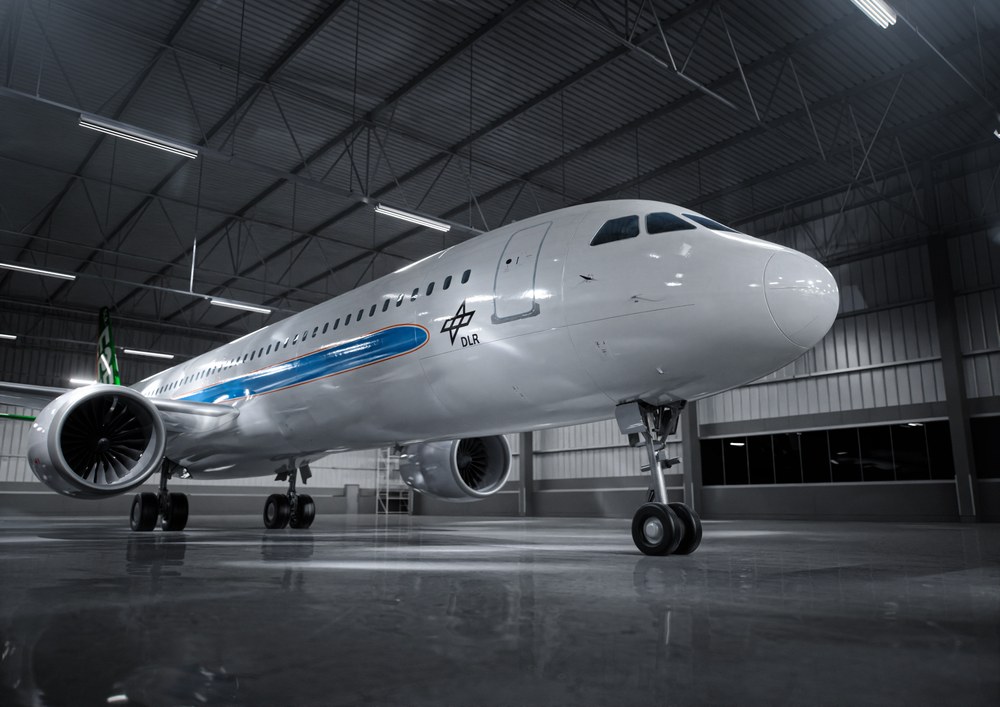
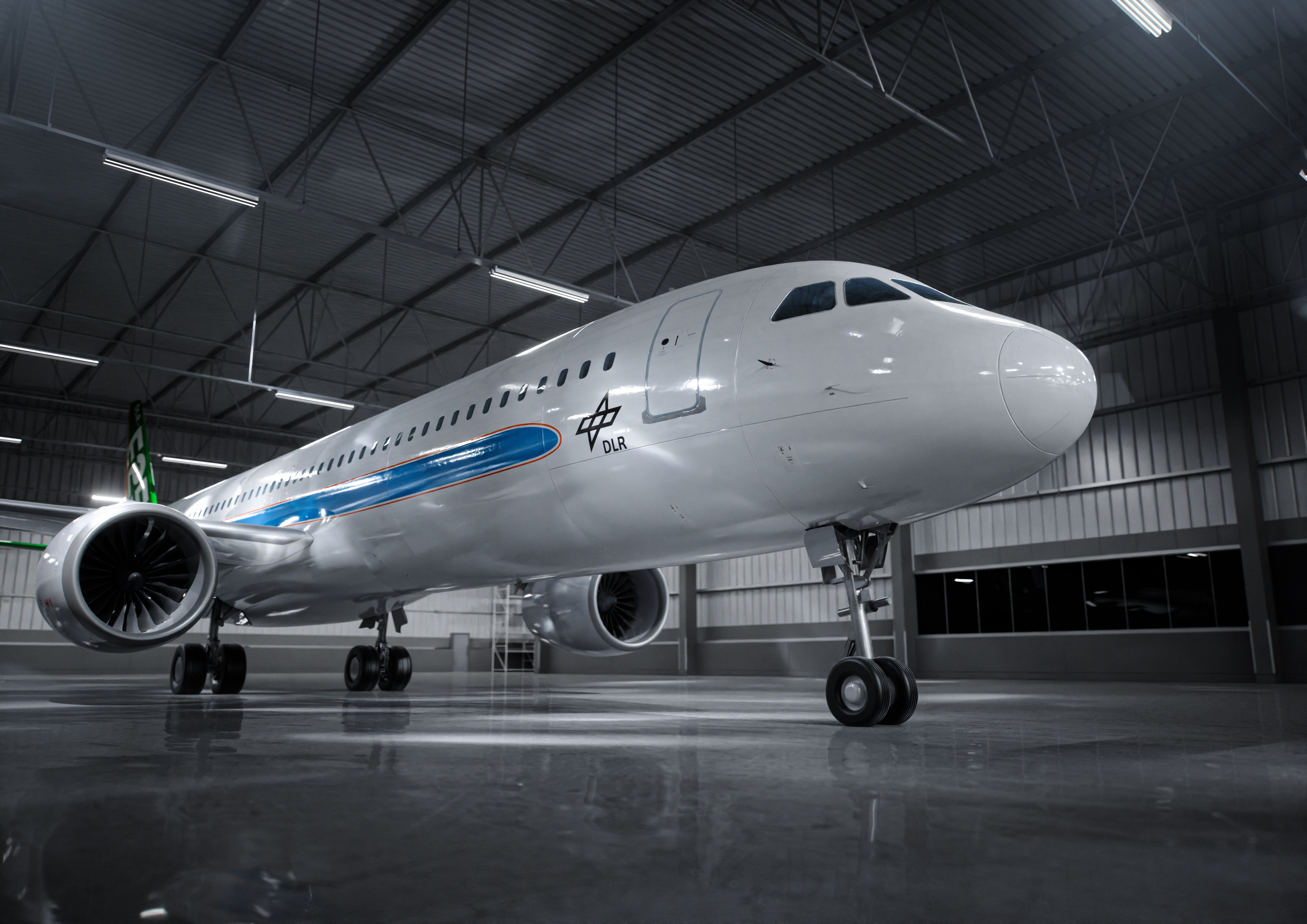
The DLR-F25 is a research configuration developed by the German Aerospace Centre for a future short- and medium-haul aircraft with particularly high wings. Various research projects have shown that these challenges can be overcome through a combination of multidisciplinary optimisation in conjunction with advanced, active load control. The DLR-F25 serves as the lead configuration for DLR's aeronautics research and is being further developed within the framework of research projects together with our partners.
Data from research projects
Extensive data from simulations and wind tunnel tests were obtained as part of research projects. These show that Highly stretched wings can significantly reduce the energy requirements of an aircraft - provided that the structural and aerodynamic challenges are mastered.
Active load control is an important component here. It ensures that loads caused by gusts or flight manoeuvres are reduced in a targeted manner. Modern sensor systems can help to recognise air movements at an early stage and adjust the control surfaces in good time. However, such sensors are only one part of the overall system. The actual performance is achieved through the interaction of aerodynamics, structure and control technology.
In addition, the DLR is working on more advanced concepts that allow wings to adapt even better to changing flight conditions. These so-called "intelligent" approaches aim to optimise the actual lift distribution along the flexible wing and thus achieve additional efficiency gains.
Our DLR F25 exhibit: Smart aircraft configuration you can touch
The DLR F25 model is a plastic exhibit that clearly illustrates the innovative aircraft configuration. The focus is on the particularly slim, high aspect ratio wings, which are designed for efficient flight.
The underlying configuration was developed as part of research projects and has established itself as an important basis for numerous other investigations. Wind tunnel tests in the VirEnfREI project in the European Transonic Wind Tunnel (ETW) were used to experimentally evaluate the aerodynamic behaviour and structural properties of this configuration.
The model makes this research tangible and shows how future aircraft can be designed to be more energy-efficient and climate-friendly.
Technical details at a glance
The dimensions of the exhibit:
- Scale of the model: 1:27
- Length: 165 cm
- Width: 167 cm
- Height: 42 cm
- Weight: approx. 25 kg
Further links: