Development of a cost-effective production process for sandwich structures
Development of a cost-effective production process for sandwich structures
Sandwich construction is characterised by an advantageous combination of lightweight construction, mechanical stability and geometric simplicity. This makes it attractive for applications where low mass is important. Nevertheless, it also presents challenges, particularly in terms of production and joining technology.
Advantages of sandwich construction
A key advantage of sandwich construction is the ability to produce very lightweight structures. This increases the efficiency of vehicles, for example, as less energy is required to accelerate the vehicle.
Sandwich components are also characterised by very good mechanical properties. The combination of two thin, strong cover layers and a lightweight core material in between results in high rigidity and strength with low weight. This makes the design particularly suitable for applications where high loads and low weight are required at the same time..
Sandwich panels are comparatively easy to produce in different dimensions, which makes the design flexible. In addition, due to the high rigidity of the sandwich components, only a few reinforcing parts are required. This reduces the effort involved in construction and assembly.
Despite the numerous advantages of sandwich construction, the joining technology poses a particular challenge. Welding is hardly possible with sandwich components, as the surface layers are very thin and the core is damaged by welding. The panels are therefore joined by hand, for example by gluing with profiles, which requires a great deal of labour.
The assembly of components on sandwich panels also requires localised reinforcement of the connection points, which must be processed manually. This increases the effort and production time.
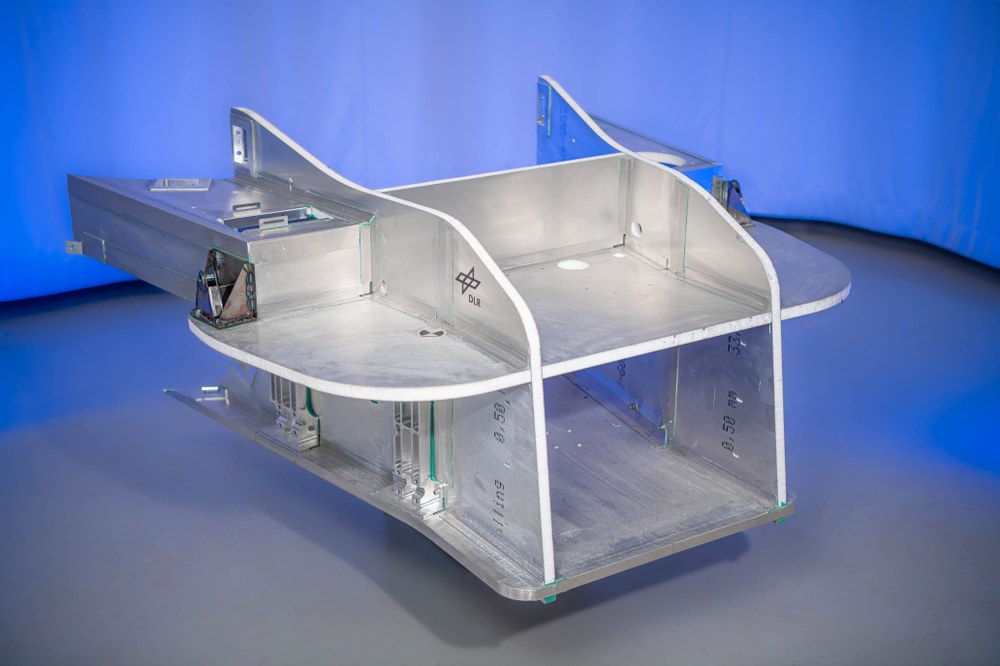
The project developed automated manufacturing processes for sandwich components with integrated screw-on points.
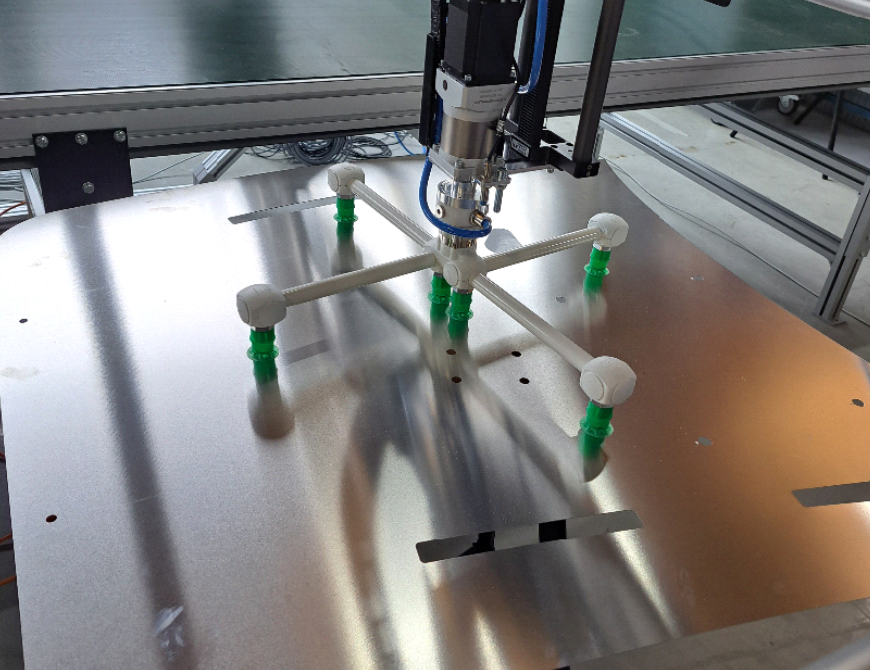
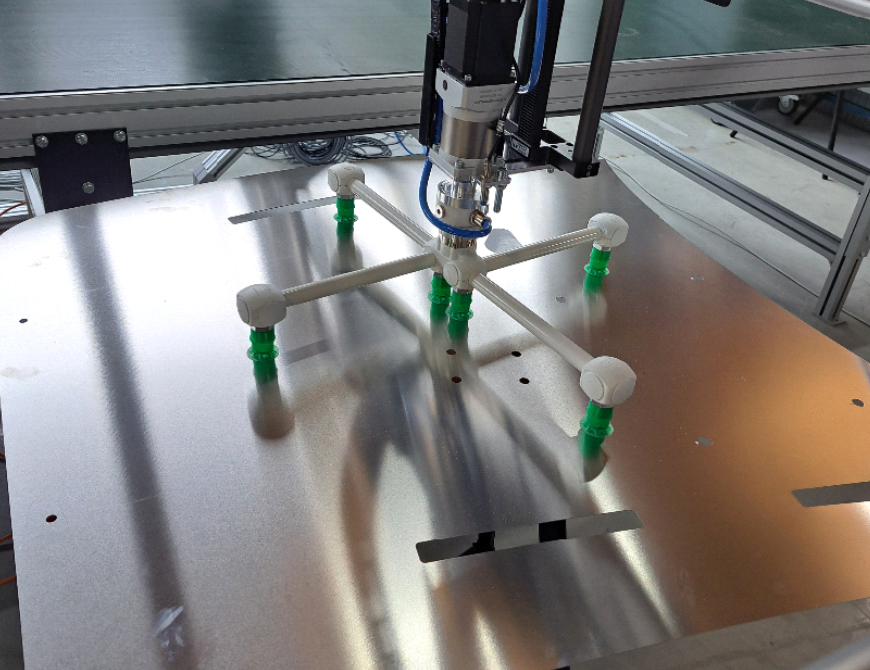
The sandwich components are manufactured automatically. Inserts are inserted during the production of the sandwich panels.
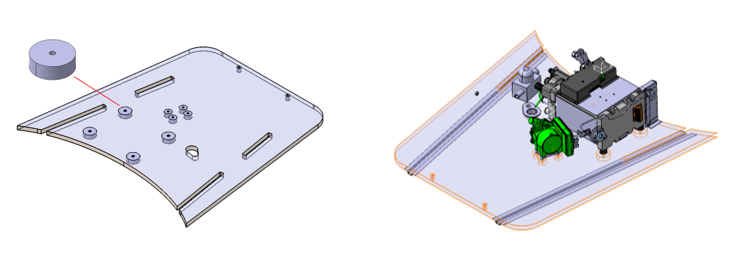
This enables the integration of screw-on points and connecting elements during the production of the components so that add-on parts can be screwed on directly.
Due to the low weight of the components, low-cost solutions can be used for automation.
Application example: Sandwich component with integrated inserts for fastening drive components
Hermann von Helmholtz Gemeinschaft deutscher Forschungszentren e.V.; DLR e.V., Vorstandsbereich Innovation, Transfer und wissenschaftliche Infrastruktur
Contact
Dr.-Ing. Gerhard Kopp
Head of Department
German Aerospace Center (DLR)
Institute of Vehicle Concepts
Vehicle Architectures and Lightweight Design Concepts