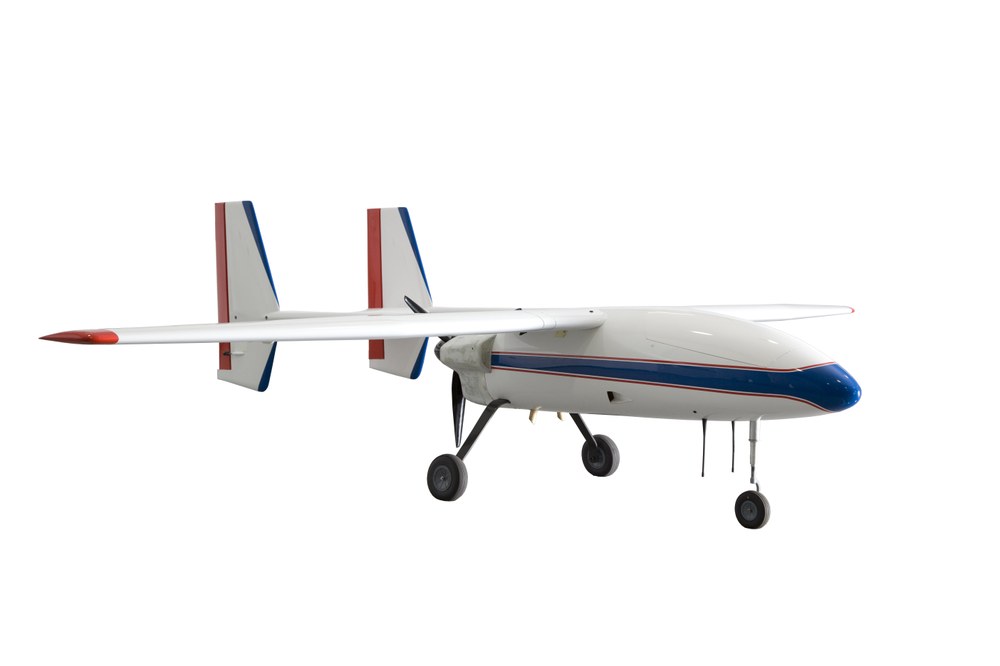
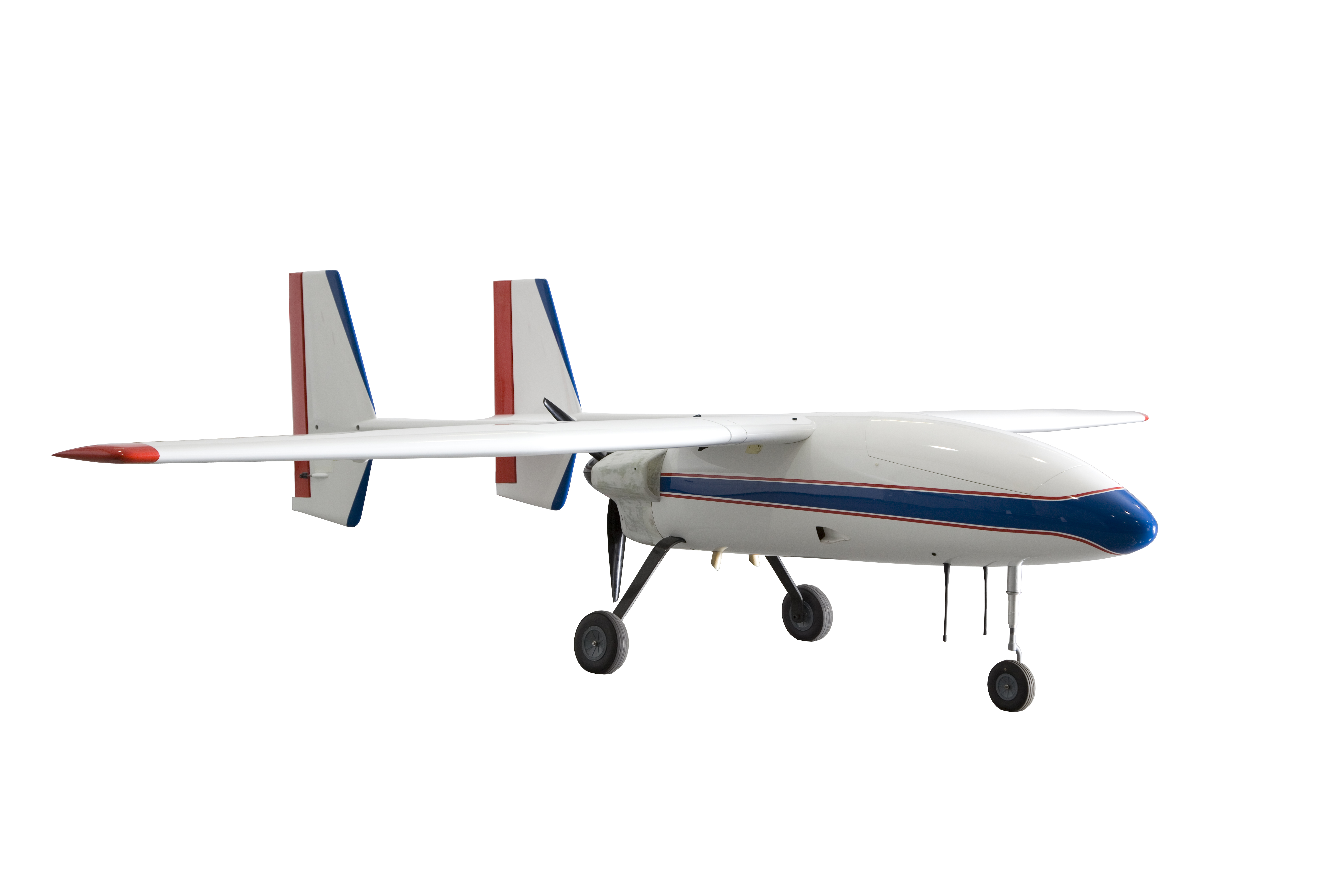
Fixed wing Prometheus with pusher propeller configuration
The Prometheus fixed-wing aircraft has a wingspan of 3.2 m, a maximum takeoff weight (MTOW) of 30 kg, a flight time of 30 minutes, and a flight speed of 80 to 130 km/h.
The department of unmanned aircraft at the DLR Institute of Flight Systems operates a range of fixed-wing aircraft that are used as research and test platforms for various scientific, technical, and operational tasks. Each of these aircraft is tailored to specific fields of application and serves to develop, test, and demonstrate new technologies and concepts in the field of unmanned aviation systems.
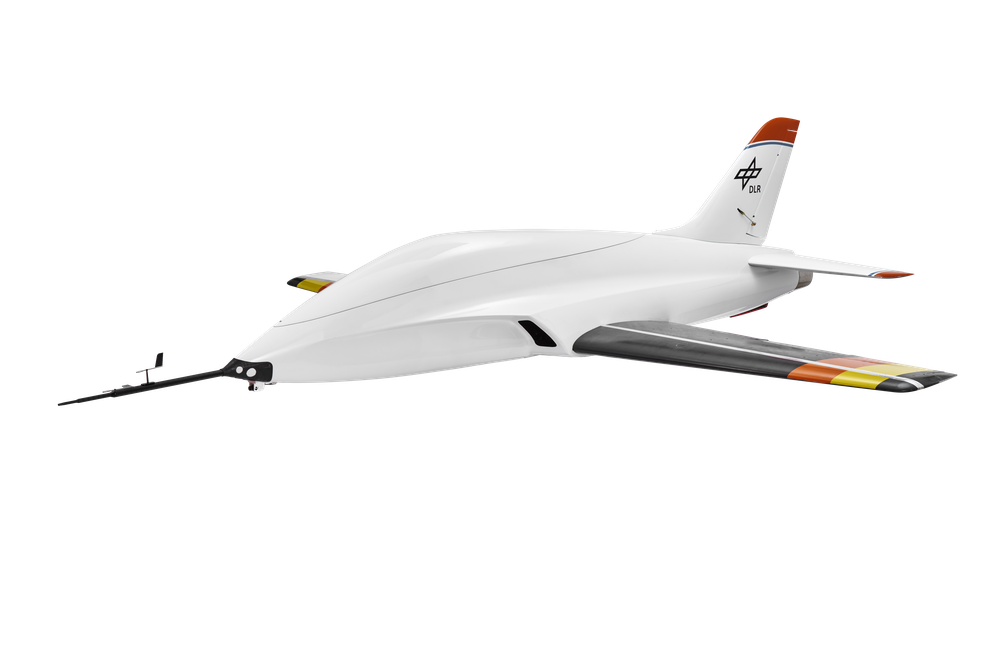
Proteus is a high-speed demonstrator designed for scaled flight testing. The turbine-powered jet reaches speeds of over 300 kilometres per hour, enabling realistic investigations of aerodynamic and structural effects at high velocities. At present, Proteus is being used to test morphing wing structures in combination with adaptive, AI-based flight control. This system allows the wing to adjust in real time to the current flight conditions, minimising drag and enhancing aerodynamic efficiency.
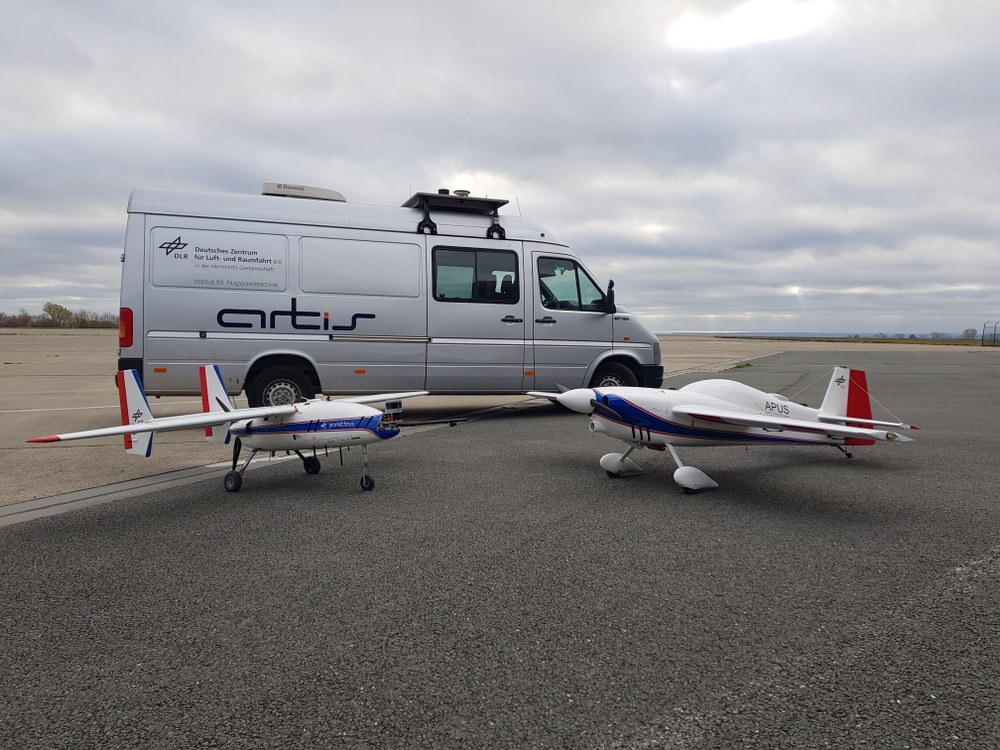
FALK is a single-engine fixed-wing aircraft with a piston engine in a pusher configuration, part of the national test centre in Cochstedt, operated by the Institute for Flight Systems as a flexible sensor platform for experiments in automated relative navigation. The system is used, among other things, for research into automated coupling manoeuvres, such as those relevant to air-to-air refuelling or the capture of carrier rockets.
The experimental platform MAL (Micro Air Lab) is also used in this context and serves as a towing aircraft for relative flight experiments. The electrically powered high-wing aircraft is characterised by its high thrust in the medium speed range, which allows it to effectively compensate for the additional drag during towing tests. This makes MAL particularly well-suited for investigations requiring stable flight conditions under increased aerodynamic loads.
The HAPTrainer is a twin-engine, electrically powered fixed-wing aircraft developed as part of the DLR’s High-Altitude Platform (HAP) project for pilot training. Using a specially adapted flight controller, the flight characteristics of the large-scale, solar-powered HAP system can be realistically simulated. This allows the HAP Trainer to conduct safe and cost-efficient training and test flights at low altitudes. Like its larger counterpart, the trainer is also equipped with solar cells, which help extend its range and support the electrical power supply during longer flights.
Prometheus is an unmanned fixed-wing aircraft in a twin-boom configuration with a piston engine and pusher propeller, developed entirely by DLR. It was designed to provide a flexible and adaptable platform for research and development in the field of unmanned aircraft. Prometheus offers sufficient space for sensors, computing units, and communication systems, and serves as an universal technology demonstrator for the integration and testing of new flight control, navigation, and mission systems.