New measuring system enables flexible analysis of residual stresses
January 20, 2026
New measuring system enables flexible analysis of residual stresses
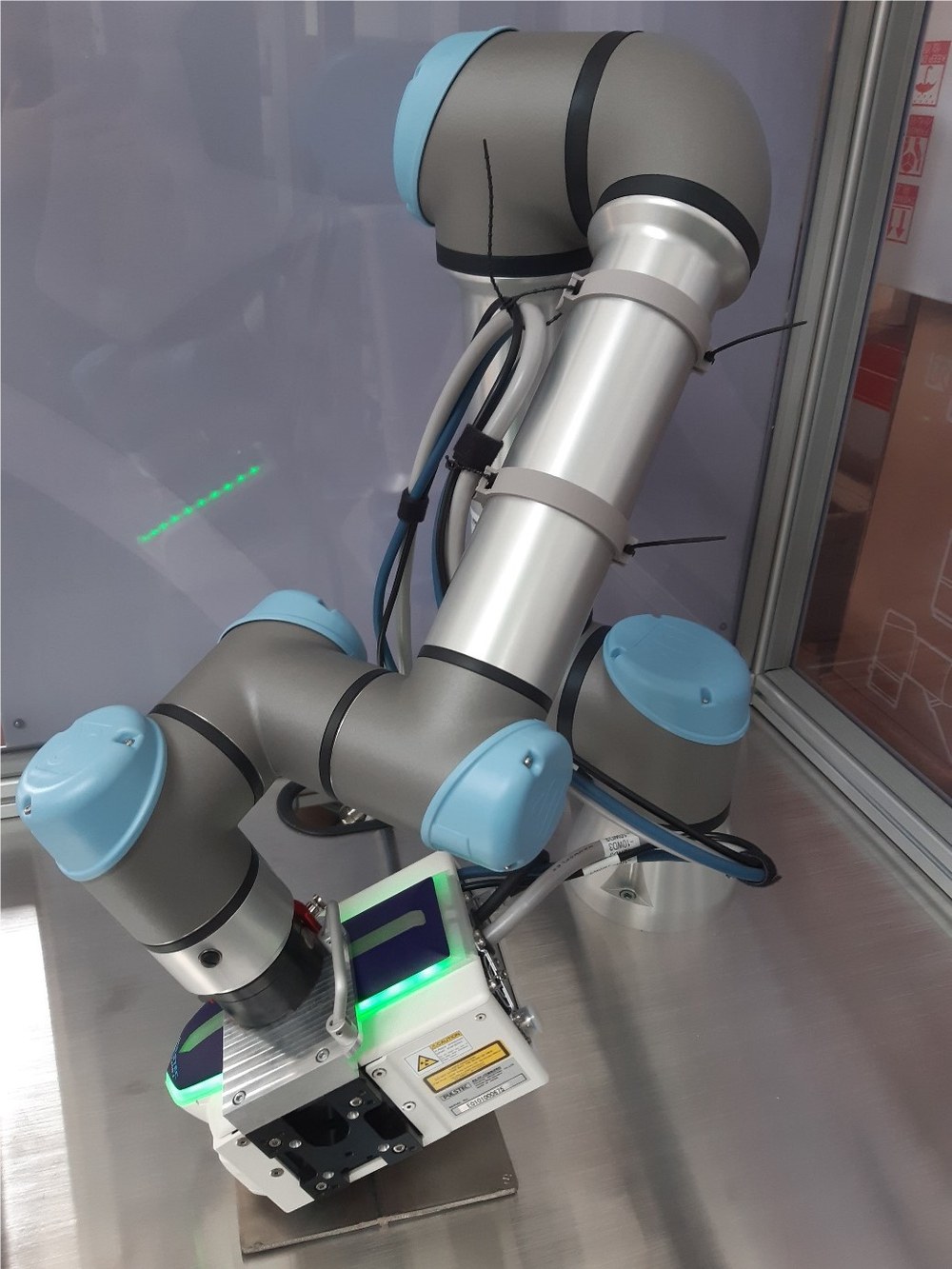
μ-X360J X-ray diffractometer
The X-ray diffractometer can determine the residual stresses in additively manufactured components and welded structures. A separate robotic system for precise positioning and alignment of the measuring device is available for stationary operation.
The DLR Institute of Maritime Technologies and Propulsion Systems has put a new X-ray diffractometer into operation.
The measuring device can determine residual stress in additively manufactured components and welded structures.
A special feature of the device is that it can be used on the move thanks to its compact design.
The Institute of Maritime Technologies and Propulsion Systems has commissioned a new state-of-the-art measuring system for analysing residual stresses in metal components. These internal stresses arise, for example, during welding or 3D printing of metal parts and can lead to cracks or material failure over the course of their service life, particularly in areas subject to heavy loads such as ship hulls, offshore structures or propulsion systems. With the newly acquired μ-X360J X-ray diffractometer, these residual stresses can now be measured precisely, quickly and non-destructively.
Stationary and mobile use
A particular advantage of the new device is its flexibility. It can be used both stationary in the laboratory and mobile directly on site, for example on large or permanently installed structures. This is made possible by the very low radiation exposure of the X-ray beam used and the compact design of the X-ray diffractometer. While older devices may often only be operated in specially shielded rooms, a safety distance or simple Plexiglas shielding is sufficient with this system.
Why are these measurements so important?
Residual stresses have a major influence on when and where cracks occur. Particularly in the maritime industry, where components are exposed to high loads over many years, this plays a decisive role for fatigue life and therefore for safety. The measurement results obtained can be used to specifically improve designs, optimise maintenance intervals and identify risks at an early stage.
The new measuring system will not only be used in a single project, but will also be utilised in numerous research projects in the future. The aim is to make a sustainable contribution to the safety, reliability and further development of maritime technology.