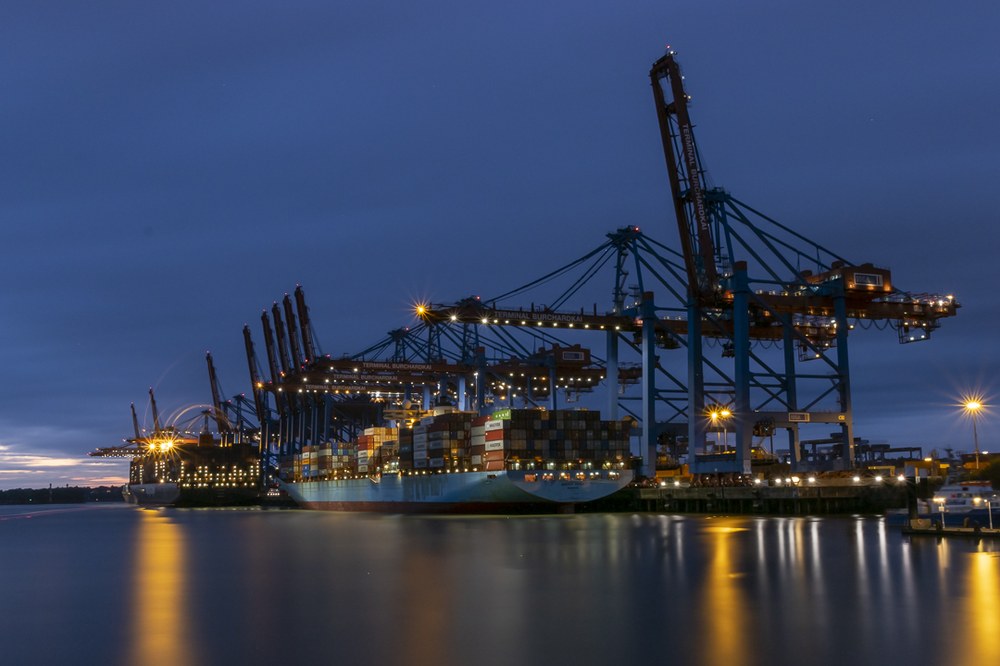
Through the Blue WaterWay project, the DLR is actively driving forward the digital transformation of waterways and port systems, thereby making an important contribution to the future viability of ports and strengthening their role as key hubs in the transport system. Ports are an essential part of the waterborne transport system; however, in practice, they are often not yet optimally digitally linked to other modes of transport and their logistical processes. The aim of Blue WaterWay is therefore to further strengthen the role of ports as digital hubs – both in terms of access routes and hinterland connections – whilst also optimising their integration into intermodal transport chains.
Today, global supply chains offer enormous opportunities for efficient, sustainable and interconnected transport solutions. To fully realise this potential, better coordination between modes of transport, infrastructure and processes is crucial, particularly in ports as key hubs of international trade. This is precisely where the Blue WaterWay project comes in: it provides concepts, technologies and tools to ensure that ports can be integrated even more seamlessly into the water-based digital transport system of the future, thereby further strengthening and consolidating their vital role as hubs in global logistics chains. Maintaining the competitiveness of German ports also plays an important role in this regard.
The digital transformation of ports
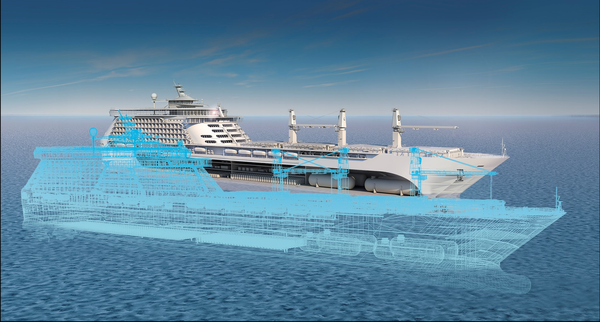
In many cases, ports are already integrated into intermodal transport networks, but this integration is uneven and often still incomplete from both a technical and organisational perspective, particularly with regard to efficiency, sustainability and resilience. The Blue WaterWay project is developing concepts, technologies and tools to drive forward the digital transformation of ports in a targeted manner. The focus is on digitally linking port calland hinterland processes with neighbouring modes of transport; the intelligent control of port call processes, incorporating new types of fuel to reduce turnaround times and enable the dynamic allocation of capacity; and the close physical and digital integration of the ship system into the overall maritime system. Through collaboration between various research institutes and the early involvement of companies from the shipping and port logistics sectors, a systemic perspective is emerging in which modes of transport, infrastructure and processes are more closely interconnected. Interconnected components are thus regarded as an integrated system and further developed. The aim is to increase efficiency through digitalisation, intelligent traffic management and innovative technologies, whilst at the same time sustainably enhancing the resilience of maritime transport.
Practical applications with potential for transfer
The project results are tailored to the needs of the ports and their stakeholders and are demonstrated in a practical context. Selected examples include:
Reduced turnaround times and dynamic capacity allocation for port call processes
Quantifying the economic potential of just-in-time logistics in German ports and identifying specific cost savings for both ships and ports
Demonstration of a fully digitally supported hydrogen bunkering process, in which intelligent systems forecast demand, coordinate supply chains and carry out safety checks automatically.
These practical applications illustrate how integrated, intelligent transport and logistics management sustainably enhances the efficiency, cost-effectiveness and safety of the maritime system as a whole.