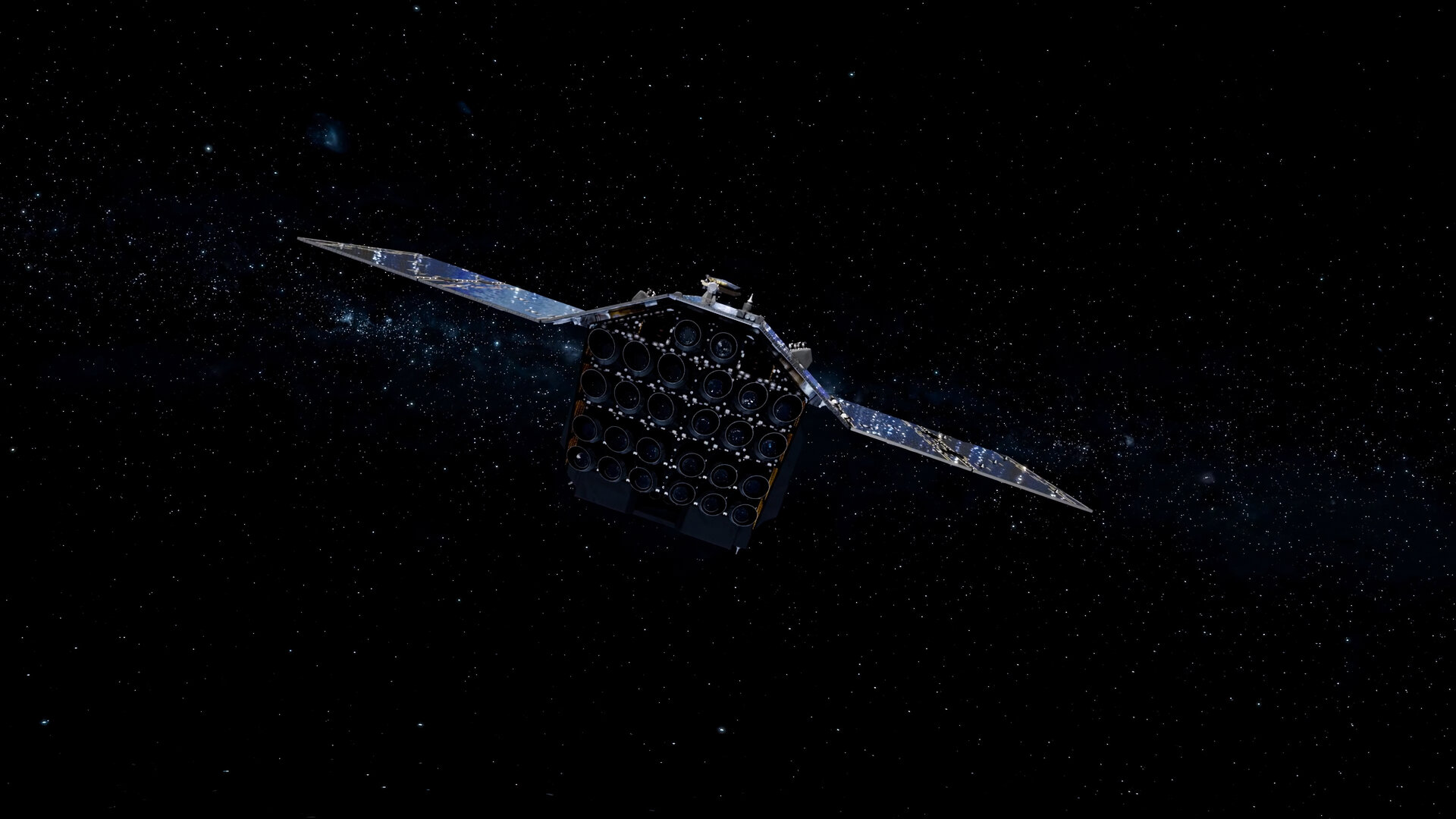
In early 2027, PLATO (PLAnetary Transits and Oscillations of stars) will begin its search for Earth-sized planets. Its stated aim is to find Earth-like planets orbiting a Sun-like star within the habitable zone. These could include planets on which life has developed or could develop.
In early 2027, PLATO (PLAnetary Transits and Oscillations of stars) will begin its search for Earth-sized planets. Its stated aim is to find Earth-like planets orbiting a Sun-like star within the habitable zone. These could include planets on which life has developed or could develop.
It may allow us to answer questions that previous generations asked themselves:
Is our solar system unique?
Are there planets orbiting other stars that offer conditions suitable for life?
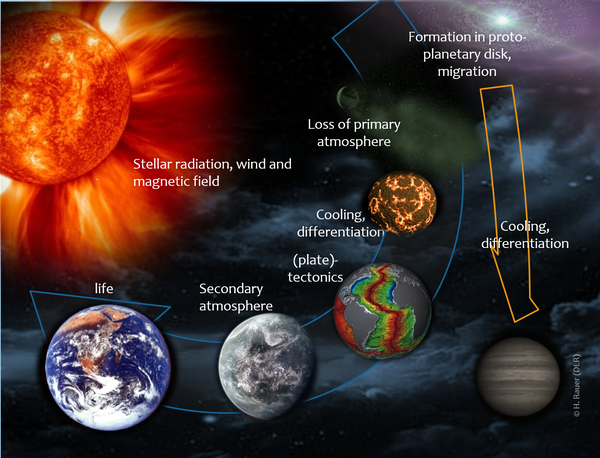
How do planets and planetary systems form and evolve?
PLATO is an M3 mission of the European Space Agency (ESA) under the Cosmic Vision programme, selected in 2014. The German Aerospace Centre (DLR) leads the international consortium and the consortium is responsible together with ESA for the construction of the science payload. Furthermore DLR contributes to the mission operation under the ESA leadership.
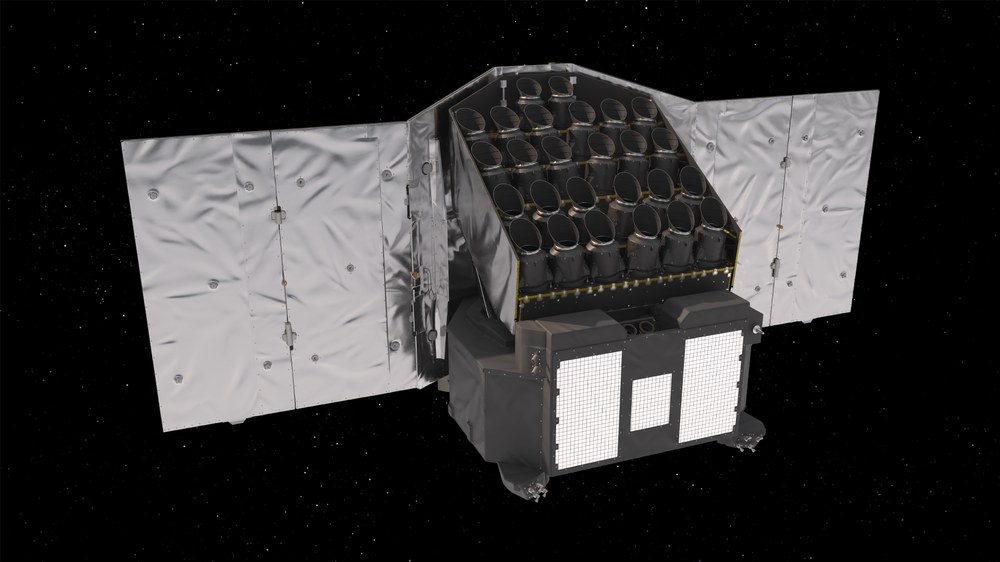
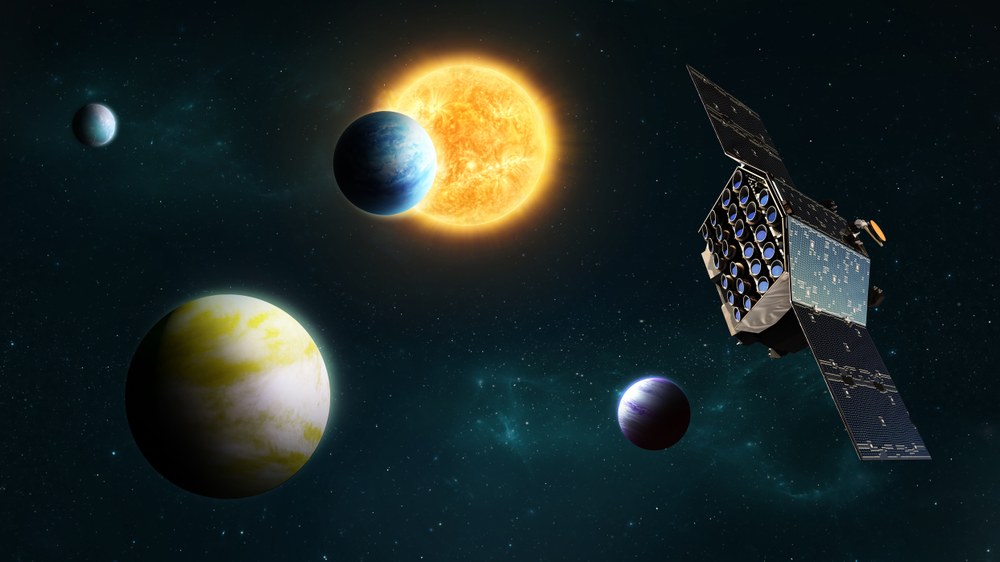
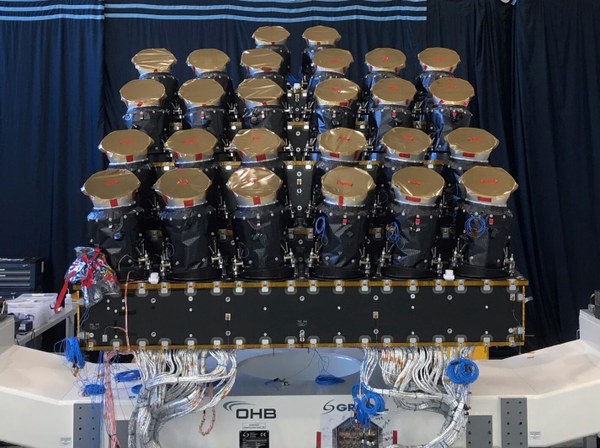
Using a special telescope design comprising 26 individual cameras, PLATO will observe a large field of view for more than two years. It will record the brightness curves of thousands of stars and search for periodic dips in these light curves. This method, known as the transit method, allows us to discover planets, as when they pass between the star and the telescope, they cause a slight dimming of the star’s light. Of great interest are the planets that lie within the habitable zone of their star. In this zone, liquid water could exist on the surface of a rocky planet.
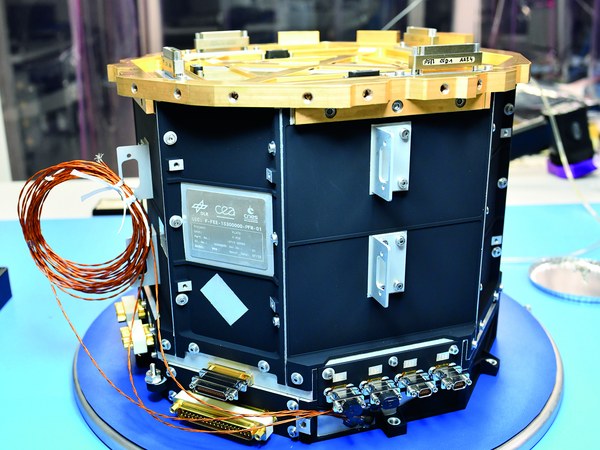
To detect the very small dips in brightness caused by a planet, PLATO must be very precisely aligned with the sky and continuously measure the brightness of tens of thousands of stars. By carefully analysing the light curves and making further measurements with ground-based telescopes, it is possible to precisely determine the planet’s radius and mass, as well as the age of the planetary system.
This marks the first time that a very large number of planetary systems have been characterised with such high accuracy. This will give us a better understanding of how planets form, how stars and planetary systems evolve, and whether there are life-friendly conditions anywhere beyond our solar system.
News
Loading
Multimedia
PLATO: Searching for exoplanets with 26 eyes
PLATO features a novel telescope design: rather than a single mirror, it employs a modular configuration comprising 26 cameras. This design provides a wide field of view, approximately 49° x 49°, with high sensitivity at the centre of the field of view. This enables PLATO to detect the slightest fluctuations in the brightness of thousands of stars. Regular fluctuations in starlight can be caused by an orbiting planet. Through such transit events, PLATO can find Earth-sized planets orbiting Sun-like stars, including, potentially, those that offer habitable conditions.
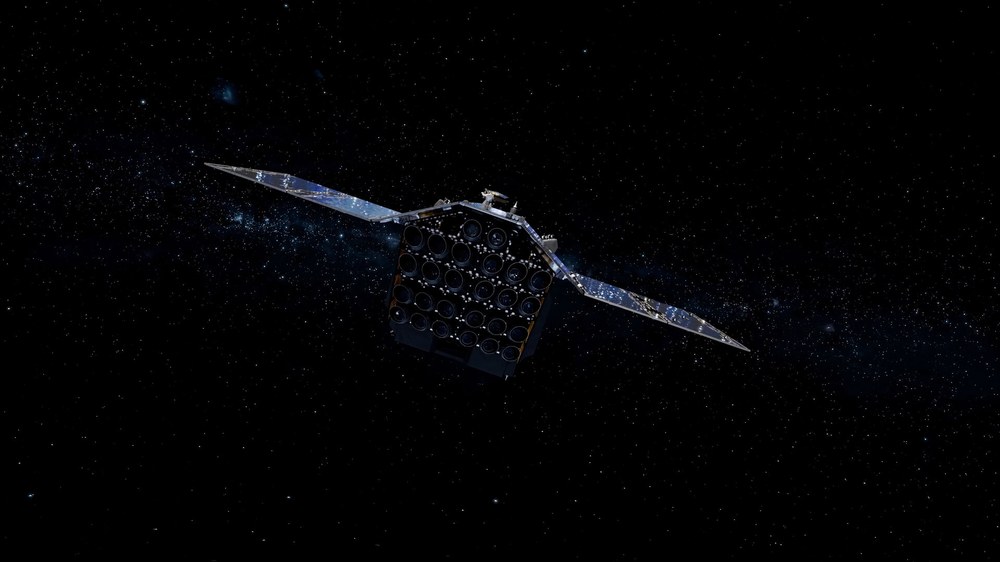
The ESA mission PLATO (PLAnetary Transits and Oscillations of stars) is designed to detect Earth- sized, potentially habitable planets orbiting Sun-like stars. Here is an artist’s impression of the mission, which, equipped with 26 cameras, will discover and characterise thousands of exoplanets in particular terrestrial planets, but also exomoons and rings around these planets. To characterise the planets as accurately as possible, it is also necessary to understand the star. The fluctuations in stellar brightness that PLATO will measure allow conclusions to be drawn about the internal structure and evolution of the stars.
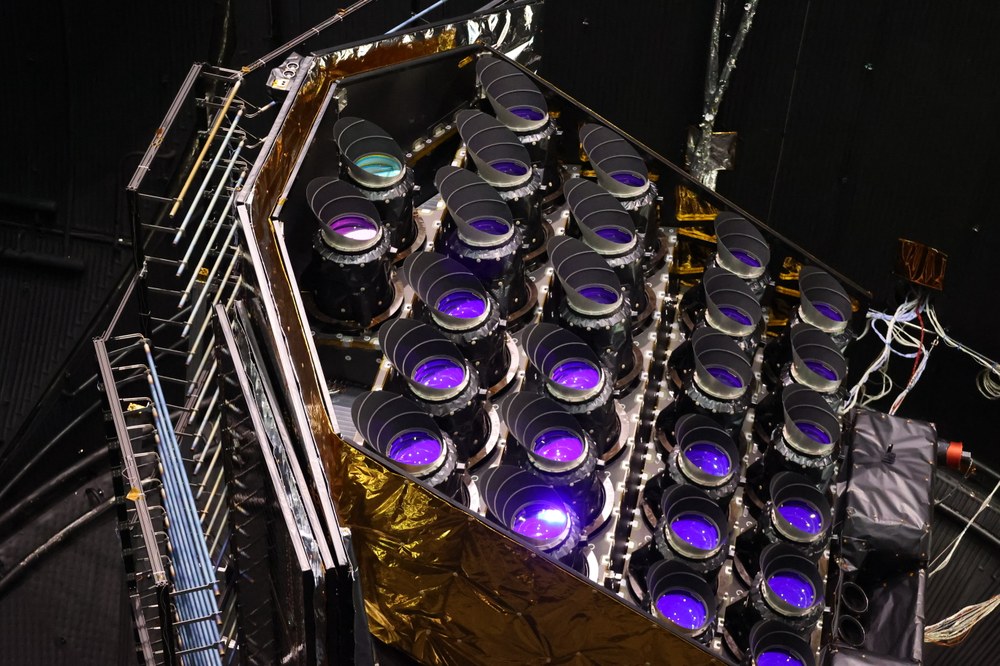
The image shows the PLATO satellite, equipped with 26 highly sensitive cameras, following testing procedures in ESA’s Large Space Simulator. The comprehensive tests were completed in April 2026 and demonstrated that the instrument functions under the harsh conditions of space. PLATO will shortly be shipped to French Guiana and launched into space from the local spaceport there in early 2027 aboard an Ariane 6 rocket. Once in orbit, 1.5 million kilometres from Earth, PLATO will begin collecting scientific data.