
Harvest forecasts for the business world
In the course of their university studies and work on their dissertations they have become experts in satellite data and harvest forecasts. Now the two geographers and the information scientist want to use this expertise to start up their own company.
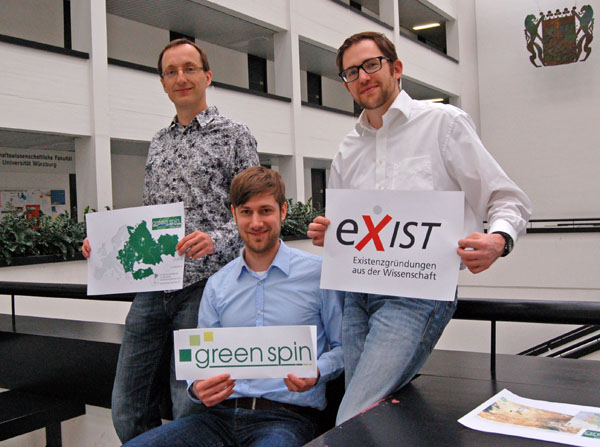

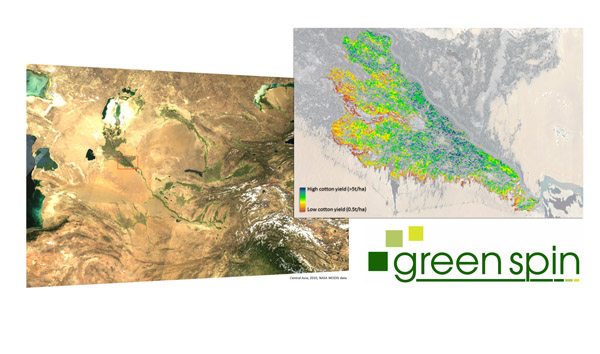
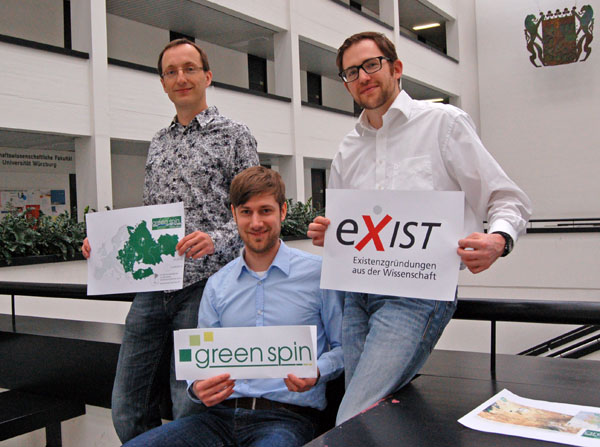
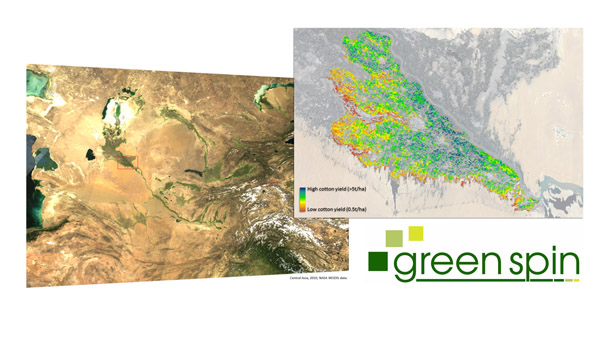
Every day, satellites send masses of data to Earth that can be used not only to predict the weather, but also plant growth and anticipated agricultural yields. On this subject, geographers Clemens Delatrée and Sebastian Fritsch and information scientist Gunther Schorcht know what they are talking about. They have all studied at Würzburg University.
Fritsch and Schorcht wrote their doctoral dissertations at the Chair of Remote Sensing on the subject of harvest forecasting with satellite data. After his studies, Delatrée first worked as a harvest analyst for a remote sensing company, then for several years for a management consultancy. Now the three are preparing to establish their own service company, green spin (short for ‘green spatial intelligence’).
Market opportunity identified
“Growth and yield prognoses for wheat, rice, cotton and other crops are highly significant for commodity traders, insurance companies and other enterprises”, declare the founders, giving an example: “If dealers in raw material learn early enough about possible shortages, they can stock up in time before global prices react to the threatened scarcity by going up.
Thanks to its expertise, the green spin team is convinced that its company can provide up-to-date growth and harvest forecasts that are more reliable than those of other service providers, and do it faster. It has also discovered a market niche that it intends to fill: “Remote sensing companies often supply their customers with the satellite data alone, without interpretation and recommendations for action”. Such an advisory service is thus an important aspect of the business plan.
Focus on eastern Europe
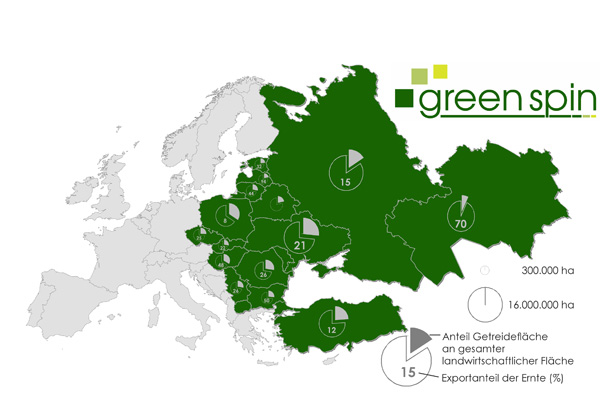
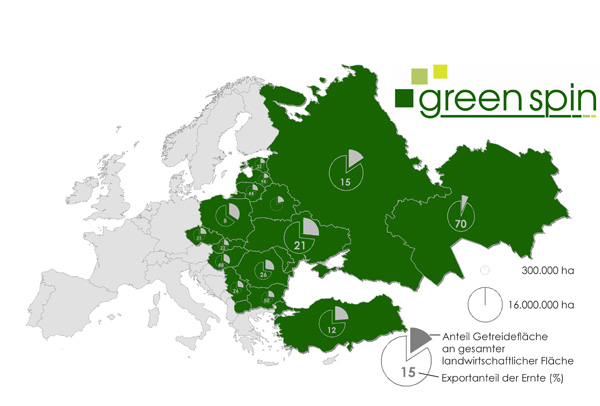
As a start, the three founders will concentrate on wheat cultivation in Poland, Ukraine and other eastern and southeastern European countries. “There, the amounts of grain produced have global market relevance, and the data situation is inadequate”, they argue.
In the USA and the core countries of the European Union there is at present no additional need for harvest forecasts based on satellite data. But that could change – for example, if green spin can offer innovative and better products. Also, it is likely that climate change and the associated weather extremes will contribute to growth in the market for forecast products.
First potential customers on the horizon
“We are already in touch with potential customers interested in our idea”, says Schorcht. The founders now want to concentrate on these enterprises. “We first need to understand precisely how they work and what their needs are, and then involve them in the development of a tailored harvest forecast product”, explains Fritsch. The end of this process, for example, could be an app that informs the customer on a daily basis how well the wheat is maturing in the region he is interested in.
Exist subsidy for the first year
Starting March 2013 the Würzburg entrepreneurs will be supported for one year with some 100,000 euro from the Exist scholarship program of the Federal Ministry of Economics and Technology. During this time they will be mentored by Professor Christopher Conrad and Professor Stefan Dech of the Chair of Remote Sensing. With the Exist program, the ministry supports scientists about to start up their own companies.
“In the best case, after a year we will have a product ready for the market that so convinces a pilot customer that he wants to purchase it”, says Schorcht. By then the team also expects to have a business plan ready. Assistance will come from participation in a northern Bavarian business plan competition that offers relevant seminars and coaching for budding entrepreneurs. The first phase of the three-step competition turned out well for green spin: of the 99 participating teams the three Würzburg scientists were among 20 candidates nominated for prizes.
Support from the university
For their start-up project, Delatrée, Fritsch and Schorcht will be supported by the Research and Technology Transfer Service Centre at Würzburg University. Start-up assistance was also provided by the Würzburg Innovation and Entrepreneurship Centre. Both offices advise and support fledgling entrepreneurs coming from the university.
Contact
green spin start-up, Tel. +49 931 31 88011, info@greenspin.de
Clemens Delatrée, born in Munich, studied geography at Würzburg University with a minor in business administration. After graduation he was a harvest analyst, and then for several years a management consultant.
Sebastian Fritsch comes from Goldkronach near Bayreuth. He studied geography at Würzburg University and is in the last stages of completing work for his doctorate at the Chair of Remote Sensing established in cooperation with DLR at Würzburg University.
Gunther Schorcht grew up in Uhlstädt near Jena in Thuringia. He studied informatics at Würzburg University with a minor in geography. He too is in the last stages of completing work for his doctorate at the Chair of Remote Sensing established in cooperation with DLR at Würzburg University.