5000 Days of Mesopause Temperature Measurements in Antarctica
November 18, 2026
5000 Days of Mesopause Temperature Measurements in Antarctica
Since February 2013, the Earth Observation Center (EOC) and the Alfred Wegener Institute (AWI) have jointly operated an infrared spectrometer at the German Antarctic station Neumayer III. It measures the temperature of the atmosphere at an altitude of about 90 kilometres, at the edge of space. In early November, the 14th season was successfully completed, almost coinciding with the 5000th day of operation. Time to take stock: Why are these measurements carried out? What do we learn from them? And where do we stand internationally?
In the early 2000s, the scientific community was convinced that the progression of climate change should be detectable considerably sooner at the edge of space than at the Earth’s surface. The atmosphere there is far thinner and therefore responds more rapidly to temperature changes. The reasoning behind this: if carbon dioxide causes more heat to be retained in the lower layers of the atmosphere, the layers above them cool down. A cooling of 1 K per decade was anticipated.
One way of measuring at these altitudes is to observe what is known as airglow, a faint emission of light from the atmosphere. It arises when atoms and molecules at an altitude of about 90 kilometres are excited by intense solar radiation and by chemical processes and subsequently release this energy again. Specialised spectrometers can observe the resulting emission. The temperature at this altitude can then be derived from its spectral composition.
However, observations at various stations around the world contradicted the original assumption. In some cases they differed considerably, yielding long-term trends ranging from −10 K per decade to +3 K per decade.
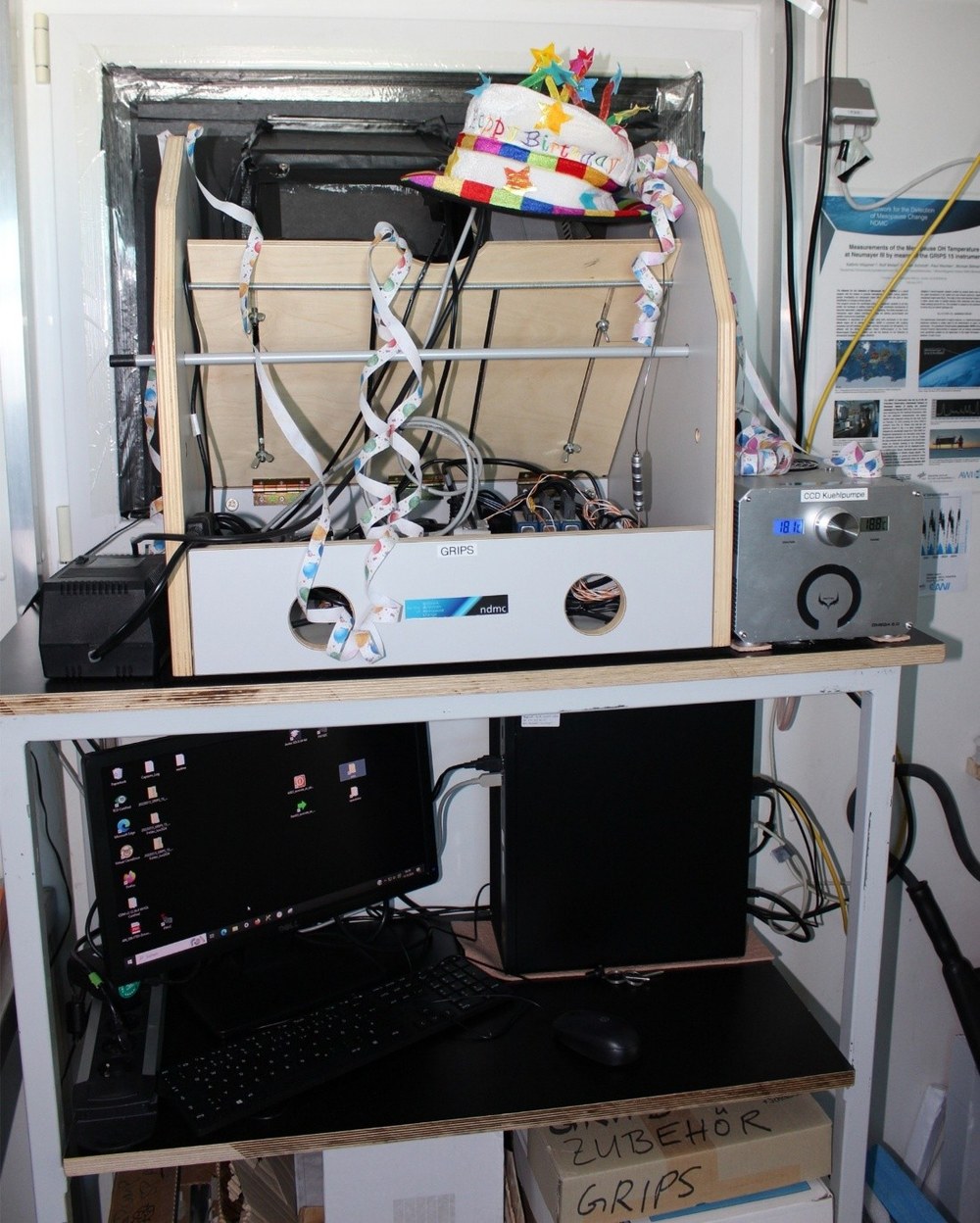
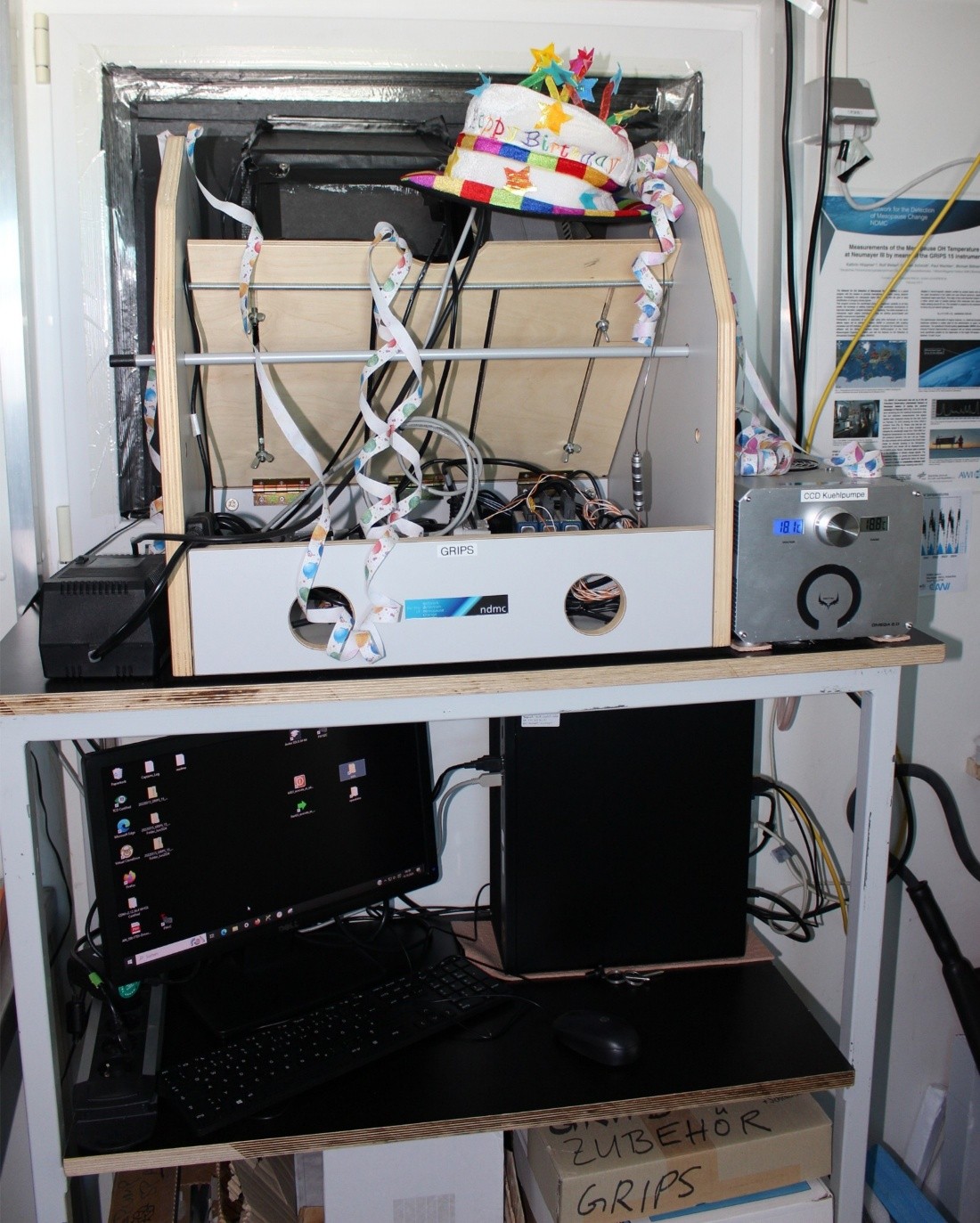
At the initiative of EOC-DFD, this led to the founding of the “Network for the Detection of Mesospheric Change” (NDMC). Subsequently, GRIPS (Ground-Based Infrared P-Branch Spectrometer) was created as a standard instrument for observing the airglow layer. GRIPS is a further development of instruments from the University of Wuppertal, where spectrometer development began as early as 1980. In 2009, the first prototype of the new GRIPS generation was put into operation at the Environmental Research Station Schneefernerhaus (UFS) on the Zugspitze. It has served as the reference station ever since. Today, more than a dozen nearly identical instruments are operated worldwide by EOC in cooperation with other institutions. The use of uniform instruments and identical data processing makes the data collected around the world comparable. In 2012, the opportunity finally arose to put a GRIPS into operation in Antarctica as well, at AWI’s Neumayer Station III.
This instrument, however, initially suffered from teething problems: spurious signals had already appeared during the construction phase at EOC. Nevertheless, it had to be shipped so as not to miss the transport opportunity to Antarctica. Once there, the spurious signals continued to increase over the course of the first season, until the day the detector’s power supply unit almost caused a fire. Thanks to the skill of AWI’s electronics engineer, measurements continued virtually without interruption. His newly built power supply also eliminated the spurious signals. Since then, through 14 years and several generations of operating systems, data transmission protocols and server infrastructures, the instrument has run with absolute reliability. In 2021, the laboratory door gave way during a storm, burying the instrument in snow. After days of drying and rewarming, it became clear that the instrument had survived this endurance test as well. Most recently, in mid-2026, a “nearly” frictionless Teflon gear had to be replaced after it had quite literally ground itself to dust.
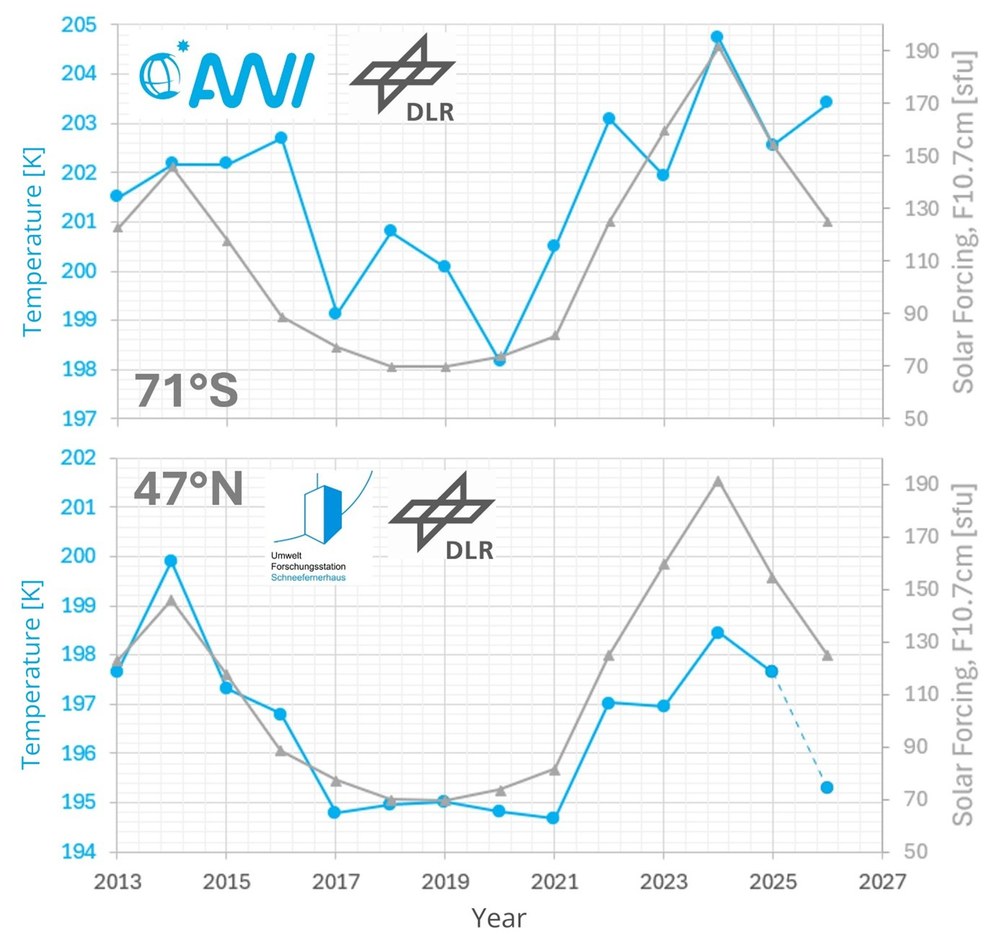
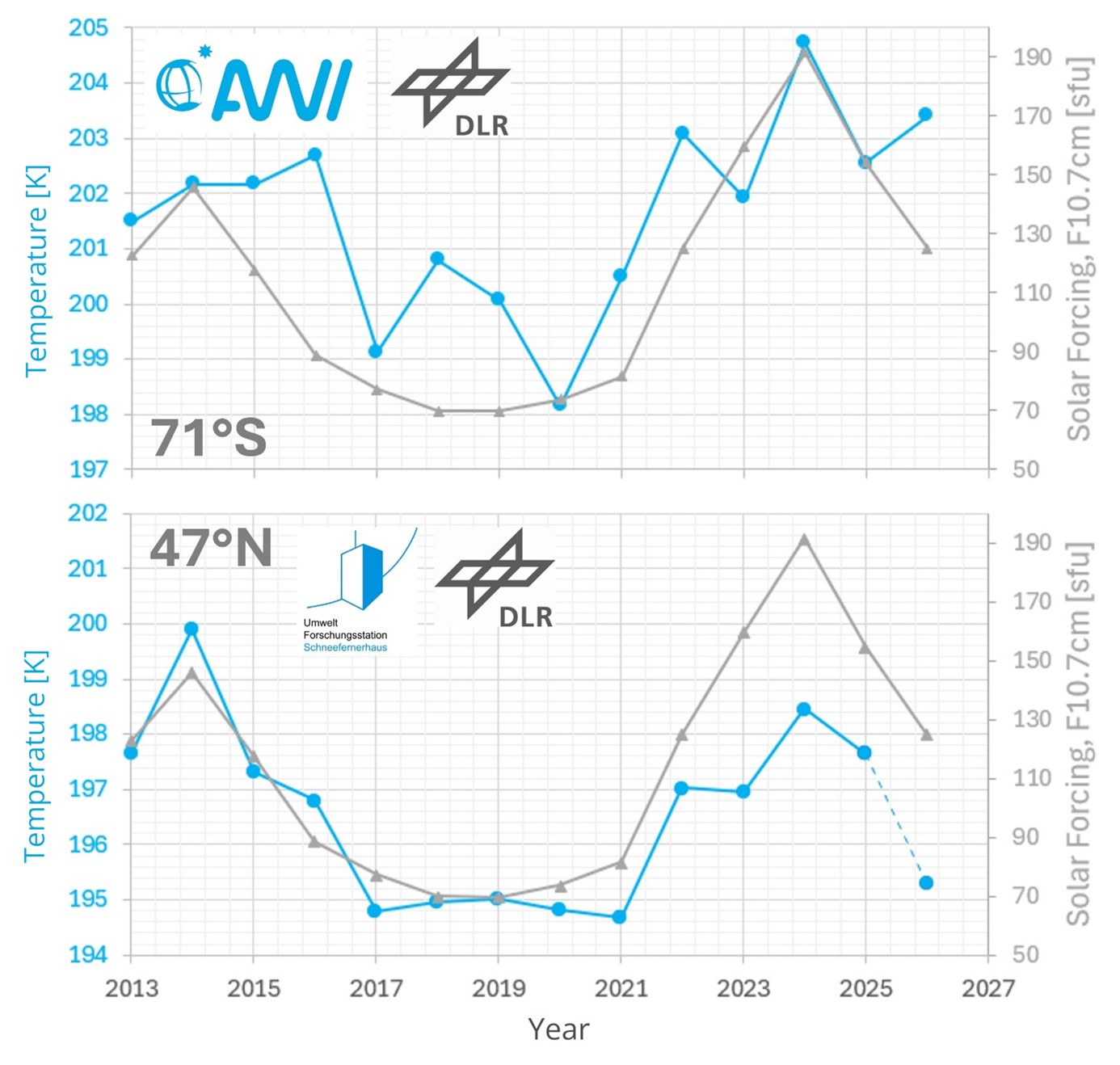
Annual Mean Temperatures
While annual mean temperatures (blue) in Antarctica (top) more or less follow solar forcing (grey), in Central Europe (bottom, here at the Zugspitze) they appear to have become increasingly decoupled from it in recent years and to be falling ever further over the long term. Measurements at the Zugspitze will continue until the end of the year; the value shown for 2026 is a conservative projection. 2026 could yet become the coldest year here since measurements began.
It is thanks to the tireless commitment of the AWI team that such a long measurement series from Antarctica now exists. To this end, one or two new AWI overwinterers receive dedicated training at DLR in Oberpfaffenhofen every year. Comparable airglow measurements were also made at Brazil’s Comandante Ferraz Antarctic Station, but the facility was destroyed by fire. The airglow instrument at the British Halley Research Station, meanwhile, has only been able to measure to a limited extent since the station began to be staffed in summer only.
Thanks to the uniform measurements of the NDMC network, there is growing evidence today that temperatures at an altitude of 90 kilometres are not only influenced by climate change but also follow the Sun’s 11-year activity cycle. Accordingly, the 2024 solar maximum also produced correspondingly high temperatures in the airglow layer in the Antarctic measurements. The measurements at the UFS on the Zugspitze, by contrast, appear to be decoupling further from solar forcing year after year. Measurements are still ongoing, but there are indications that 2026 could become the coldest year since measurements began, even though the next solar minimum will not be reached until 2031. This finding could be interpreted as a sign of progressing climate change. However, the underlying physical processes are not yet fully understood. Unlike 20 years ago, though, the development work carried out at EOC now makes it possible to rule out that these differences are due to different measurement techniques or data processing methods.
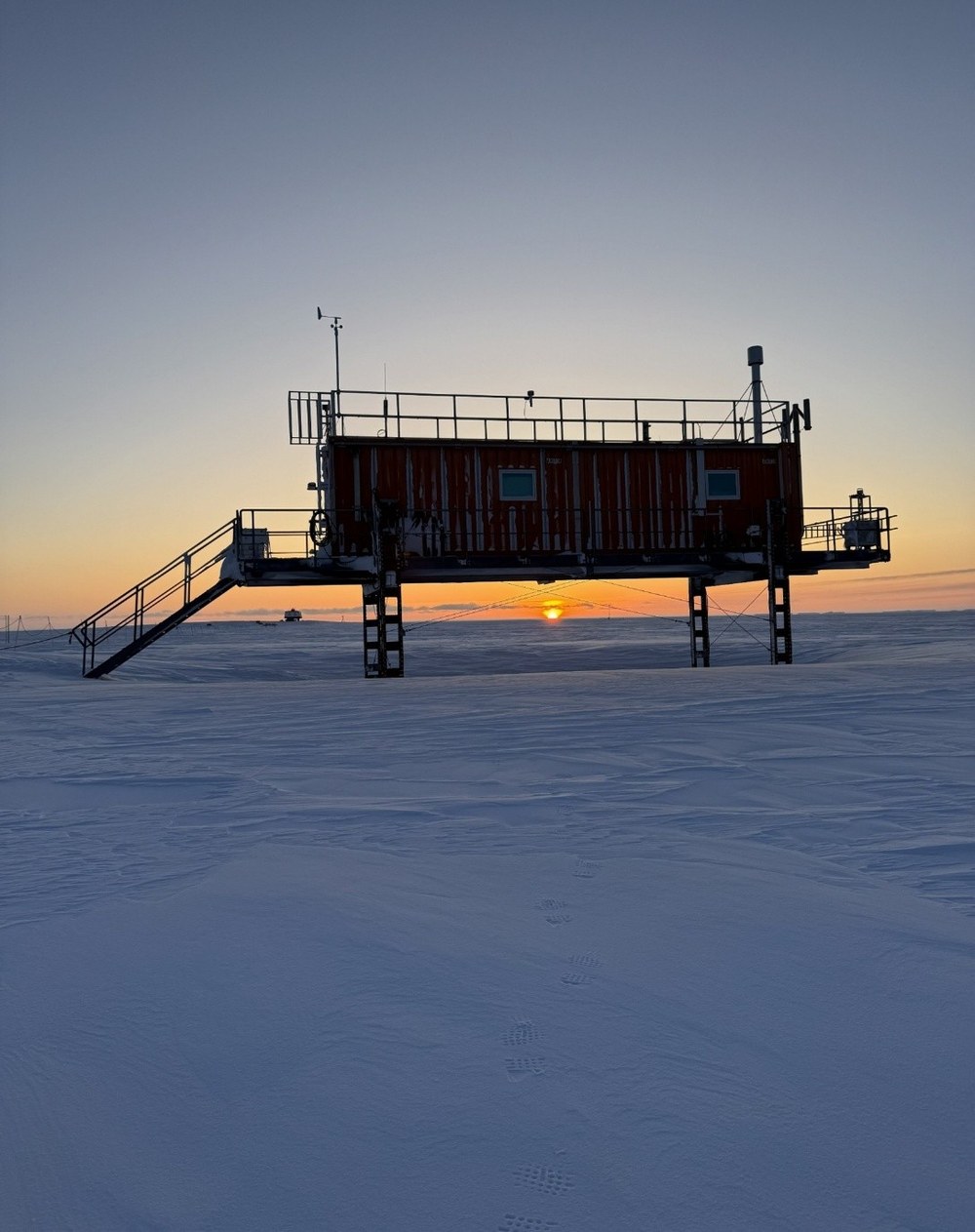
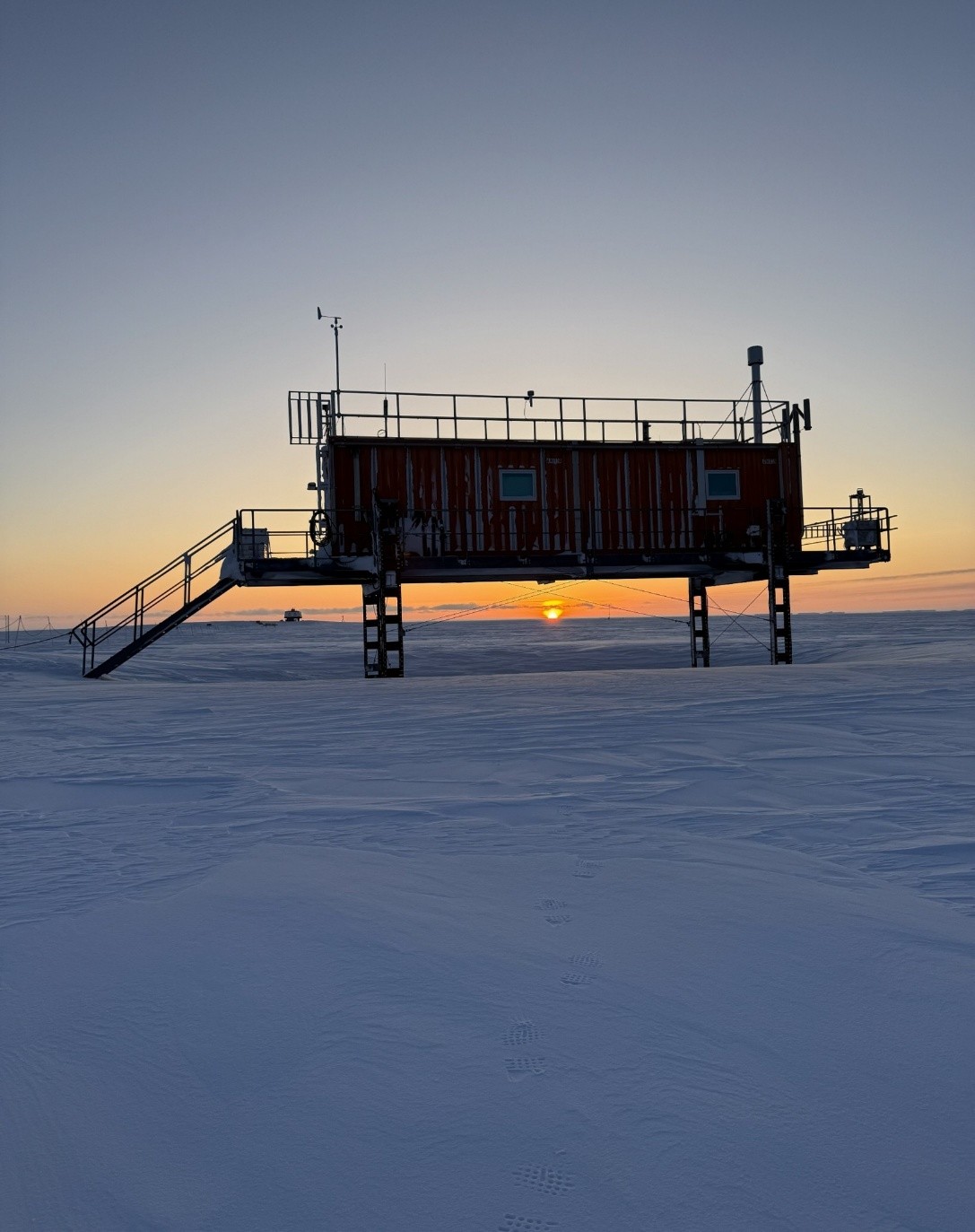
Air Chemistry Observatory
When the Sun sinks towards the horizon, the working day begins for GRIPS 15 in the Air Chemistry Observatory at Neumayer Station III. The observatory is located a few hundred metres away from the main Neumayer III station.
But development does not stand still. In 2024, the Australian Antarctic Division (AAD) developed a new instrument modelled on GRIPS. The improvements made there have in turn been incorporated into a new EOC spectrometer built this year, which is now in service at the Environmental Research Station Schneefernerhaus (UFS).
This example impressively demonstrates how important scientific exchange across national and continental borders is. Where better to achieve this than in Antarctica, where the Antarctic Treaty has frozen all national territorial claims and, as early as its Article II, provides for freedom of scientific investigation and cooperation?