Ahead Response
The “Autonomous Humanitarian Emergency Aid Devices (Ahead Response)” project is developing remote-controlled vehicles to transport relief supplies for the UN relief organisation, the World Food Programme (WFP).
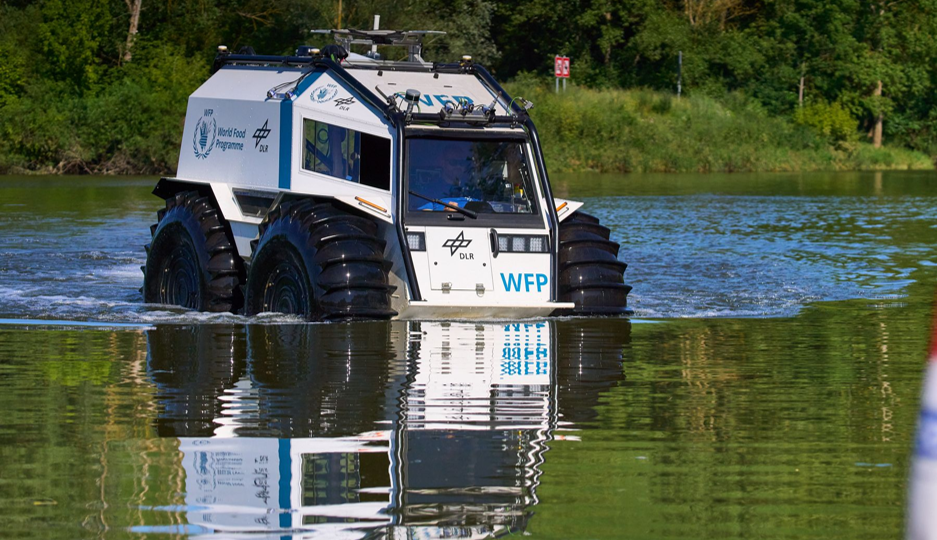

Robot-controlled vehicles are designed to travel along routes that pose significant risks to human drivers, such as in rough terrain and flood-affected areas. The teleoperated amphibious vehicle SHERP will be equipped with innovative environmental perception capabilities, novel autonomous functions and enhanced operational capabilities. To achieve this, the project will utilise state-of-the-art methods and AI technologies.
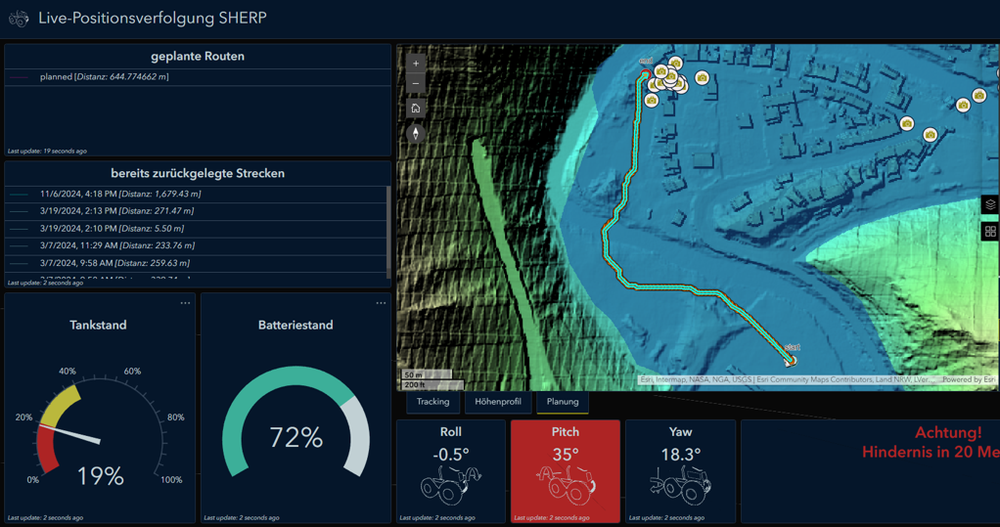
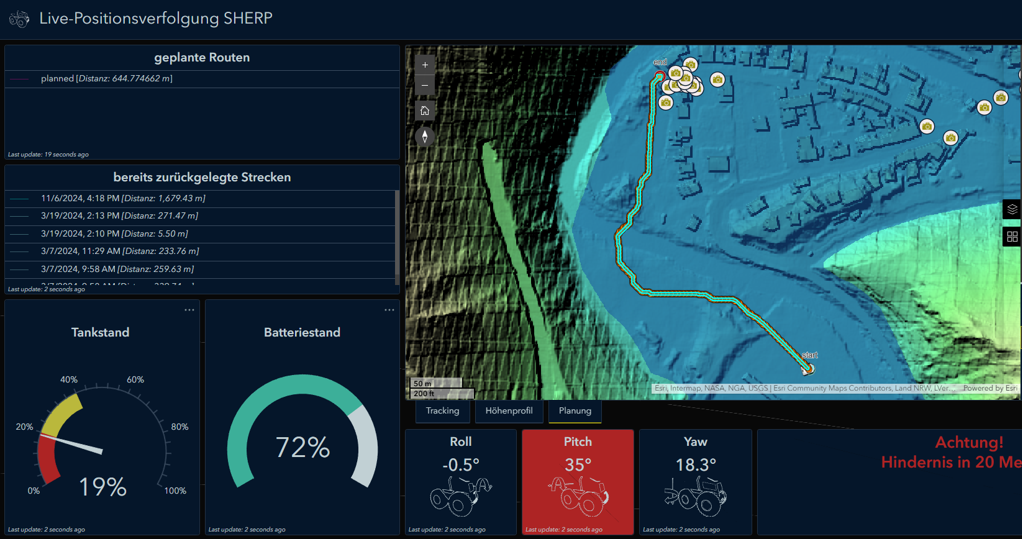
The aim is to develop the mission to a level of technological maturity that will enable this technology to be transferred from research to practical application. Situation assessment provides an important basis for informed decision-making on the ground. A regional situational picture will be compiled at the Global Mission Operation Centre (GMOC) for the planning, execution and evaluation of the SHERP mission.
The ZKI will test novel methods for global mission planning as well as for enhanced situational awareness and assessment, e.g. AI-based flood detection and routing.