Skip to main contentSkip to navigationSkip to footer
  • DLR Portal
  • Press
  • Accessibility
deen
DLR Logo
Microwaves and Radar Institute
  • About us

    • ▾Microwaves and Radar Institute
      • ▾Vision
      • ▾Head of Institute
      • ▾Point of Contact
    • ▾Departments
      • ▾SAR-Technology
      • ▾Radar Concepts
      • ▾Satellite SAR-Systems
      • ▾Reconnaissance and Security
    • ▾Awards
      • ▾Getting there
      • Research & Transfer

        • ▾Expertise
          • ▾Projects
            • ▾Forest / Non-Forest Map
            • ▾Tandem-L
            • ▾TerraSAR-X
            • ▾TanDEM-X
            • ▾F-SAR
            • ▾QUA-SAR
          • ▾Research Infrastructure
            • ▾F-SAR
            • ▾DLR SAR Calibration Center
            • ▾TechLab
            • ▾Compact Test Range
            • ▾360° Tour
          • ▾Scientific publications
            • ▾Publications 2026
            • ▾Publications 2025
            • ▾Publications 2024
            • ▾Publications 2023
            • ▾Publications 2022
        • Latest

          • ▾News
            • ▾Blog
          • ▾Scientific Colloquia
          • Media

            • ▾Publications
              • ▾Brochures and Reports
              • ▾History of the Institute
              • ▾Software
              • ▾Data Formats
            • ▾Pictures
              • ▾E-SAR and F-SAR Gallery
              • ▾TanDEM-X DEM Gallery
              • ▾TerraSAR-X Gallery
            • ▾Videos
              • ▾Videos of the Institute
              • ▾Videos from the press
              • ▾Videos on YouTube
            • ▾Conferences
            • Careers & Education

              • ▾Job vacancies at the Institute
                • ▾Information for students
                  • ▾Interview: „I personally extremely enjoyed the move to Germany“
                  >
                  Latest
                  >
                  News
                  >
                  >
                  2021
                  >
                  DLRmagazine: New eyes for looking upward
                  Home
                  >
                  Latest
                  >
                  News
                  >
                  2021
                  >
                  DLRmagazine: New eyes for looking upward
                  October 26, 2021

                  DLRmagazine: New eyes for looking upward

                  DLRmagazine 168 - Articel Taking a new look at space

                  539.1 KB | PDF

                  For some time, the sars have shared the night sky with an ever-increasing number of artificial satellites orbiting Earth. One prominent addition is SpaceX's Starlink constellation, which attracted attention last year as its satellites gleamed in the darkness overhead like a string of celestial pearls. However, the physical condition of individual satellites often remains unknown; their status data tell us nothing about whether a piece of a solar pane has broken off, or if the satellite bus has been dented by a chunk of space debris - and operating companies often only learn that their satellite is defective when the subsystems fail. To continuously document the condition of space objects and identify failures at an early stage, DLR researches are developing a new concept comprising multiple transmitter and receiver units, with the aim of creating a system capable of maintaining continuous, high-quality surveillance of these new celestial bodies.
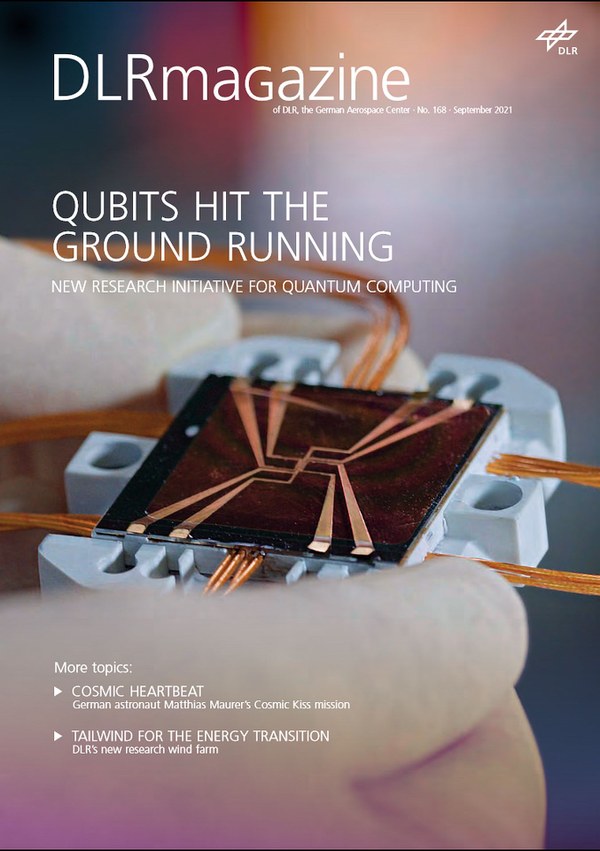
                  Zugriff auf das DLRmagazin 168

                  DLRmagazine 168 – Qubits hit the ground running

                  4.9 MB | PDF

                  DLR logo
                  Microwaves and Radar Institute
                  DLR Logo
                  Microwaves and Radar Institute

                  Münchener Straße 20 82234 Weßling

                  Contact

                  • Contact form

                  About the website

                  • Accessibility
                  • Privacy Policy
                  • Privacy Settings (Cookies)
                  • Imprint & terms of use
                  Visit us here:
                  Visit us on LinkedinVisit us on YouTube
                  Supported by: Federal Ministry of Research, Technology and Space