Isolation Studies as a Key to Preparing Future Space Missions
March 10, 2026
Isolation Studies as a Key to Preparing Future Space Missions
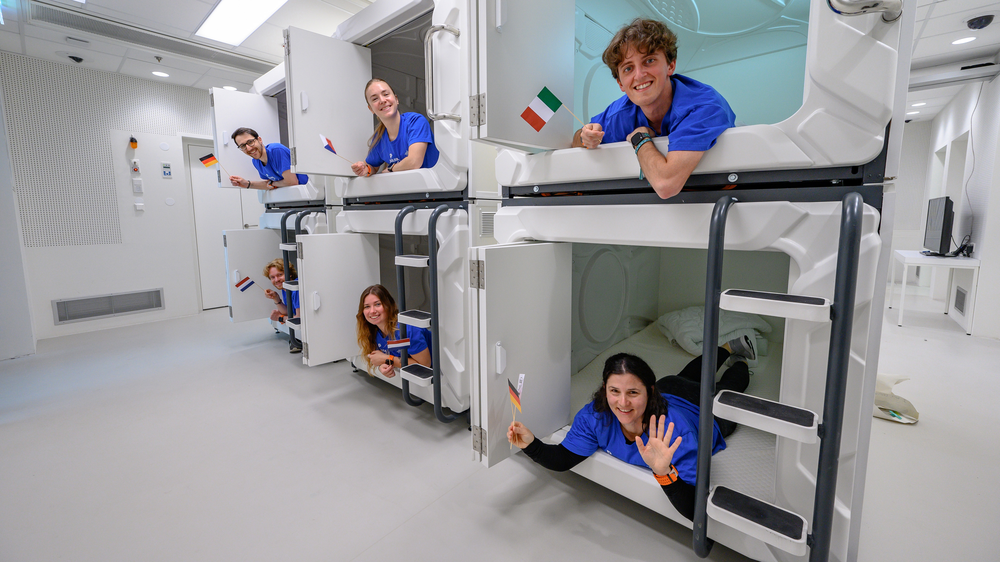
Sleeping pods for 100 days of isolation
The :envihab isolation module features a block of six sleeping pods for the crew members, stacked vertically and side by side. Each pod has its own ventilation system and are heavily soundproofed to offer a degree of privacy.
New study website provides insights into the research
Focus: Space, exploration, space medicine
To mark the launch of the ESA isolation study SOLIS100 in April 2026, the DLR Institute of Aerospace Medicine has launched a new website providing insights into research on isolation studies. At SOLIS100 – studying the effects of isolation on humans, interested parties can find information on the implementation and scientific background of such analog studies for future space missions.
SOLIS100 will launch in April 2026 at the DLR's :envihab in Cologne. Six carefully selected participants will live there together for 100 days in a confined and resource-limited environment. The study, led by the European Space Agency (ESA), serves as a ground-based analogue for future missions to the Moon and Mars.
Future space missions will take us far beyond Earth's orbit and involve long travel times and limited resources. Crews will have to work together for months or even years in isolated and confined environments, taking on a high degree of personal responsibility. At the same time, support and possible rescue measures from Earth will be limited.
Isolation studies are therefore an important tool in space research. In controlled environments, researchers investigate how isolation, confinement, and limited resources affect human health, behavior, and performance. The findings help to better understand the risks of long-term missions and develop strategies to support crews – for example, in the selection, training, and medical and psychological care of future astronauts.