
What can competitive masters athletes teach us about healthy ageing?


- TaFMAC – A 10-year study to assess fitness, training and health in Masters athletes.
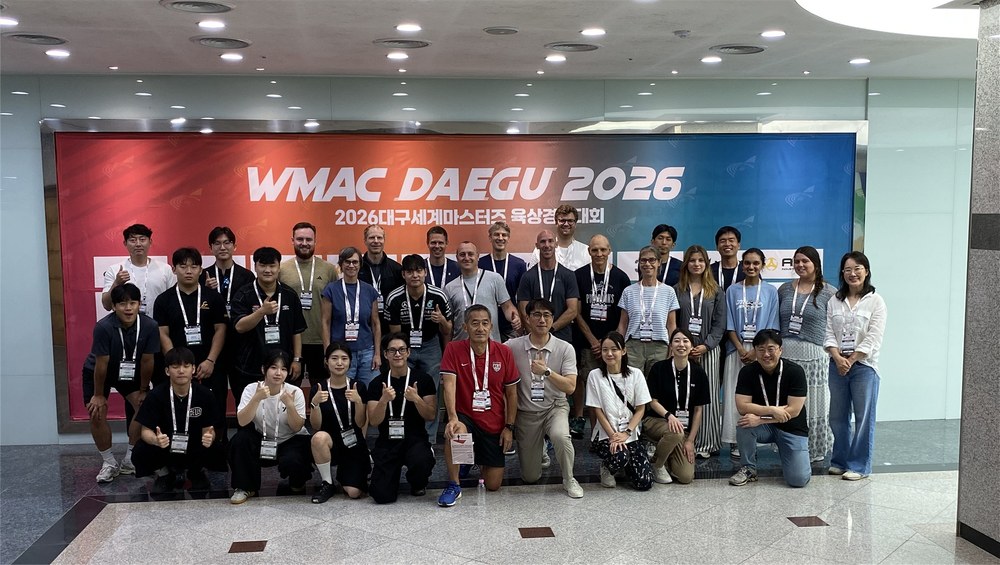
- The TaFMAC research team is conducting new data at this year’s World Masters Championships in Daegu, South Korea.
- The TaFMAC study also highlights parallels between age-related changes and the physiological adaptations of astronauts to prolonged stays in weightlessness – particularly in the muscles, bones, cardiovascular system and metabolism.
How can people maintain physical function, health and performance as they grow older? This question is at the heart of the Track and Field Masters Athletic Cohort (TaFMAC) Study, a 10-year international DLR field study investigating fitness, training and health in Masters athletes.
Masters athletes – competitive athletes who continue to train and compete beyond the age considered “mature” for their sport – offer a unique opportunity to study healthy ageing. While aerobic fitness, muscle strength, flexibility, balance and vascular function typically decline with age, many older athletes maintain remarkable levels of physical performance, cognitive health and wellbeing. Their lifelong commitment to exercise training and physical activity provides valuable insights into the factors that may help preserve human function and extend healthspan.
This year, the TaFMAC research team travelled to Daegu, South Korea, for the World Masters Athletics Championships. Athletes had the opportunity to participate in a comprehensive series of tests assessing, among other factors, aerobic capacity, muscle strength, cardiovascular and vascular function, and lung function. Following athletes over a period of ten years allows the researchers to investigate how fitness, training and health change over time – and which factors may contribute to maintaining physical function and reducing disease risk as people age.
Symposium during the World Masters Athletics Championships featuring research findings
The research was also presented at a dedicated symposium during the World Masters Athletics Championships. Professor Dominik Pesta, Ph.D., from the DLR Institute of Aerospace Medicine/University of Cologne, and Professor Hiro Tanaka, Ph.D., from the Department of Kinesiology and Health Education at The University of Texas at Austin, presented findings and perspectives on healthy ageing and the preservation of human function across the lifespan. The symposium, planned as a jour fixe of future Championships, brought together athletes and competition officials, who showed great interest in the research and the potential lessons that Masters athletes can offer for healthy ageing.
But what do Masters Athletes have in common with astronauts? Both experience accelerated physiological decline, challenged either by aging or microgravity. And both take every measure to maintain physical function and health. The TaFMAC Study therefore also explores parallels between ageing and spaceflight, particularly with regard to changes in muscle, bone, cardiovascular and metabolic function. Studying people who maintain high levels of physical performance despite the challenges of ageing may help researchers better understand the mechanisms that support human resilience – both on Earth and in space.
Importantly, Masters athletes do not show us how to stop ageing. They show us how much physical function can be preserved.
Lead organisation and collaborating partners of the TaFMAC study
The TaFMAC Study is led by the Department of Metabolism and Human Performance at the DLR Institute of Aerospace Medicine, with the Department of Cardiovascular Aerospace Medicine as a collaboration partner. International partners include The University of Texas at Austin (USA), the University of Saskatchewan and Brandon University (Canada), and California State University, Bakersfield (USA). In 2026, the research team is collaborating with Juntendo University (Japan), Yonsei University, Yeungnam University and Keimyung University (South Korea). The project is supported by Galileo Training / Novotec Medical GmbH (Germany).
Contact
Prof. Dr. Dominik Pesta
Friederike Wütscher