New research facility for the bunkering of liquid hydrogen commissioned
October 1, 2026 | Commissioning of Bunkering Station
New research facility for the bunkering of liquid hydrogen commissioned
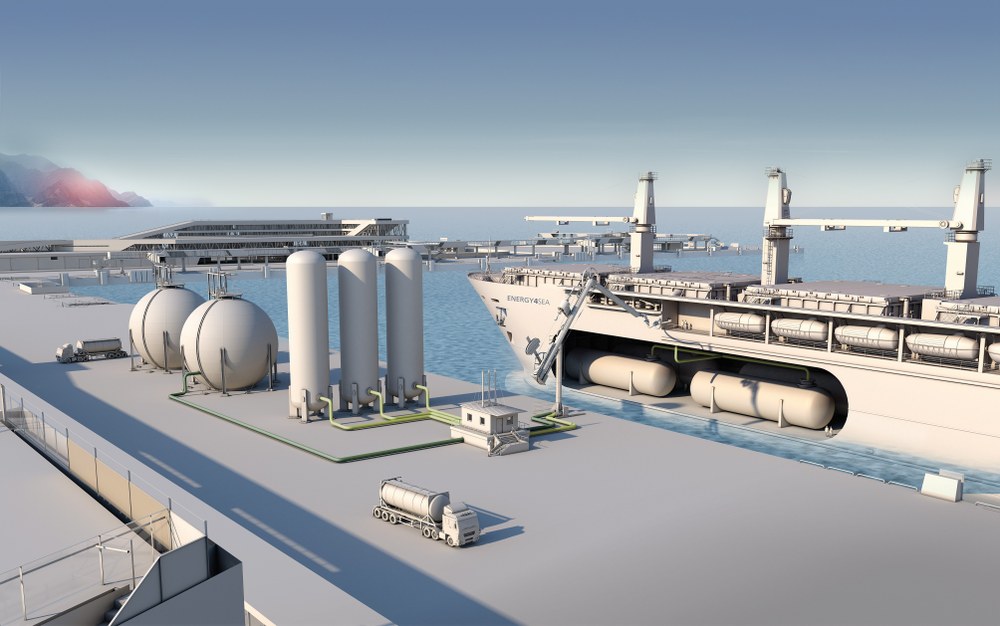
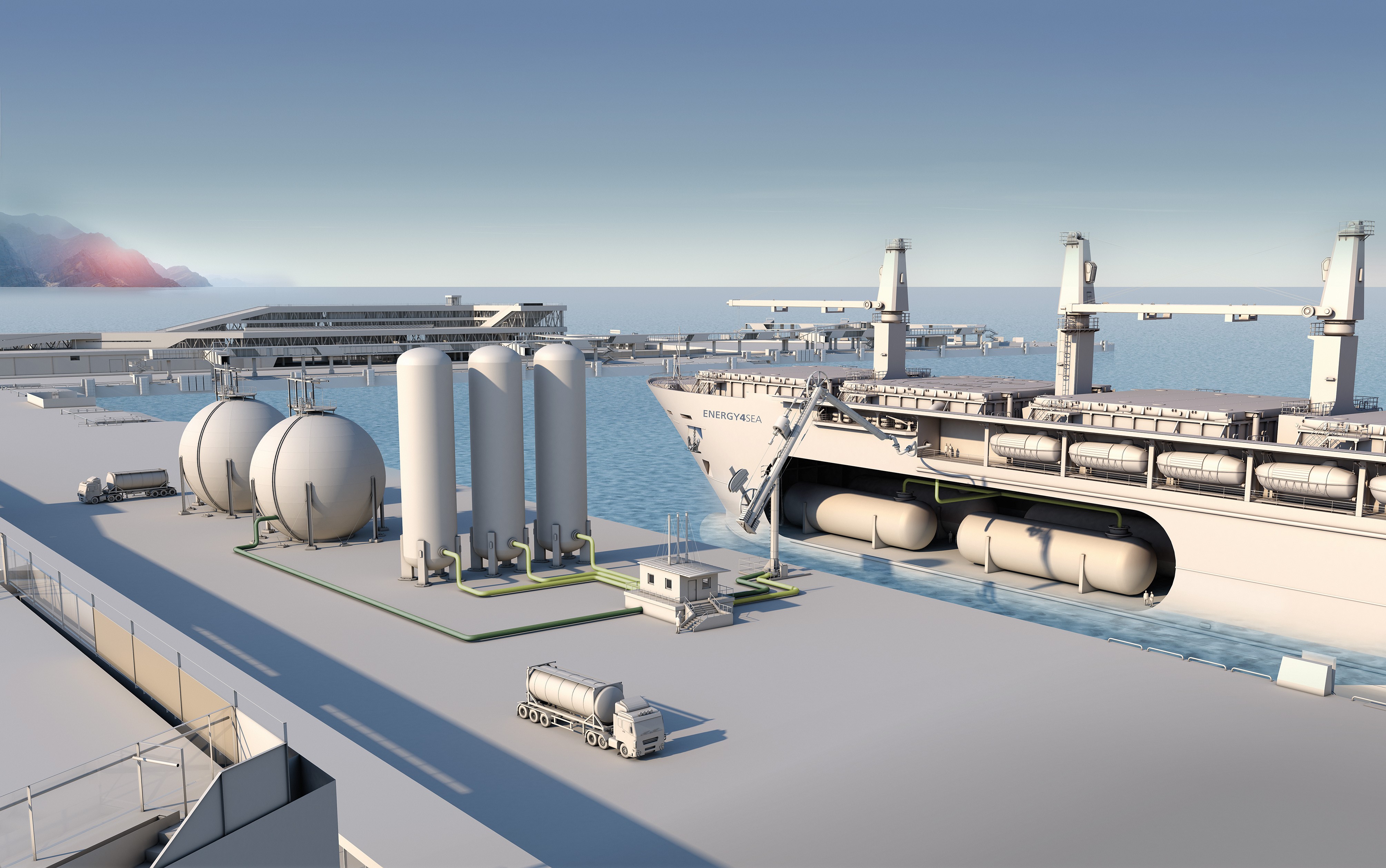
Research facility for the bunkering of liquid hydrogen
The future LH₂ refuelling station is expected to be capable of transferring up to 500 kilograms of liquid hydrogen per hour and will be extensively equipped with sensors. This will enable the DLR to study the transfer of liquid hydrogen under real-world conditions and to model it digitally.
The facility combines real-world testing with digital methods.
The transfer of liquid hydrogen is to be modelled and simulated; the models will be validated on the real-world facility, and the overall process will be further optimised on this basis.
The one-off LH₂ refuelling facility, which has now been commissioned, will transfer up to 500 kg of liquid hydrogen per hour.
Focus: Transport
How can liquid hydrogen be transferred to ships safely, efficiently and with as little loss as possible?
With a new LH₂ bunkering station, we aim to investigate, digitally model and optimise the transfer of liquid hydrogen under real-world conditions in future. In future, liquid hydrogen could play a role both as an energy source on board a ship and as cargo. This requires safe and efficient bunkering processes. This is precisely where our new research facility comes in.
Marine Service GmbH, based in Hamburg, is to build an LH₂ bunkering station for the DLR Institute of Maritime Technologies and Propulsion Systems – the first research facility of its kind in the world. The station will be capable of transferring up to 500 kilograms of liquid hydrogen per hour and will be extensively equipped with sensors.
Preventing boil-offs
One important factor here is evaporation losses, known as ‘boil-off’. Liquid hydrogen is stored and transported at very low temperatures. During transfer, heat can enter the system, causing some of the hydrogen to evaporate. With the new facility, we aim to investigate in more detail how these losses occur and how they can be reduced.
Specialist staff are being trained in the handling of hydrogen
In addition, the bunker station will enable us to investigate other safety-related processes, such as the inerting of pipes and systems. At the same time, the facility is intended to be used in future to train crews and other specialist staff in the safe handling of liquid hydrogen.
This will create a research infrastructure that enables us to investigate the transfer of liquid hydrogen not only in individual components, but also in the context of the entire system. The aim is to make processes safer and more efficient, thereby laying the foundations for the potential use of liquid hydrogen in shipping.
Marine Service GmbH has been commissioned to build the plant. Delivery is scheduled for the end of 2028.