
HYLAS-3 – Data Relay in Geostationary Orbit

ESA
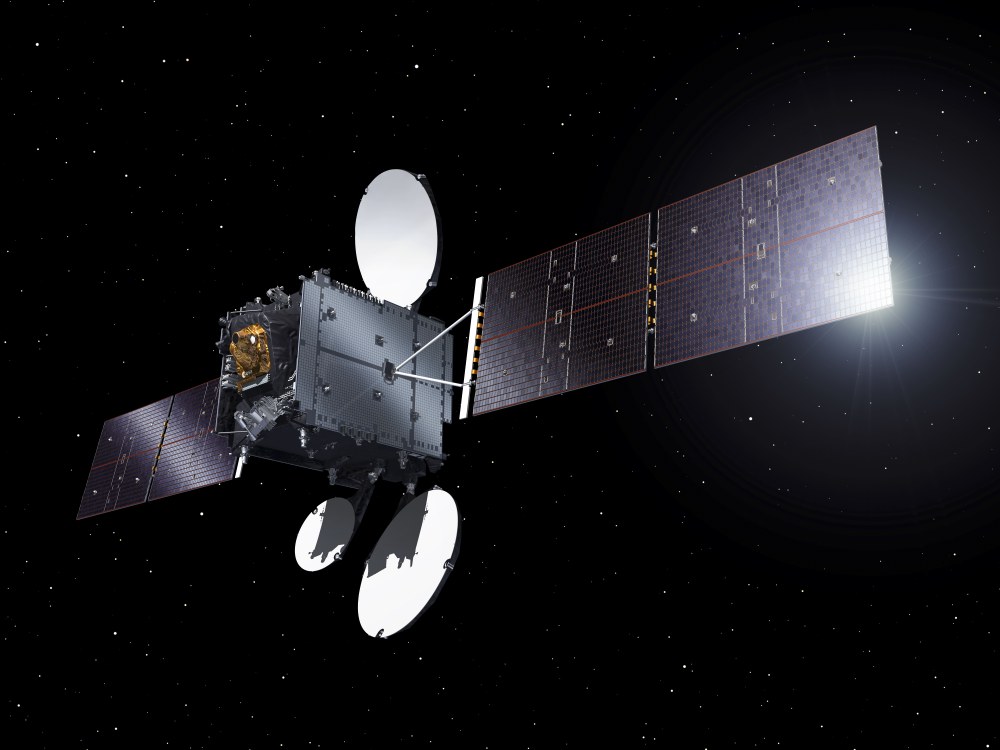
HYLAS-3 is a geostationary communications satellite providing commercial data relay services in the Ka-band. Positioned at 142° East over the Asia-Pacific region, it enables data transmission across large parts of the Southern Hemisphere.
The name HYLAS stands for “Highly Adaptable Satellite”, reflecting the concept of a flexible satellite platform designed to meet a wide range of operational requirements. Its communications payload supports various applications and customers, including Earth observation satellite operators and telecommunications providers.
From EDRS-C to HYLAS-3
Launched in August 2019 as EDRS-C, the spacecraft was the second satellite in the European Data Relay System (EDRS). This communications network was designed to enable the rapid transmission of large volumes of data from satellites in low Earth orbit to ground stations via geostationary relay satellites.
Following a shift towards commercial services and a change of ownership to Avanti Communications, the satellite was renamed HYLAS-3 in 2025.
Development and Operations
HYLAS-3 was developed and built by the German space company OHB, based on its SmallGEO platform. The platform is designed for reliable, long-term operations in geostationary orbit.
The satellite is controlled and monitored by the German Space Operations Center (GSOC) at DLR in Oberpfaffenhofen, near Munich. The flight control team monitors the spacecraft's health around the clock, performs necessary orbital adjustments, and ensures safe and reliable satellite operations.
NGRM – Monitoring Space Radiation
Beyond its primary communications role, HYLAS-3 carries a valuable secondary instrument: NGRM (Next Generation Radiation Monitor), an ESA payload designed to measure the space radiation environment.
Data collected by NGRM feeds directly into the scientific and engineering understanding of radiation risks in Earth orbit—information that is essential for everything from spacecraft design to the safety of astronauts on upcoming deep-space and lunar missions.