
DLR Institute of Solar Research wins EU-SOLARIS Awards
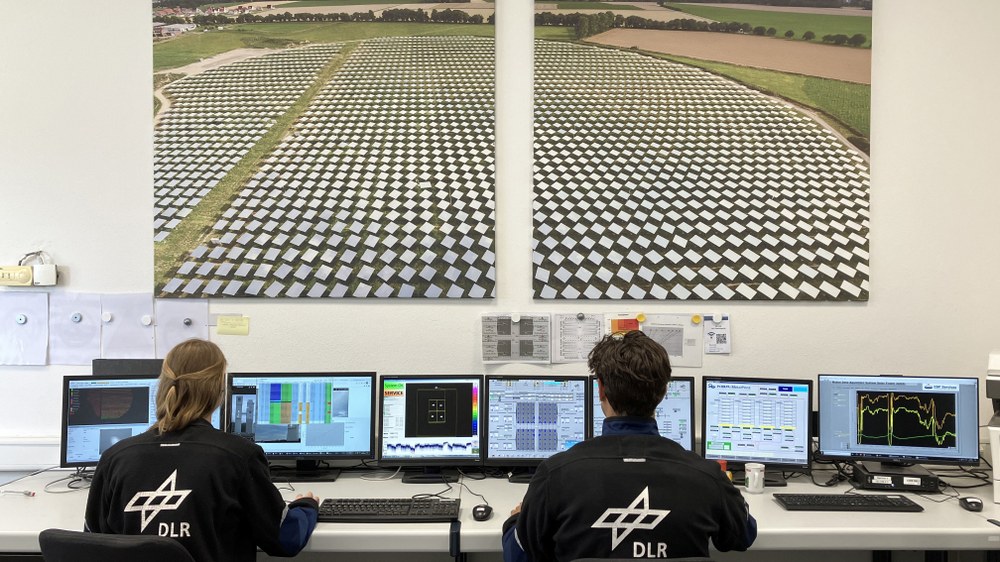

- The German Aerospace Center (DLR) has received both awards presented by EU-SOLARIS, in the category ‘Outstanding Contribution to Improving the Capacities and Services of CST Research Infrastructures’ and in the category ‘Best Doctoral Thesis’.
- The Solar Energy Autopilot (SOLEA) system enables large-scale concentrated solar thermal plants to operate autonomously. The project team intends to carry out long-term tests and transfer studies in future.
- In his doctoral thesis, Mathias Kuhl developed AI-based methods that can be used to predict how individual heliostats concentrate sunlight onto the solar tower.
The DLR Institute of Solar Research has won two EU-SOLARIS awards – in the categories ‘Outstanding Contribution to the Improvement of CST Research Infrastructures’ Capabilities and Services’ and ‘Best Doctoral Thesis’. Inga Miadowicz and her project team received the recognition for developing the Solar Energy Autopilot (SOLEA), a holistic concept that enables the digital transformation of conventional concentrated solar thermal (CST) plants into a highly autonomous cyber physical systems (CPS).
SOLEA bridges the gap between isolated automation tools and plant-wide autonomy. It does this by introducing a modular, four-layer architecture spanning the physical CST plant and advanced measurement and control systems. Among other things, this architecture includes digital twins and specified AI agents for autonomous operational planning and closed-loop control of the heat generation process.
Gradually increasing the autonomy of large-scale plants with SOLEA
In practical terms, SOLEA provides a technology-agnostic blueprint that enables industrial plants and research infrastructures to gradually increase their autonomy and integrate innovative new artefacts without disrupting daily operations.
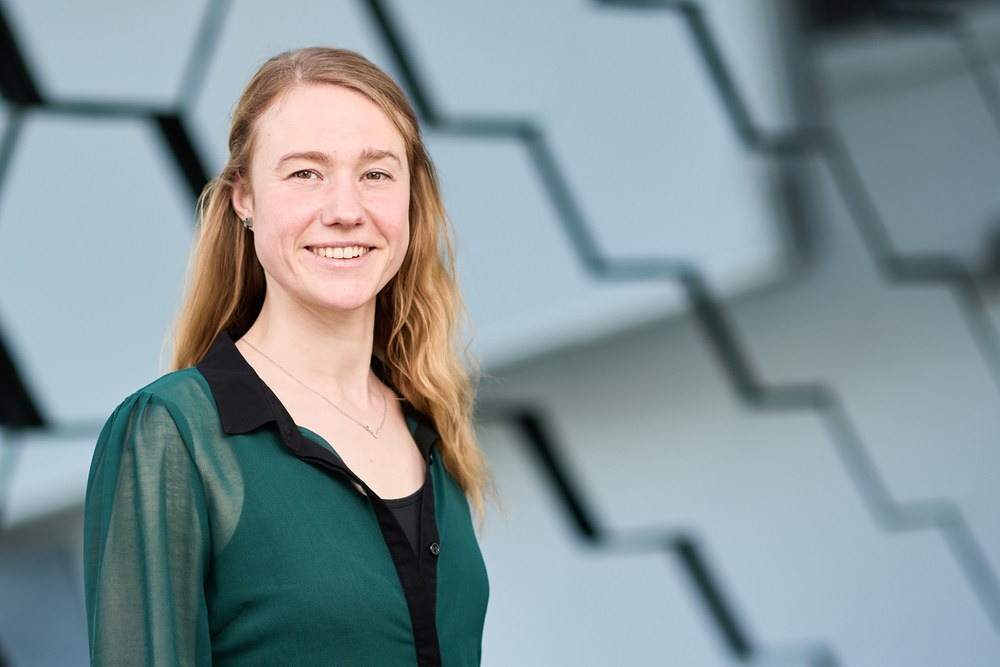
“For us, this award confirms that investing in plant wide data architectures that enable autonomous operation of large-scale facilities is a meaningful contribution both to CST research Infrastructures and to the broader industrial context”, says Inga Miadowicz, project lead. “At the same time, it is a strong encouragement for our efforts to demonstrate that autonomous, climate neutral heat generation based on CST technologies is technically feasible in a large scale CST research facility.”
The architecture has been implemented and evaluated at the Jülich Solar Tower research facility. There, intelligent agents autonomously plan operating days, commission the plant, control it in accordance with the targets throughout the day and shut it down at the end of an operating day. In doing so, the agents continuously analyse data from measurement and control systems in order to dynamically regulate the mass flow and temperature in the operating process in response to changing weather conditions.
SOLEA improves robustness, efficiency and cost-effectiveness
The evaluation shows that SOLEA substantially improves robustness, efficiency, and cost performance. It shifts the human role from active control to supervision and targeted intervention. This paves the way for the next generation of autonomous CST plants, as well as for future industrial and thermochemical applications.
“About seven years ago, demonstrating the autonomous operation of a solar thermal plant was a vague and ambitious idea. We gradually developed this idea from a research vision into a well defined autonomy framework that enables its operational reality”, says Miadowicz.
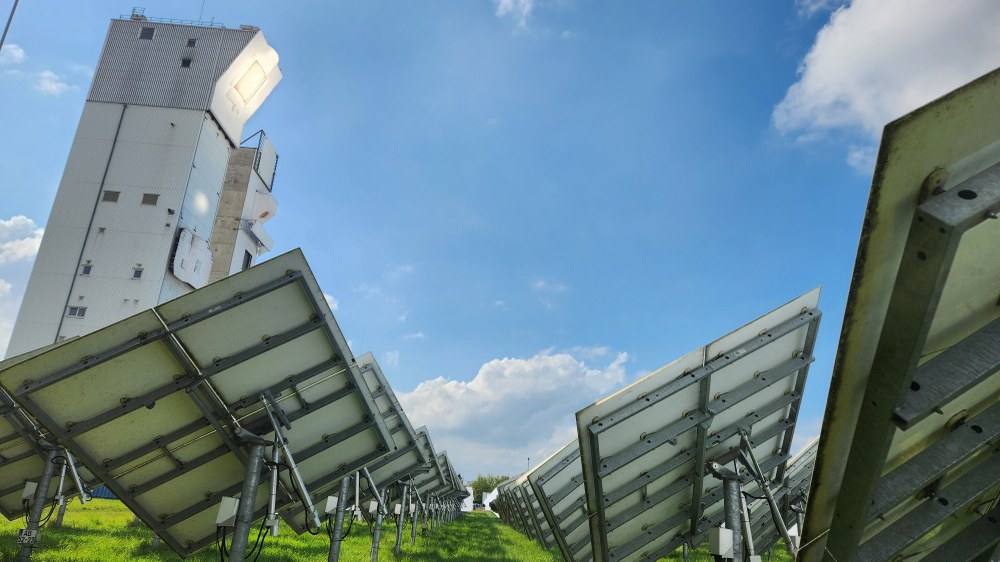
For the industry, SOLEA demonstrates the technological feasibility of highly automated and autonomous operation at a plant-wide level. It provides a reusable autonomy blueprint and reference implementation to improve and de-risk future design decisions for the commercial deployment of CST plants and solar-based process heat solutions.
Further developing SOLEA through long-term operations and transfer studies
Looking ahead, the project team intends to validate and adapt the SOLEA blueprint beyond the current case study at the Jülich Solar Tower by carrying out long-term operations, conducting transfer studies, and replicating the blueprint at other CST plants and in similar industrial settings. Specifically, this involves applying SOLEA to other industrial facilities, extending the concept to industrial and thermochemical process heat demonstrators, and exploring autonomous “heat as a service” pilots with industrial partners.
“We are actively seeking organisations interested in joint follow up projects to co develop next generation autonomous CST plants and related digital energy services”, says Inga Miadowicz.
Award for doctoral thesis
Dr.-Ing. Mathias Kuhl received the “Best Doctoral Thesis Award” for his doctoral thesis “A Data-Driven Methodology for Precision Flux Density Predictions for Heliostat Fields”. In it, he developed AI-based methods that can be used to predict how individual heliostats concentrate sunlight onto the solar tower and what flux distribution this produces at the receiver.
This is based on simple calibration images taken during regular plant operation. Neural networks learn the optical behaviour of the heliostats from these images and can use this to predict the resulting flux distributions for different sun positions and aim points. This enables solar tower plants to be operated more efficiently and safely, without the need to first carry out a comprehensive and time-consuming optical characterisation of each heliostat.

“A key challenge was the development of robust AI models that function reliably not only under controlled conditions but also using real operational data from a large heliostat field”, explains Mathias Kuhl. To achieve this, more than 200,000 measurements had to be processed, different measurement conditions taken into account and suitable model architectures developed.
“I was particularly motivated by the fact that the methods developed are not purely theoretical, but can be tested directly using operational data from the Jülich Solar Tower and used in future to control the plant”, says Kuhl.
Safe and efficient operation of solar tower plants
The predicted radiation distributions can be used to automatically optimise the heliostat aim points during operation and adapt them to the plant’s current operating state. In the long term, the aim is to integrate monitoring, modelling, optimisation and control in such a way that solar tower plants can be operated more safely, more efficiently and with less manual intervention.
The EU-SOLARIS Awards are presented annually to promote the development and consolidation of a scientific community within the European Research Infrastructure Consortium (ERIC) in the field of CST technologies, whilst training new researchers to make appropriate use of the research infrastructures. The awards will be officially presented at the SOLARIZE Doctoral Colloquium 2026, which will take place from 19 to 23 October 2026 in Nicosia, Cyprus.
Contact
Dr.-Ing. Kai Wieghardt
Sigrun Damerau