Heat transition | Energy transformation in the chemical industry
DeFi
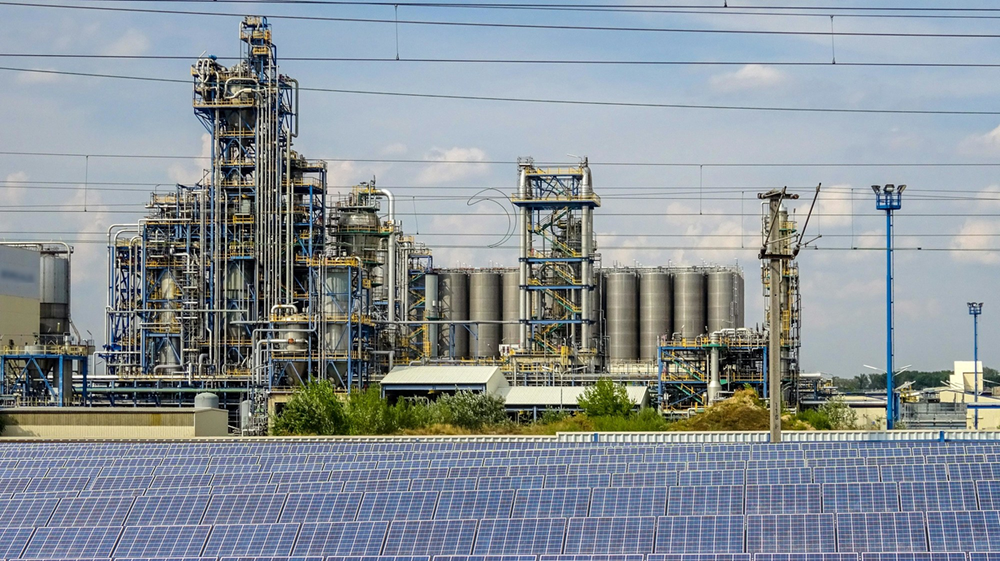
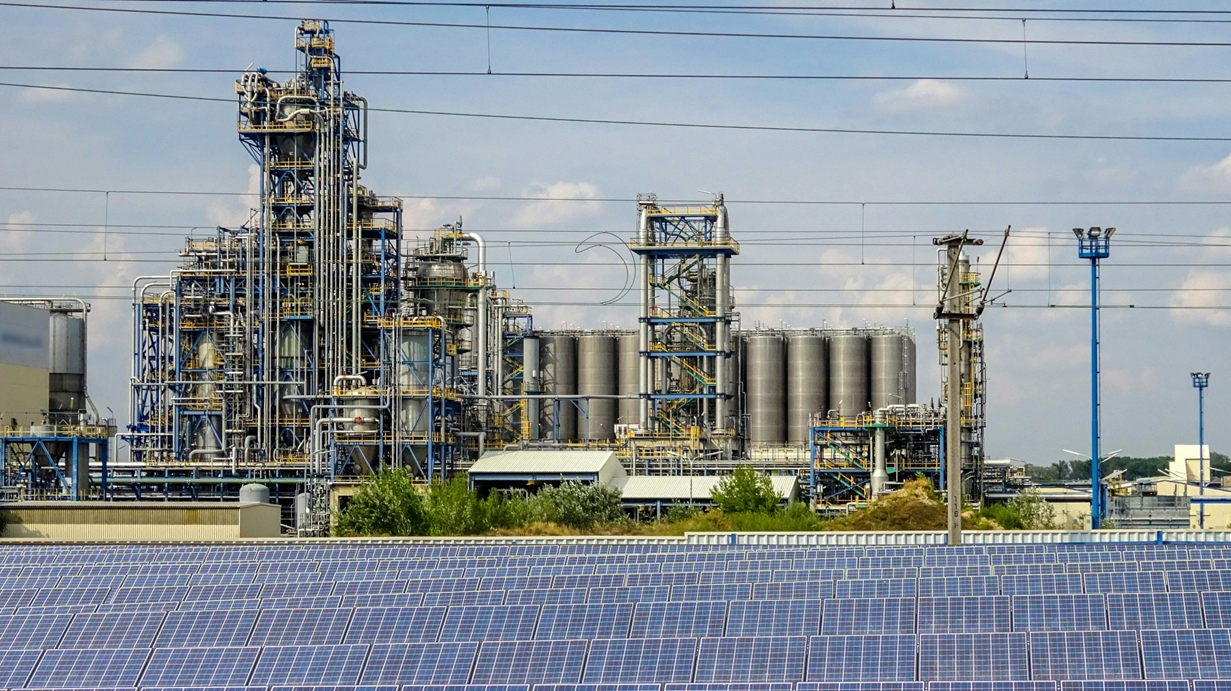
Chemical plant with photovoltaic system
The chemical industry is challenged to replace fossil fuels with energy from renewable sources as much as possible. To meet its huge energy needs, it will need a mix of different energy sources and energy storage systems. The efficient use of available resources is another challenge in the transition.
To this day, the industrial sector’s heat supply is still predominantly based on fossil fuels. The “Defossilisation of Industry and Heat” project is developing methods to ensure that the operation and design of the supply infrastructure for industrial processes are not only cost-effective but also minimise the use of fossil fuels. In particular, the project focuses on batch processes, as are frequently found in the speciality and fine chemicals sectors.
Batch processes for a flexible energy supply
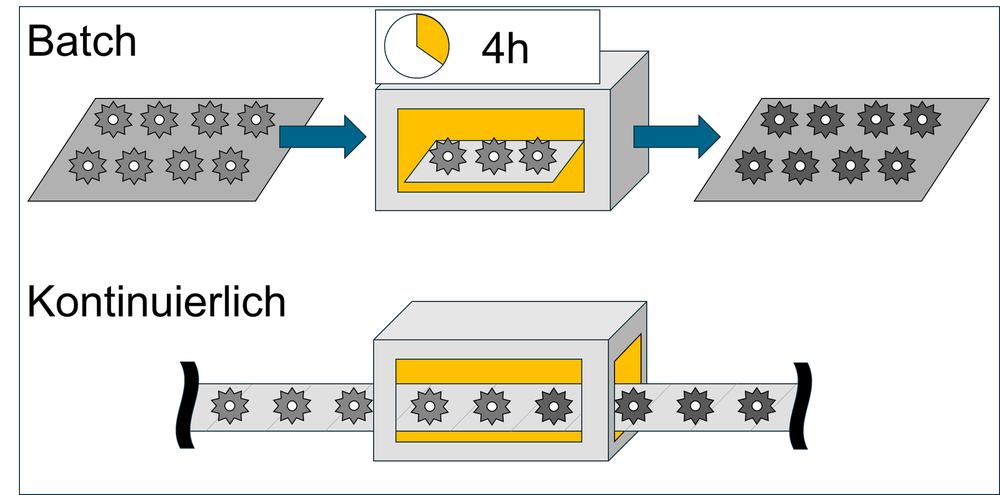
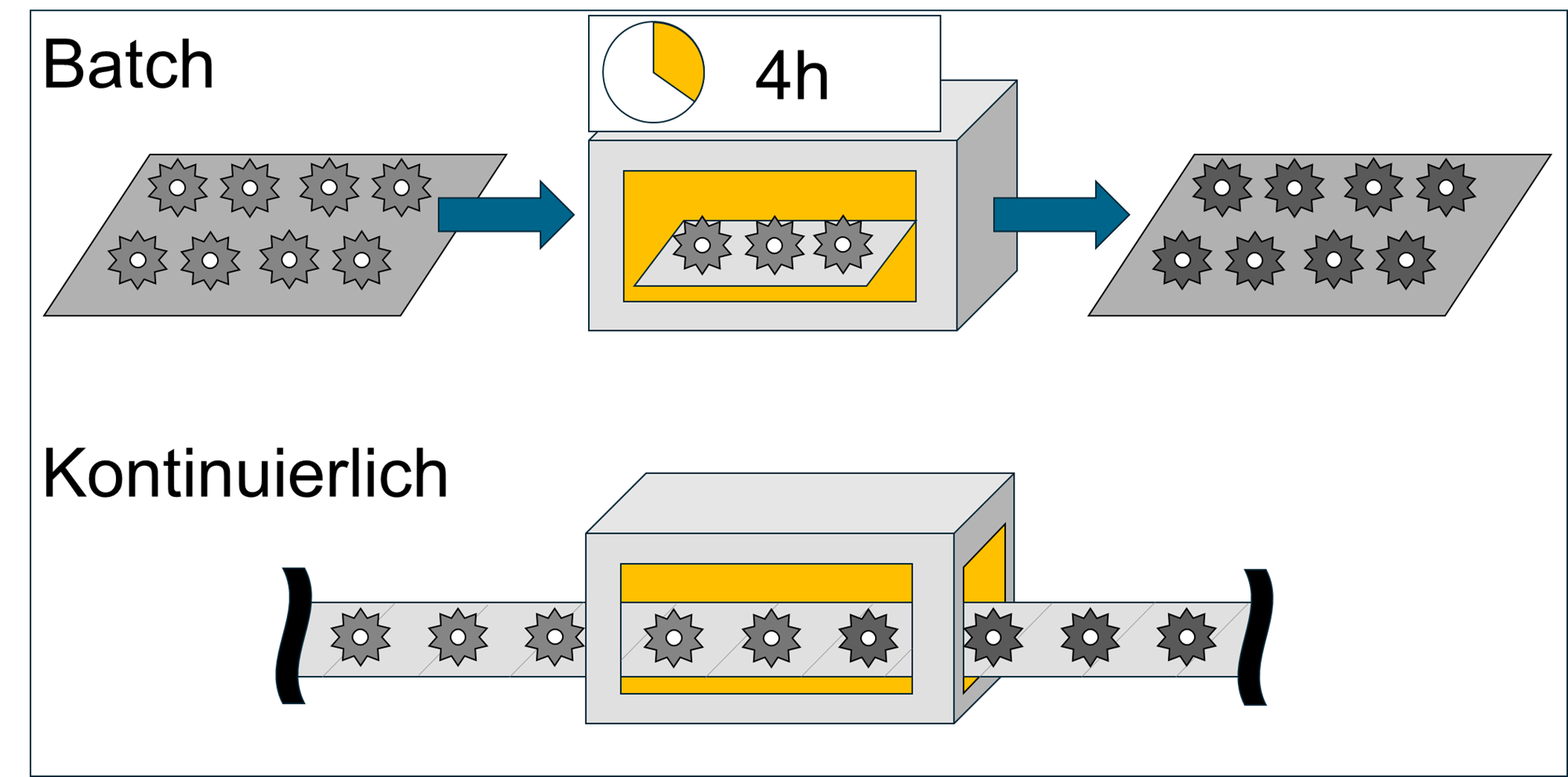
Batch processes are production methods in which materials, in fixed quantities known as batches, pass through specific process steps in a fixed sequence. The entire batch begins and ends the respective production step simultaneously, and the next batch is only started once all production steps of the previous batch have been completed. Examples of such processes can include the synthesis of medicines in reactors or the hardening of steel in heat treatment furnaces. Compared with continuous processes, the utilisation of waste heat is more difficult due to the discontinuous mode of operation and the associated fluctuations in the availability of waste heat over time. If this is compounded by the fluctuating availability of renewable energy, changes are required to the operating mode of the process and the supply system, as well as, where necessary, structural changes to the process and supply system themselves.
A comparison of production methods in batch processes and continuous processes
Comprehensive optimisation of energy supply and production processes
A comprehensive techno-economic analysis for successful decarbonisation therefore requires the simultaneous optimisation of the energy supply structure, operational procedures and production processes. This requires detailed, time-resolved simulation models that enable optimisation over sufficiently long representative time periods (for example a typical operating year), as well as in-depth process knowledge to develop realistic and sustainable solutions. The DLR Institute of Solar Research already has an established simulation environment for hybrid energy systems, which is currently being further developed to create a seamless interface with various optimisation methods for operations and structure. In addition, the simulation environment is being expanded to include chemical material flows and production components in order to ensure a more comprehensive representation of chemical processes.
Optimisation of production and energy supply
A key focus lies in the coupling of production and energy supply systems. The DLR Institute of Solar Research and the DLR Institute of Low-Carbon Industrial Processes are jointly developing new optimisation algorithms to holistically capture and optimise the interactions between energy supply, process control and production flows. Process characterisation also plays an important role in these approaches, enabling an understanding of process flows and the identification of energy and resource requirements at individual production stages. At the Institute of Solar Research, methods for process characterisation are therefore also being developed as part of the project; these enable an analysis of the potential for increasing process flexibility, taking into account aspects such as load shifting, load control and adaptation to variable energy supplies. The newly developed methods and optimisation algorithms are then tested and applied to various batch processes in the chemical industry to validate their effectiveness and practical applicability.
CO₂ reduction and cost savings through an optimised energy supply
The decarbonisation of the energy supply system reduces CO₂ emissions and, through the use of renewable energy sources and periods of low electricity demand, also enables significant cost savings. The optimisation approaches developed can be applied to other sectors with batch processes, such as the food industry. The project thus contributes to the sustainable transformation of various industrial sectors.