
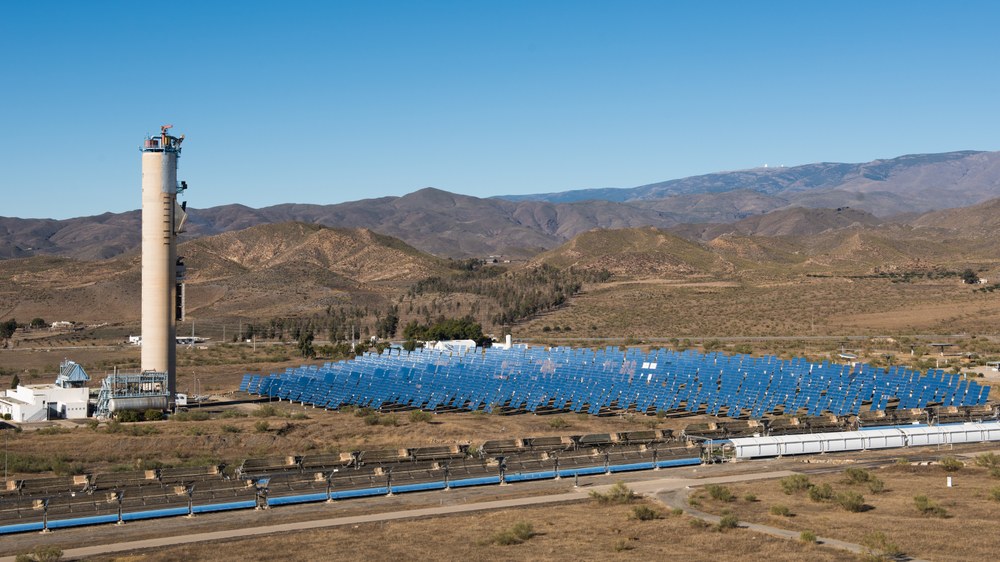
The solar power plant of the future
Concentrated sunlight hits a receiver, where it is absorbed. The heat generated is converted into usable energy by a downstream process – either into electrical power or into solar fuel. Alternatively, the thermal energy can be used directly for industrial applications such as calcination.
For efficient and safe operation, the power plant components must be continuously regulated and precisely coordinated. Key influencing factors include the position of the sun, which changes throughout the day, cloud cover above the concentrator, and the current condition of the plant components. These parameters must be evaluated in real time so that AI-supported algorithms can autonomously control plant operation.
Employees in the Concentrating Solar Technologies department are therefore conducting research into the autonomous solar power plant of the future.
Optimisation and autonomisation includes the entire power plant and the recording of environmental conditions. For this reason, the research field is divided into several key areas:
- Condition monitoring of the environment such as cloud situation, solar radiation and wind conditions
- Condition monitoring of the concentrator, receiver, storage and energy conversion process components
- Centralised provision of all relevant statuses for digital evaluation in a data platform developed for solar power plants
- Development of AI-based methods for digital modelling of the power plant components
- Development of digital twins of the power plant components
- Development of AI-supported operational assistance systems for the orchestration of power plant components
- Development of validation procedures for digital operating drivers
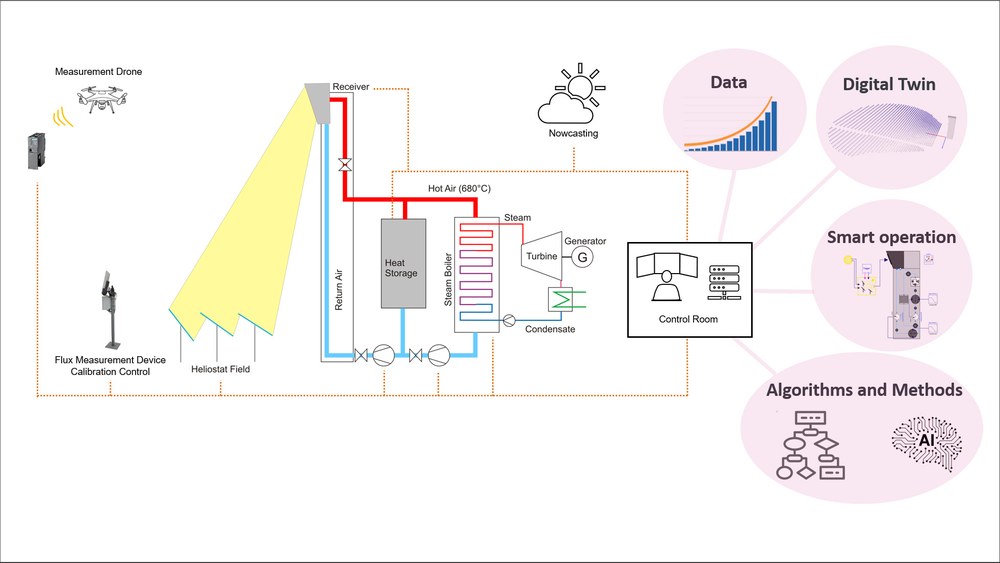

The aim of the research is to develop and demonstrate AI-based, intelligent control and monitoring systems for the autonomous power plant of the future. Such systems should be able to maximise the energy yield of power plants, extend their service life and at the same time guarantee the high safety requirements. The research results aim to reduce the electricity generation costs and labour costs for the operation of solar thermal power plants. In this way, solar thermal power plants make a decisive contribution to the energy transition.
The research field of solar thermal power plants has existed at the German Aerospace Center (DLR) for around 40 years. At the beginning, it was mainly basic research into the feasibility of such systems that was carried out. Individual components and materials for concentrators, receivers and storage systems were developed on a laboratory scale and then scaled up to kilowatt and megawatt scales. The next development step was the demonstration of entire plants, an example of which is the Jülich research power plant, which went into operation in 2010. Since then, the research focus has been on the operation and digitalisation of solar thermal plants.
The Jülich research power plant will serve as a blueprint for the most autonomous operation possible. The infrastructure developed for digitalisation and the methods researched will be used there by DLR scientists and the results and demonstration of the methods researched on an existing power plant will serve as a model.
Component manufacturers and power plant operators can be directly convinced of the benefits and feasibility at the DLR research facilities. In this way, the scientists hope that their research results can be quickly transferred from research to application.