
Background
Methodology of a meta-study
Meta-analyses compare existing studies and analyse their findings and methodological approaches. We explain why this is a targeted method for consolidating existing knowledge in a structured way.
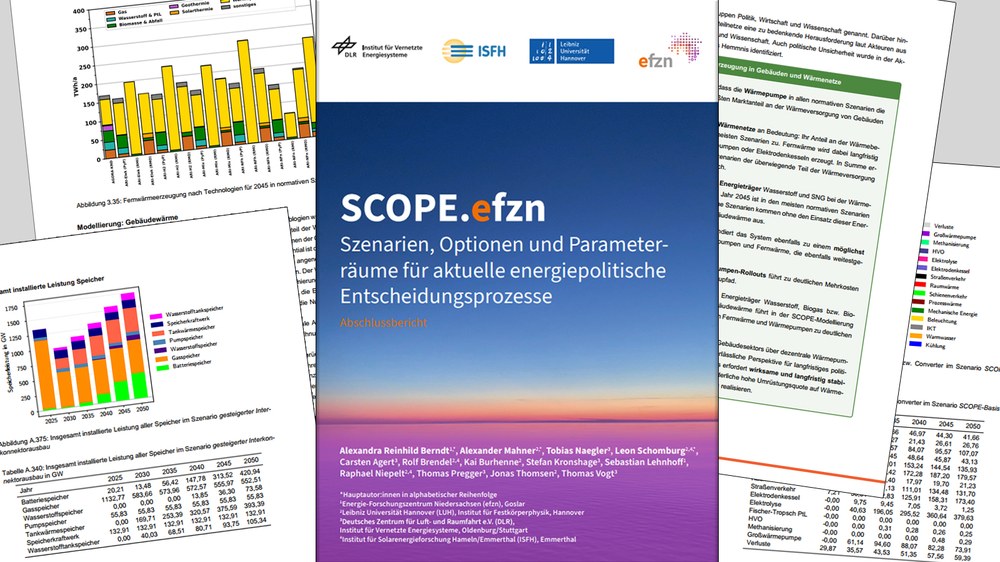

Collage by DLR, incorporating materials from EFZN
Benjamin Ahrens, CC BY 3.0
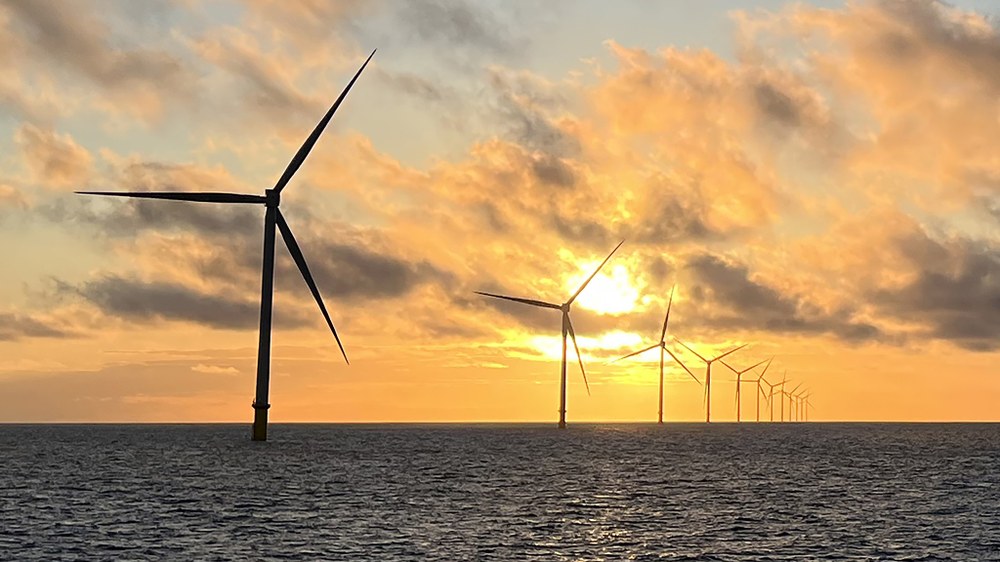
Meeting climate targets without unnecessary additional costs: According to the results of the research project SCOPE.efzn, this is now only possible through immediate and significantly higher installation rates for offshore wind farms and onshore wind turbines. This is one of the central findings of a meta-study prepared by the Institute of Networked Energy Systems within the SCOPE.efzn research project. The aim of the meta-study was to derive the best possible recommendations for action for energy policy decision-makers to achieve climate neutrality by 2045 from existing studies. The meta-study also serves as the starting point for further model-based analyses by the Leibniz University Hannover (LUH) and the Institute for Solar Energy Research Hameln (ISFH), which are also involved in the project. These partners were able to further substantiate and quantify this key finding of the meta-analysis, among other things, through model-based sensitivity tests. The results of the project, commissioned by the Lower Saxony Ministry of the Environment, Energy and Climate Protection, have now been published.
“Regarding the expansion dynamics of wind energy, the studies examined yielded quite consistent results, which strengthens the reliability of the meta-study's statements,” says Dr Tobias Naegler, SCOPE.efzn project manager at the Institute of Networked Energy Systems of the German Aerospace Center (DLR). “And because the scenario results typically stem from cost-optimising models, this essentially means: the less we expand now, i.e., the longer we wait, the more expensive it becomes – or we fail to reach our legally binding climate protection targets.”
According to the meta-study, higher installation rates are needed not only for wind energy but also for technologies that provide greater flexibility to the electricity supply. Alongside stationary batteries, these include gas-fired power plants operating on synthetic gas, hydrogen, or fossil gas with simultaneous carbon capture and storage (CCS). In contrast, the results indicate that a cost-optimal expansion for photovoltaic systems could still be achieved through installation rates comparable to those of previous years. However, constant energy policy conditions for the coming years are by no means guaranteed, partly because subsidy regulations are in constant evolution.
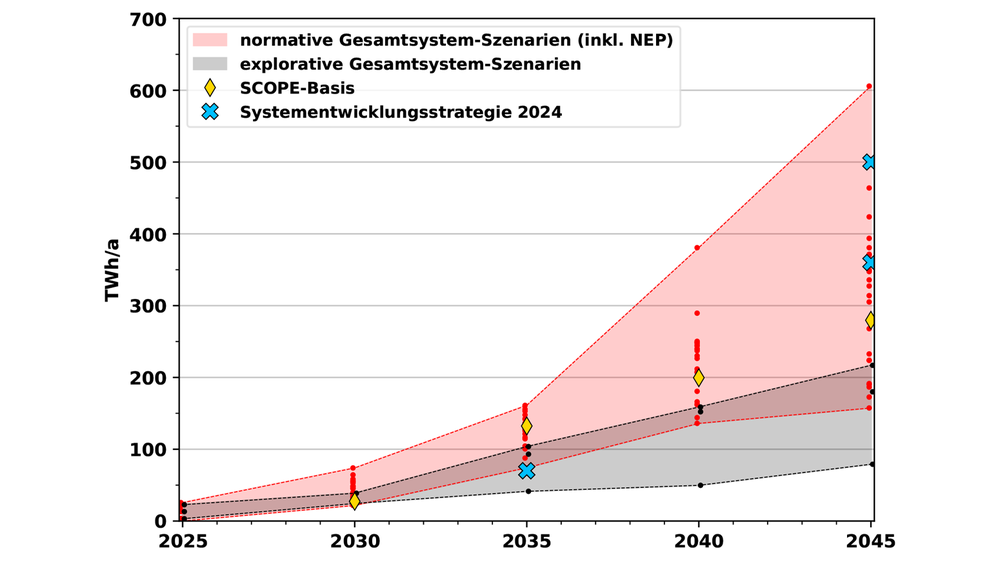
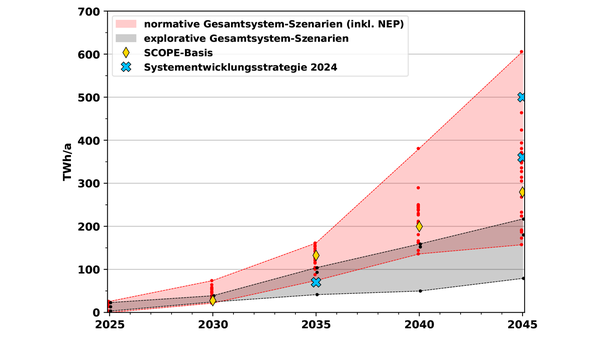
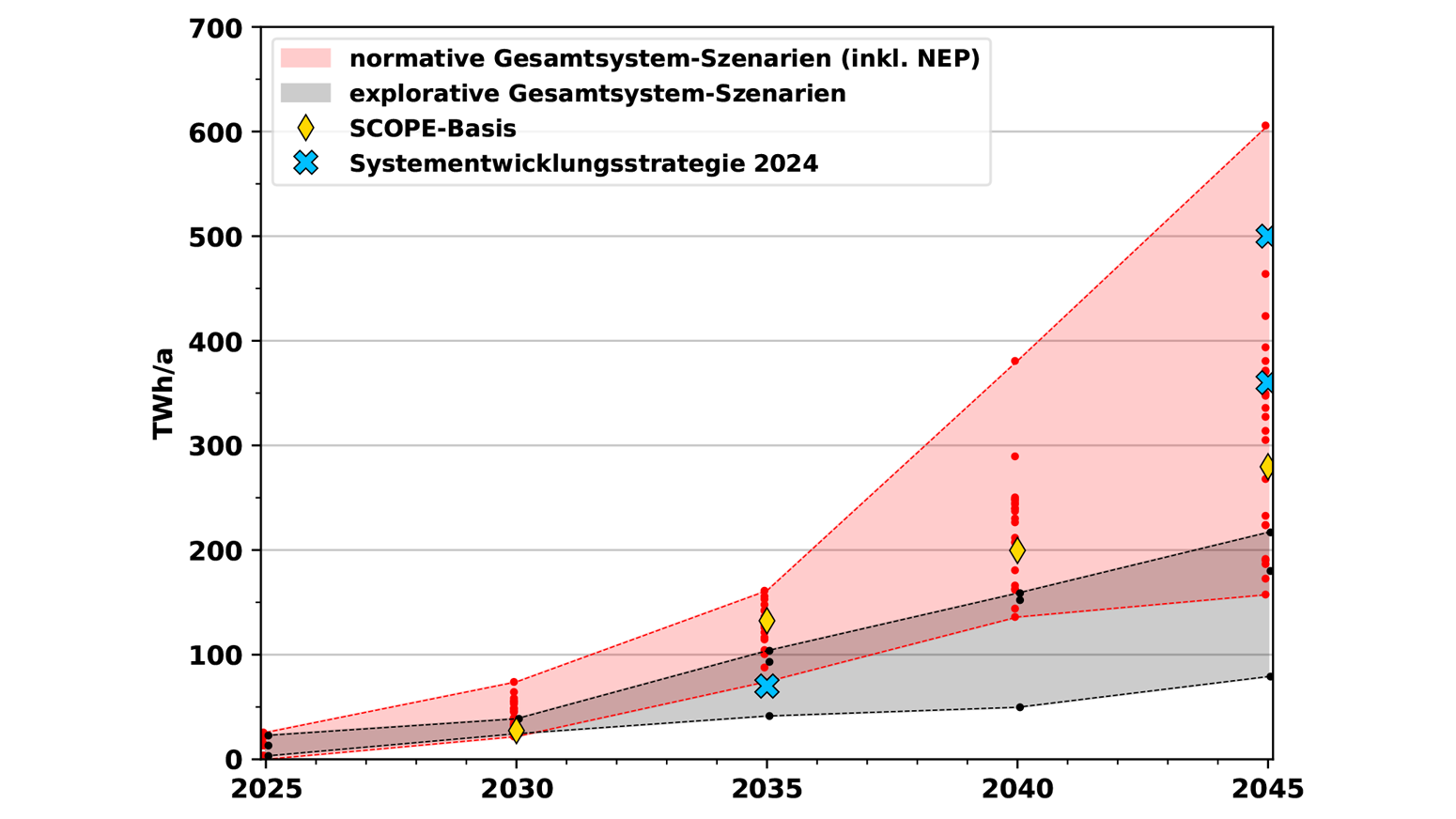
There is no doubt that electricity demand will rise significantly – among other things, due to the switch to electric heat pumps for heating, the use of electric cars, and the conversion of industrial process heat from fossil fuels to electricity and hydrogen – to meet the agreed CO2 emissions targets. According to the meta-study, the annual gross electricity demand could exceed current levels (around 526 terawatt-hours last year) by at least 250 to 300 terawatt-hours within ten years. Some scenarios even assume an additional requirement of up to 500 terawatt-hours.
Against this backdrop, the studies examined illustrate that a steady, and in some cases significantly increased, expansion of PV and wind installations is necessary until roughly the middle of the next decade to achieve energy policy goals. “By then at the latest, electricity from renewable sources will not only dominate power generation but also become our most important primary energy source in terms of total energy demand. The time for decisions is pressing,” says Naegler.
The study results suggest that rising electricity demand and the dynamic electrification behind it can only be achieved through significant additional incentives compared to current regulations. At the same time, obstacles such as long planning and approval periods must be removed, and grid expansion accelerated. “From a scientific perspective, a comprehensive package of measures is therefore required, including questions of financial viability and socially acceptable distribution of costs,” explains Naegler. Furthermore, programmes are needed that work towards both the necessary increase in skilled workers and a greater public acceptance.
According to the meta-study, the importance of hydrogen will increase significantly – both as an energy carrier for process heat and as a flexible long-term storage medium in the energy sector, and as a raw material for industry. Nevertheless, future hydrogen demand remains a major unknown in the examined scenarios. This is illustrated by strongly diverging demand estimates between 160 and 600 terawatt-hours for 2045, or projected import quotas between 14 and 92 percent. Accordingly, the need for electrolysers in Germany varies between 25 and 120 GW by 2045 across the studies.
Despite potentially high import quotas for hydrogen, Germany will significantly reduce its dependence on energy imports overall in the course of the energy transition. “Instead of around 70 per cent today, the import share in primary energy demand averages merely 15 per cent in the analysed studies,” explains Naegler. Furthermore, we have the power to develop risk-averse import strategies for synthetic energy carriers ourselves. “This implies specifically avoiding new dependencies on a few – particularly politically unstable – supplier countries as well as critical transport routes and infrastructure. This is a positive perspective, as a large number of countries have sufficient sun and wind for the cost-effective production of synthetic energy carriers.”
The research project SCOPE.efzn (“Scenarios, options and parameter spaces for current energy policy decision-making processes”) was initiated by the Lower Saxony Ministry of the Environment, Energy and Climate Protection. The aim was to analyse current scenario studies on the transformation of the energy system to achieve climate neutrality by 2045, to provide guidance and thus to identify possible action options for energy policy decision-making processes. Factors and system parameters previously not considered were also to be analysed in own scenario-based sensitivity calculations. Project partners included the Energy Research Centre Lower Saxony (efzn), the Institute of Solid State Physics of the Leibniz University Hannover (LUH), the Institute for Solar Energy Research Hameln (ISFH), and the Institute of Networked Energy Systems of the German Aerospace Center (DLR).