VMo4Orte knowledge exchange: DLR at the Smart Country Convention
October 17, 2024 | transformativ:innovativ:mobil
VMo4Orte knowledge exchange: DLR at the Smart Country Convention
Vmo4Orte at the Smart Country Convention
18 DLR institutes and facilities in one project are impressive - together, the researchers present the results of the three-year transport project Connected Mobility for Liveable Places (Vmo4Orte).
Image: 1/2, Credit:
Dirk Sattler
Short presentations for joint exchange
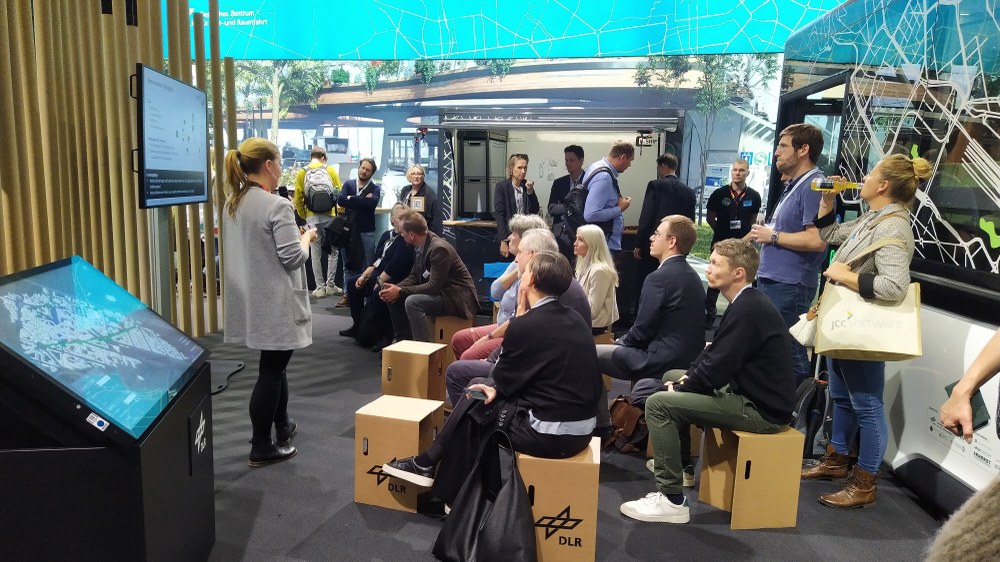
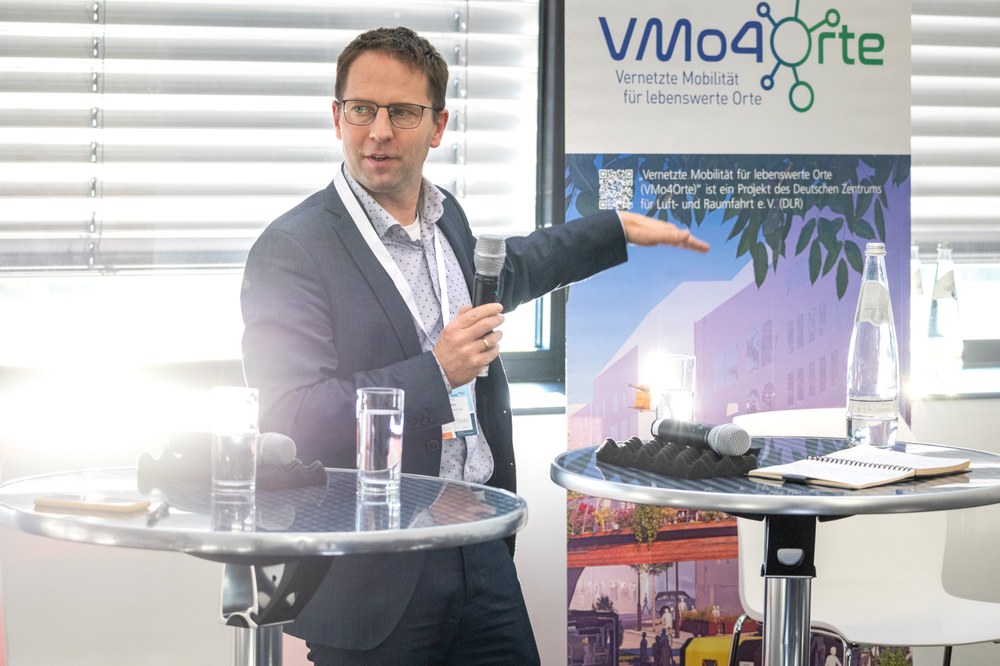
During the three days of the trade fair, DLR scientists gave short presentations on some of the various solution modules and deepened the dialogue.
For the digital state and public services - At the Smart Country Convention in Berlin, DLR is providing insights into the project " Connected mobility for liveable places". The focus is on the various cross-sectional activities relating to the mobility of the future.
The 3rd Project:Paten:Dialogue will intensify the exchange of knowledge on cross-sector solutions for mobility and logistics concepts together with transport companies, public institutions and local authorities as well as companies from the sector.
Focus areas: Transport, energy, digitalisation, aerospace, security, decarbonisation, mobility of the future.
Integration of modern technologies, people's needs at the centre and structural adjustments in everyday mobility. This is how places worth living in are being researched in VMo4Orte. At the end of the year, "Wissen.Kompakt", the summary of the research results developed in the VMo4Orte project, will be published. DLR provided initial insights into the various approaches at the Smart Country Convention in Berlin from 15 to 17 October 2024.
Flexible customisation
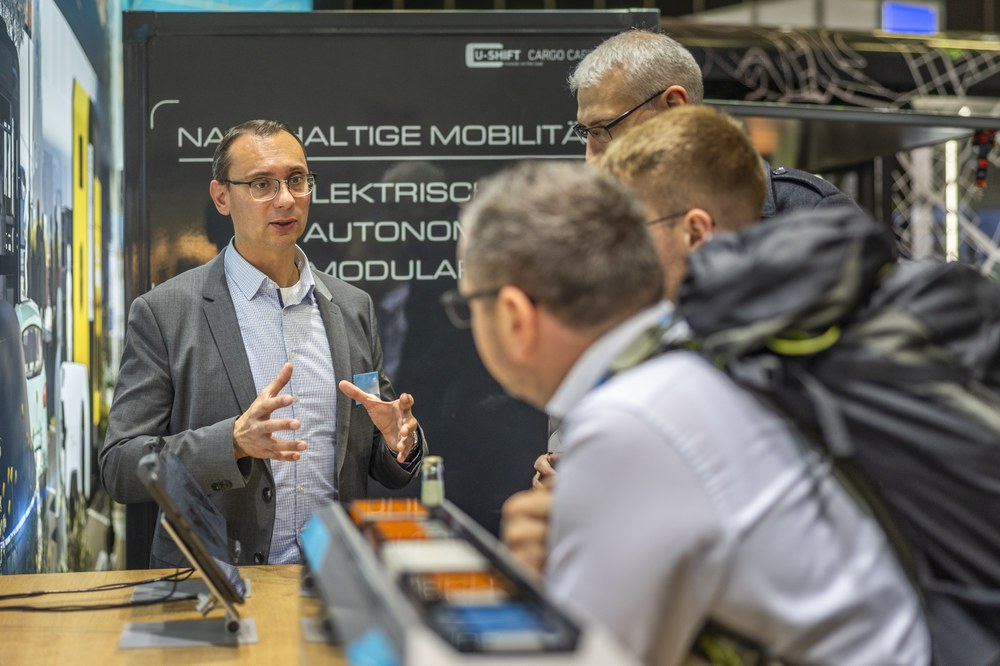
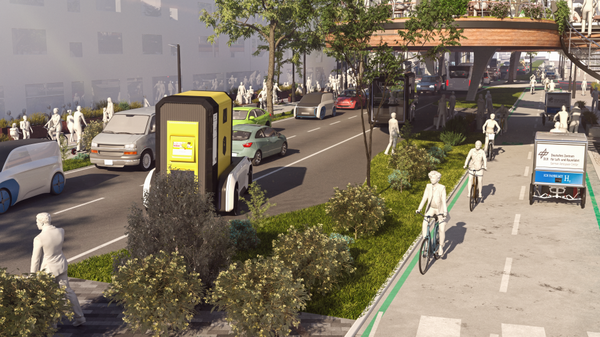
The challenges in the transport system are manifold - from outdated structures and technologies to a lack of economic efficiency and a shortage of personnel. What is therefore needed are concepts that are as flexible as possible and can adapt to the circumstances. This includes vehicle concepts and toolkits that can be used to make customised adaptations.
Vehicle concepts and flexible customisation
The challenges in the transport system are manifold - from outdated structures and technologies to a lack of economic efficiency and a shortage of personnel. What is needed are vehicle concepts that are as flexible as possible and can adapt to the circumstances.
Credit:
Dirk Sattler
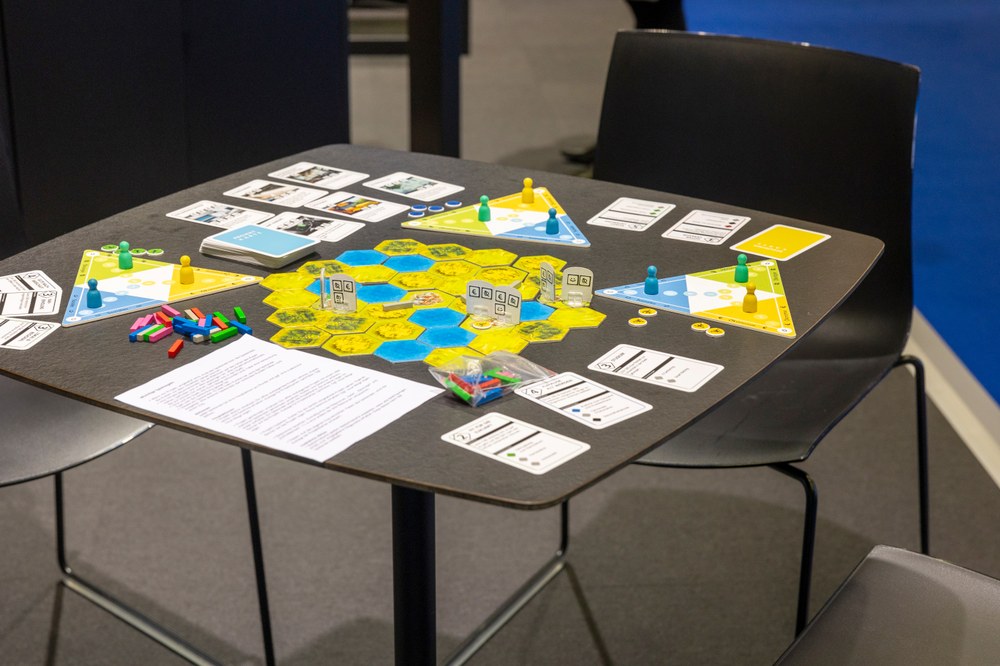
However, it is not just about concepts and toolkits - energy sources and systems, infrastructure, safety and the user perspective also play an important role in the project and are closely linked to our mobility. The challenge of having so many stakeholders involved in mobility can be overwhelming. With the serious game "forward-looking mobility", DLR demonstrates in a playful way that flexibility can also be challenged in a different way. In the serious game, up to three players find themselves in a co-operative environment. They have to design mobility for their communities and realise projects alone or together with others.
Serious game for municipalities
A board game instead of a digital tool. The serious game is designed to support local authorities in implementing new mobility projects.
Credit:
Dirk Sattler
Digital tools
Whether it is the evaluation of measures from the perspective of different user groups, the automated analysis of satellite images using artificial intelligence or personalised assistance systems - digital tools play a decisive role in a variety of ways in the solution modules for the transformation of mobility.
Digital tools
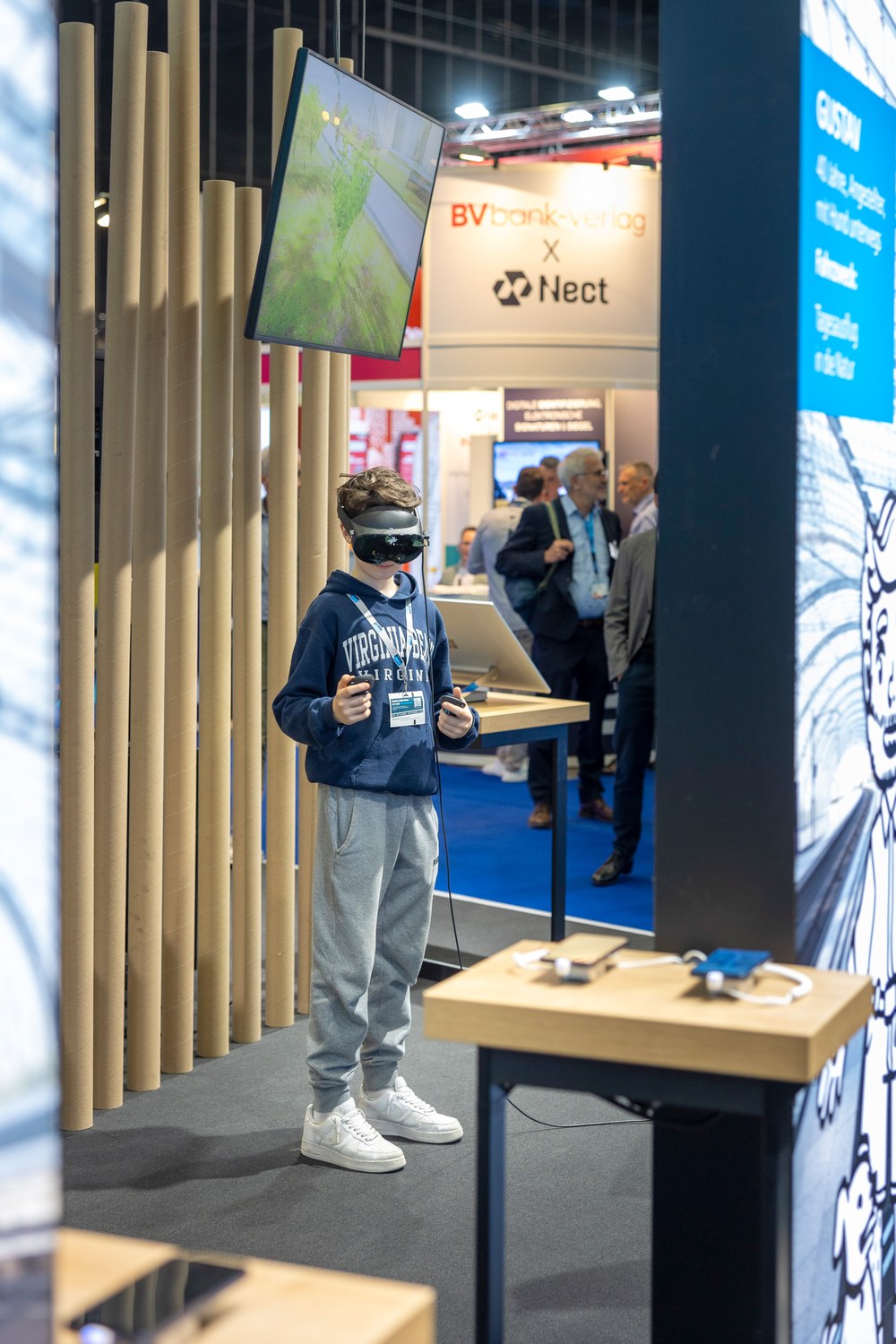
Have you ever slipped into the shoes of a child and experienced how they perceive their way to school, for example? And what would children want if they could redesign their street in front of school? Digital tools make it possible to deal with possible sources of error, personalised assistance systems - or simply a change of perspective.
Credit:
Dirk Sattler
In addition to the personalised assistance system "Total Situation Picture at the Hub", which DLR had already presented at Innotrans, the VR children's world was also on show this time. Adults shrink to 1.10 metres eye level - this corresponds to the viewing height of around ten-year-old children and wheelchair users. While many street situations pose no problem in the adult world, things look different from a child's perspective. This becomes particularly clear when these challenges are removed - in the redesign scenario that children have come up with.
Simulations and analyses, e.g. from the mobility laboratory, can show whether and how traffic measures actually work and facilitate the planning of such measures even before they are implemented. A number of short presentations at the stand provided information on this.
transformativ:innovativ:mobil
Experience reports, obstacles and opportunities
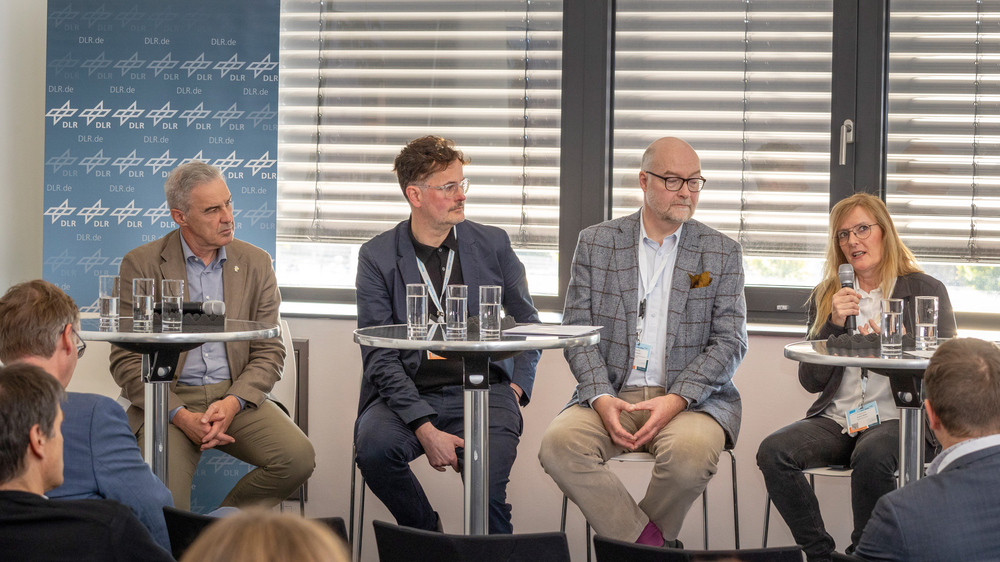
They summarised and discussed together. After three years of the project, all participants can share their experiences. Here in the panel discussion: Ralf Sygusch, Mirko Mühlpfort, Carsten Hansen and Dr Susanne Böhler-Baedeker (from left to right).
Credit:
Dirk Sattler
The interaction of all parties involved is crucial for the successful implementation of mobility projects. The DLR therefore invites companies, public institutions, local authorities and transport companies to engage in joint dialogue in the Project:Sponsors:Dialogue event series.
This year's Project: Paten: Dialogue took place as part of the Smart Country Convention. Under the motto "transformative:innovative:mobile", there were exciting discussions and impulses. The general conclusion was that we have not yet reached our goal. What works for local authorities does not necessarily work for transport companies or public institutions and vice versa. The exchange of knowledge about the different processes and possibilities between the players will remain a constant challenge.
The 3rd Projekt:Paten:Dialog ends the series of events for the time being.
Looking to the future
Prof Gernot Liedtke concluded the Project:Paten:Dialogue with an outlook. The focus was on transformation through innovation.