An intermodal transport system and sector coupling

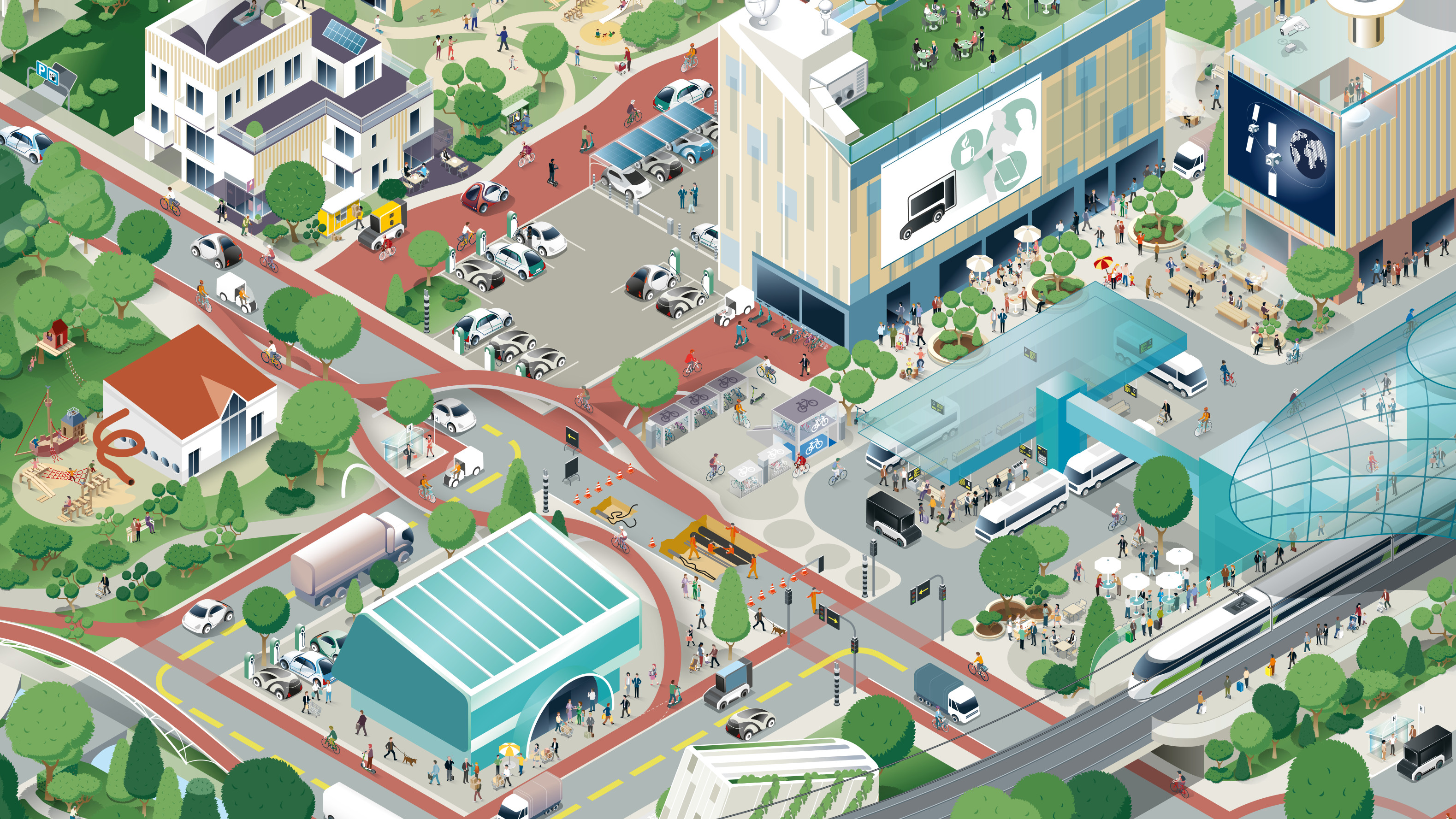
An illustration in the style of a ‘hidden object’ picture, depicting a bustling city with plenty of green spaces. In residential, leisure and shopping districts, people are actively getting about on foot, using e-scooters or cycling. They go shopping, visit shopping centres or eat in restaurants, including those with outdoor seating. Modern vehicles and autonomous transport systems, as well as buses and cargo bikes, carry people and goods. Maintenance work is being carried out on the sewerage system and cable network at a construction site. The U-Shift, developed by the German Aerospace Centre (DLR), is in use in both public transport and delivery services. Flying drones also deliver goods. Electric cars are being charged in a car park, part of which is covered by solar panels. People park their bicycles in a bicycle garage. People change transport at a central coach station. Opposite is a modern railway station where a high-speed long-distance train is stopping.
An intermodal transport system and sector coupling
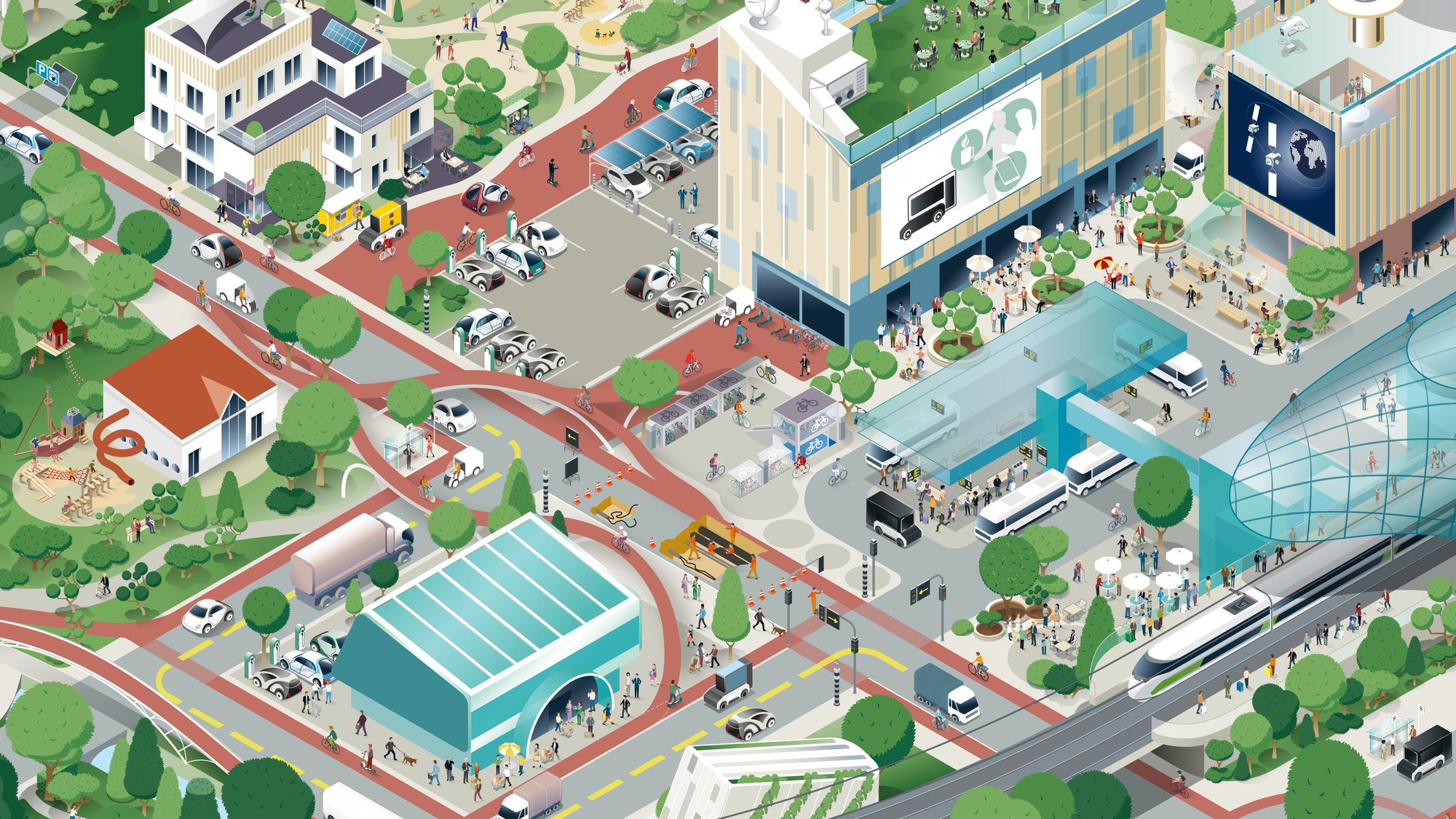
A digital, intermodal transport system connects all modes of transport. It enables seamless transfers, even between completely different modes of transport in both passenger and freight transport. It also facilitates the integration of new transport services, such as self-driving on-demand services in public transport, or new logistics concepts. As part of sector coupling with the energy sector, transport can contribute to resilience and sustainability, for example through the use of electric vehicles as mobile energy storage units.
Credit:

DLR (CC-BY-NC-ND 4.0)

DownloadDownload