Radinfrastruktur und Einsatzrouten: Sichere Coexistenz für Urbane ErreichbarkeitRESCUE
Emergency services in the transport transition
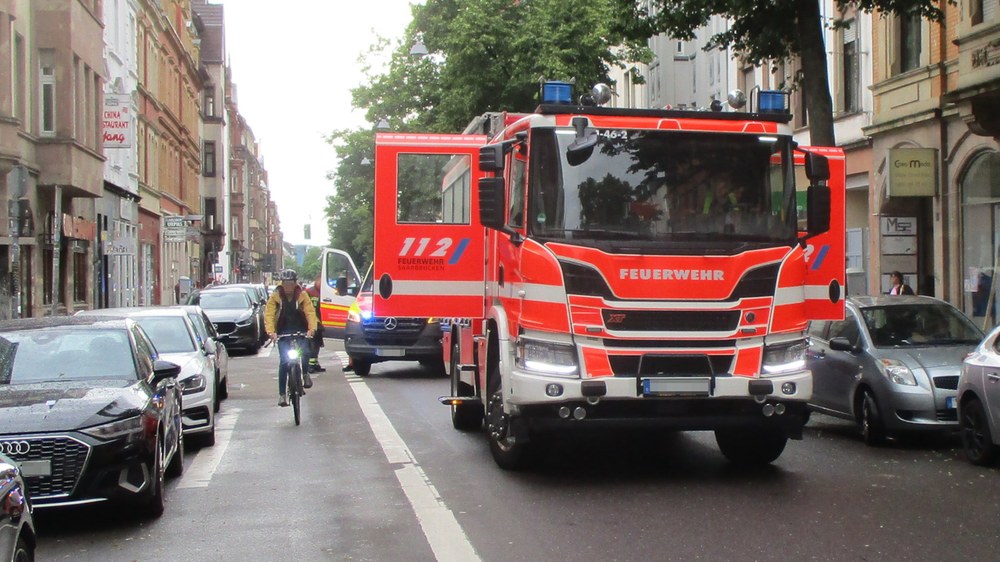
- The RESCUE project is researching the interaction between cycling infrastructure and emergency services. To this end, it is determining the current state of knowledge and analysing ongoing discussions on the topic. Key questions include the challenges faced by emergency services on their way to the scene of an incident and how various infrastructure measures affect the journey times of emergency vehicles and the response times achieved.
- There are already initiatives abroad that link cycling infrastructure and emergency services. Which of these could also be useful in Germany?
- How can synergy effects be achieved between cycling and non-police authorities and organisations with security tasks?
Transport infrastructure and traffic volume play an important role in enabling emergency services to reach their destinations quickly and reliably. The integration of active forms of mobility such as walking and cycling into the road space creates new requirements that must be reconciled with the needs of authorities and organisations with security tasks. These include short response times, i.e. the time between receiving an emergency call and the arrival of rescue units at the scene. Furthermore, not all planning options are being exploited to their full potential.
This is also increasingly being discussed publicly. However, there is a lack of reliable data for design concepts that take greater account of bicycle and pedestrian traffic while at the same time ensuring the needs of emergency services are met.
Real-world application data and examples from Europe
The RESCUE (Radinfrastruktur und Einsatzrouten: Sichere Coexistenz für Urbane Erreichbarkeit / Cycling infrastructure and deployment routes: Safe coexistence for urban accessibility) project is therefore analysing the impact of cycling infrastructure planning on emergency response operations for the first time. Real-world operational data is being used to determine exactly how various infrastructure measures affect the journeys made by emergency services.
The comprehensive evaluation also includes European examples of cycling infrastructure planning that integrate emergency services: Are these approaches promising, and can they be transferred to Germany?
The aim is to enable road space design based on verifiable data, which involves emergency services, particularly non-police emergency and security organizations, and their specific requirements for compliance with response times from the outset. The public debate on this topic should also be placed on a solid footing.
Involvement of emergency services in the project
Practitioners are already involved in the project. In addition to the Frankfurt am Main Fire Department as a direct contributor, the project is supported by an advisory board of experts. The results are published and presented on an ongoing basis. This provides support to local authorities, planners, fire departments and emergency services in their planning processes and helps to objectify the public debate.
- German Aerospace Center (DLR) – Institute of Transport Research (overall project management)
- German Institute of Urban Affairs (Difu)
- Frankfurt am Main Fire Management
The project RESCUE is funded by the Federal Ministry of Transport from funds allocated for the implementation of the National Cycling Plan.