Anyone who flies a lot will be familiar with it: the loud roar of the engines during take-off, the steady hiss during cruise flight or the vibrations that you feel rather than hear. Cabin noise is a constant companion on board commercial aircraft and a decisive factor for passenger comfort. But how can this noise be realistically predicted long before the first test flight? This is precisely the question addressed by the DLR project INTONATE .
The DLR project INTONATE makes cabin noise digitally tangible
INTONATE stands for Future Aircraft InteriOr Noise and VibrATion Evaluation and had an ambitious goal: DLR wanted to create an interdisciplinary, digital process with which cabin noise could be simulated, evaluated and even be experienced, from its origin to its perception by the passenger. This created an important basis for making future aircraft quieter and more comfortable, while at the same time reducing development risks with regard to unacceptable cabin noise.
From the engine to the ear - everything in one digital process
Noise in an aircraft does not originate at a single point. Engines generate sound and vibrations and surrounding air flows cause the outer skin to vibrate due to pressure fluctuations. This all spreads through the structure of the aircraft into the cabin. There, the sound and vibrations finally reach the passengers - with a very subjective effect.
Before INTONATE, DLR already had powerful simulation methods for many of these steps. What was missing was a consistent link between them. This is exactly where the project came in and developed a so-called "digital thread": a seamless simulation chain that links all relevant processes with one another. This makes it possible to understand how noise originating from a specific source is perceived at a specific position inside the cabin.
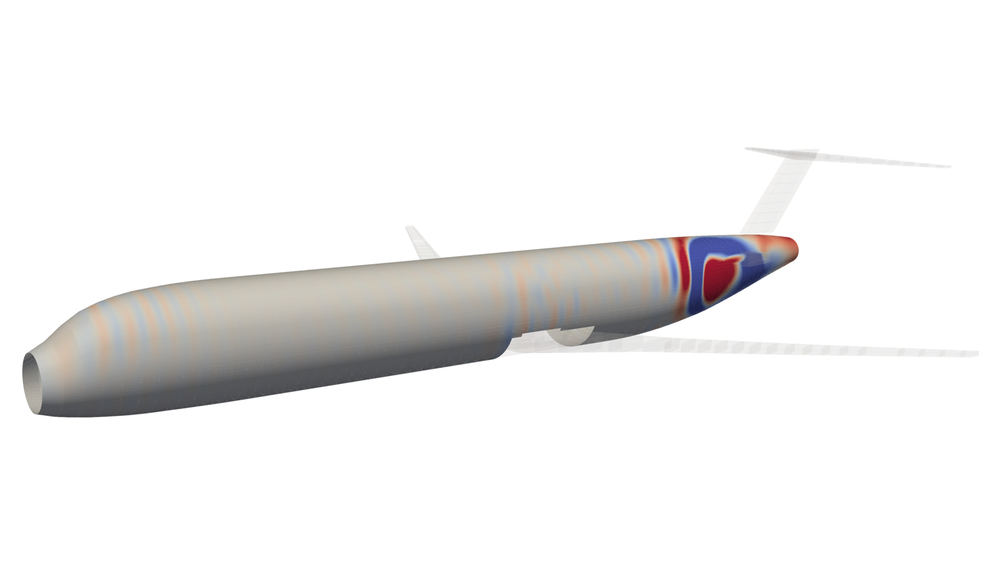
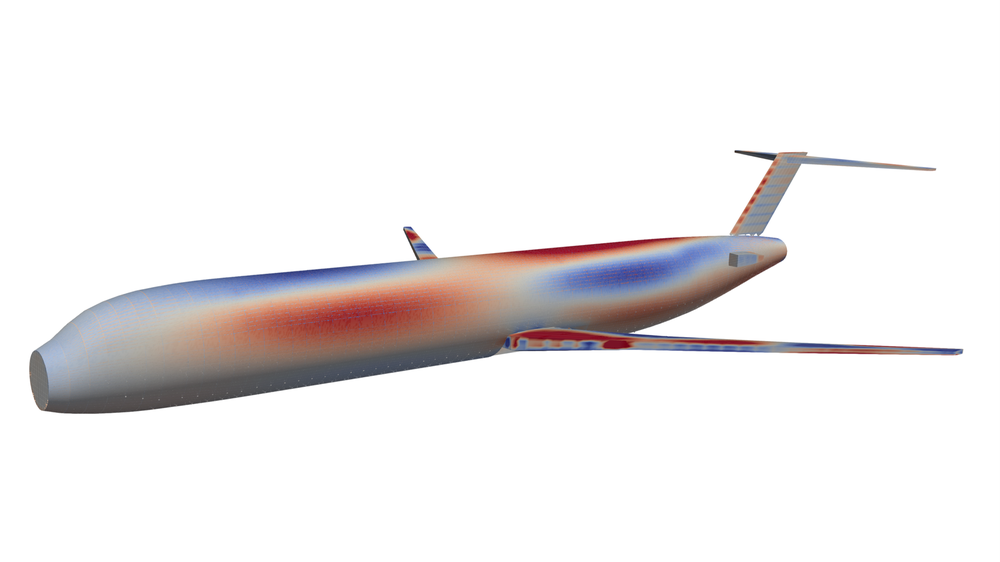
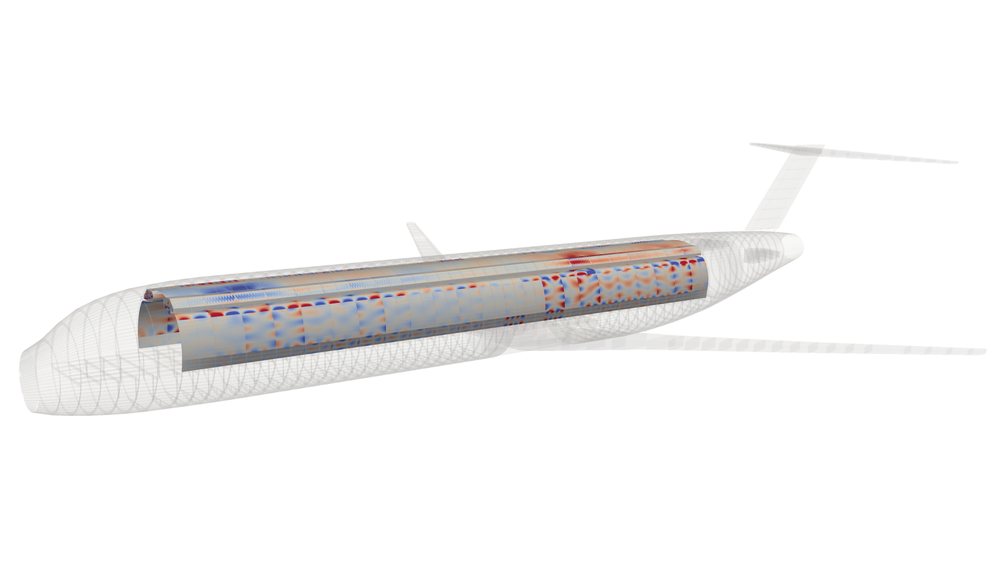
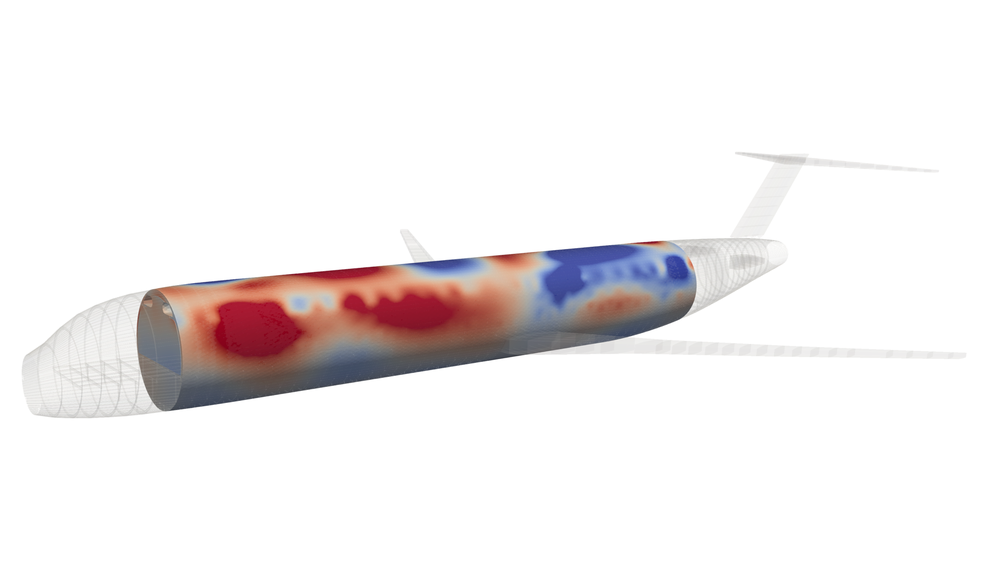
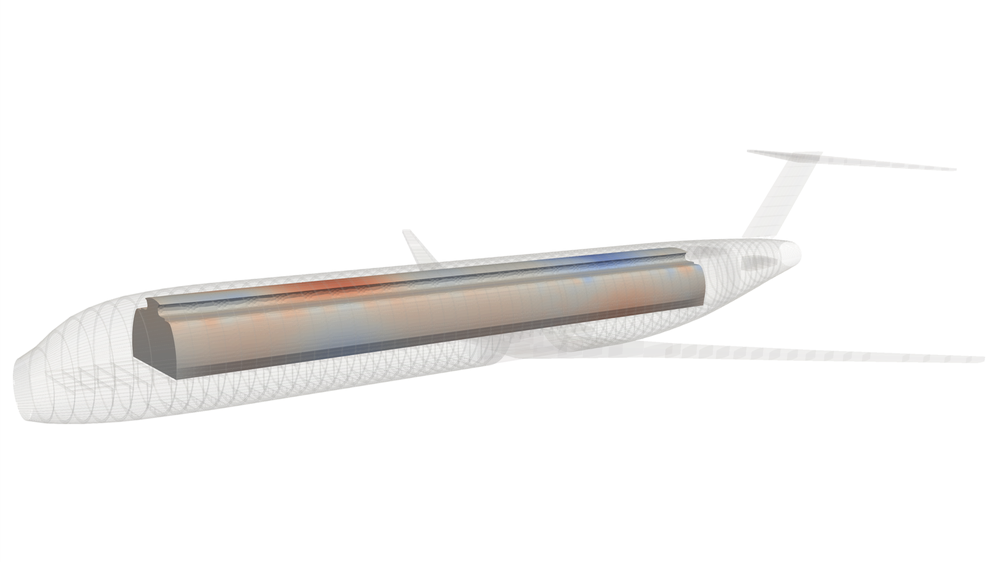
Example of the digital thread: From the fan noise as a sound source to the vibrations of the aircraft structure and the propagation of the noise inside the cabin.
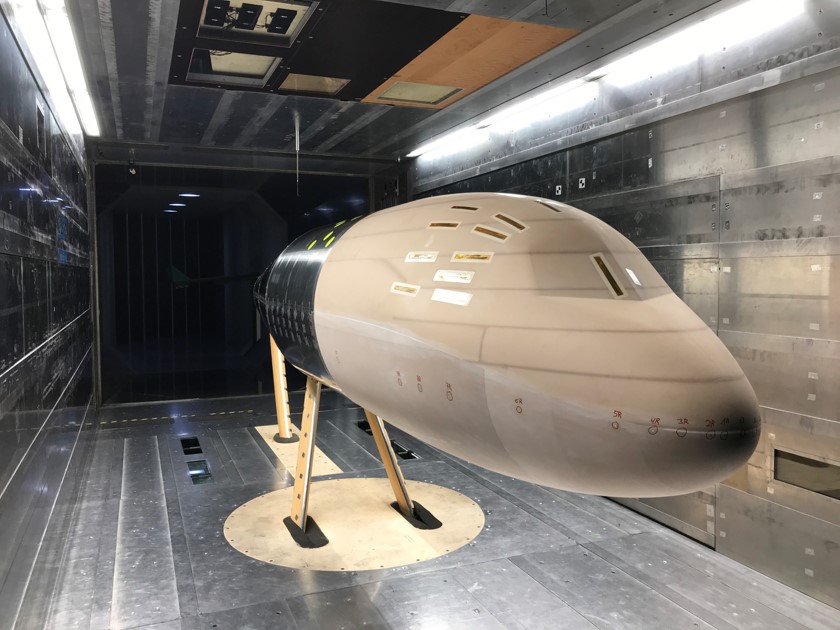
In order to reliably set up this digital thread, existing models had to be improved and new methods developed. One focus was on the investigation of turbulent air flows along the aircraft fuselage, which contribute significantly to the generation of noise. In complex wind tunnel experiments, these effects were systematically investigated for the first time for strongly curved fuselage areas.
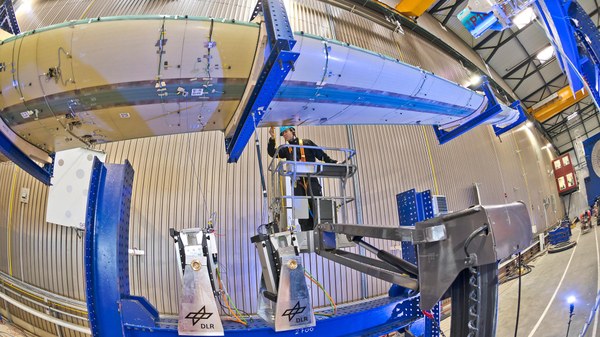
Measurement setup in the DNW-NWB:
A 1:4 scale model of the cockpit fuselage provided new insights into the generation of noise on highly curved surfaces.
At the same time, acoustic sources such as buzz-saw noise from fans and engine-induced vibrations were modeled in more detail. The structure of the aircraft fuselage and the cabin interior were modeled for the first time in high-resolution simulation models in order to realistically capture their role in sound transmission in the acoustic frequency range.
Two aircraft configurations in comparison
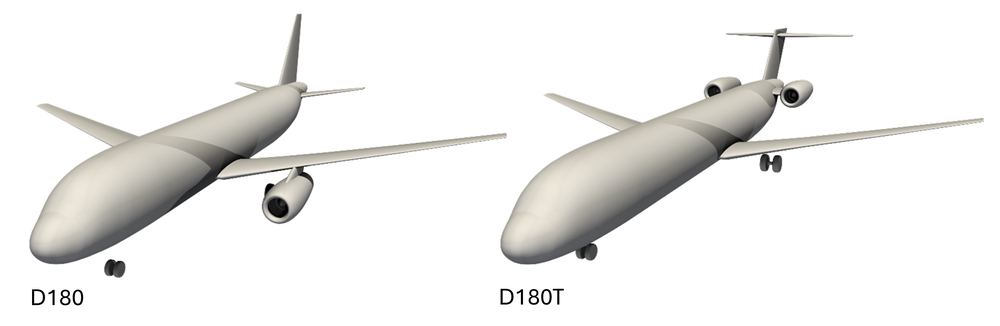
The D180 and D180T aircraft concepts examined:
Two similarly sized, classic short- to medium-haul aircraft whose different engine arrangements noticeably change the sound in the cabin.
The highlight of the project was the application of the digital thread to two different aircraft configurations. The cabin noise was fully simulated for both designs - from the sound source to the propagation in the interior. This revealed clear differences: depending on the position of the engines and the structural design, the volume, the frequency distribution and the character of the perceived sound changed significantly.
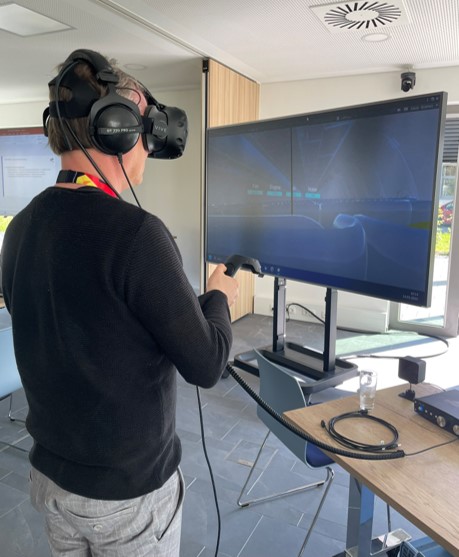
Experiencing cabin noise at the INTONATE project final meeting
The calculated sounds were auralized, i.e. converted into realistic sound signals, and embedded in a digitally visualized cabin. With the help of a VR environment, the project participants were able to experience the cabin noise as if they were actually sitting in the aircraft cabin. The simulation results could thus be experienced directly.
Why this is important
The ability to hear and evaluate cabin noise realistically at the design stage opens up completely new perspectives. Different aircraft concepts can be compared at an early stage. If critical noise sources are identified, targeted countermeasures can be taken long before expensive prototypes are built.
INTONATE has shown that this approach works. Although not all questions could be answered conclusively in the project - it focused on two classic configurations to ensure a high level of comparability with existing data - the foundation has been laid.
What's next for the quiet cabin?
INTONATE has succeeded in making cabin noise tangible. The project thus marks an important step on the way to quieter and more comfortable aircraft. This digital thread is being extended in the follow-up project INPHASE. Modern aircraft designs are to be compared with each other. In order to be able to map the modern designs, methods for electric drive concepts and noise reduction measures must be implemented in the digital thread. The comparison of these designs will not only take place subjectively by the project participants, but will also be carried out in a scientific test subject study.
Author
René Winter, Department Structural Dynamics and System Identification, DLR Institute of Aeroelasticity