Tracing the origin of noise: visualizing the propagation of vibrations within structural components
August 6, 2026
Tracing the origin of noise: visualizing the propagation of vibrations within structural components
Whether in the cabin of a modern passenger aircraft or the interior of a car, unwanted noise impairs passenger comfort. In this context, different contributions to noise can be distinguished: on the one hand, sound is transmitted directly through the air from sound sources to the locations where it is perceived as annoying (i.e., noise). On the other hand, vibrations can be transmitted through structures as so-called structure-borne sound. When these vibrations reach lightweight, large-surface structural components, they become sound sources themselves and radiate noise into the surrounding area. To effectively reduce this noise contribution, engineers must know which structural components transmit vibrations from a source to the points of noise radiation.
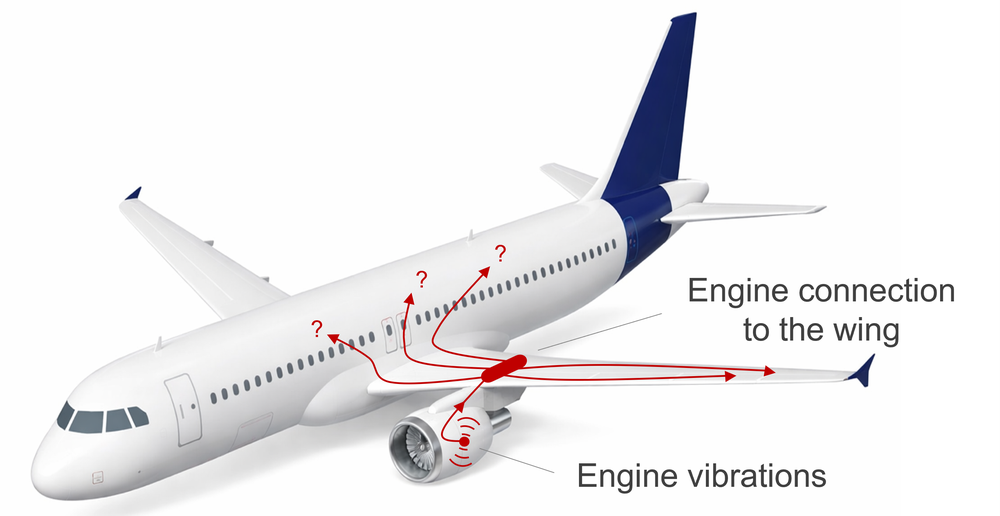
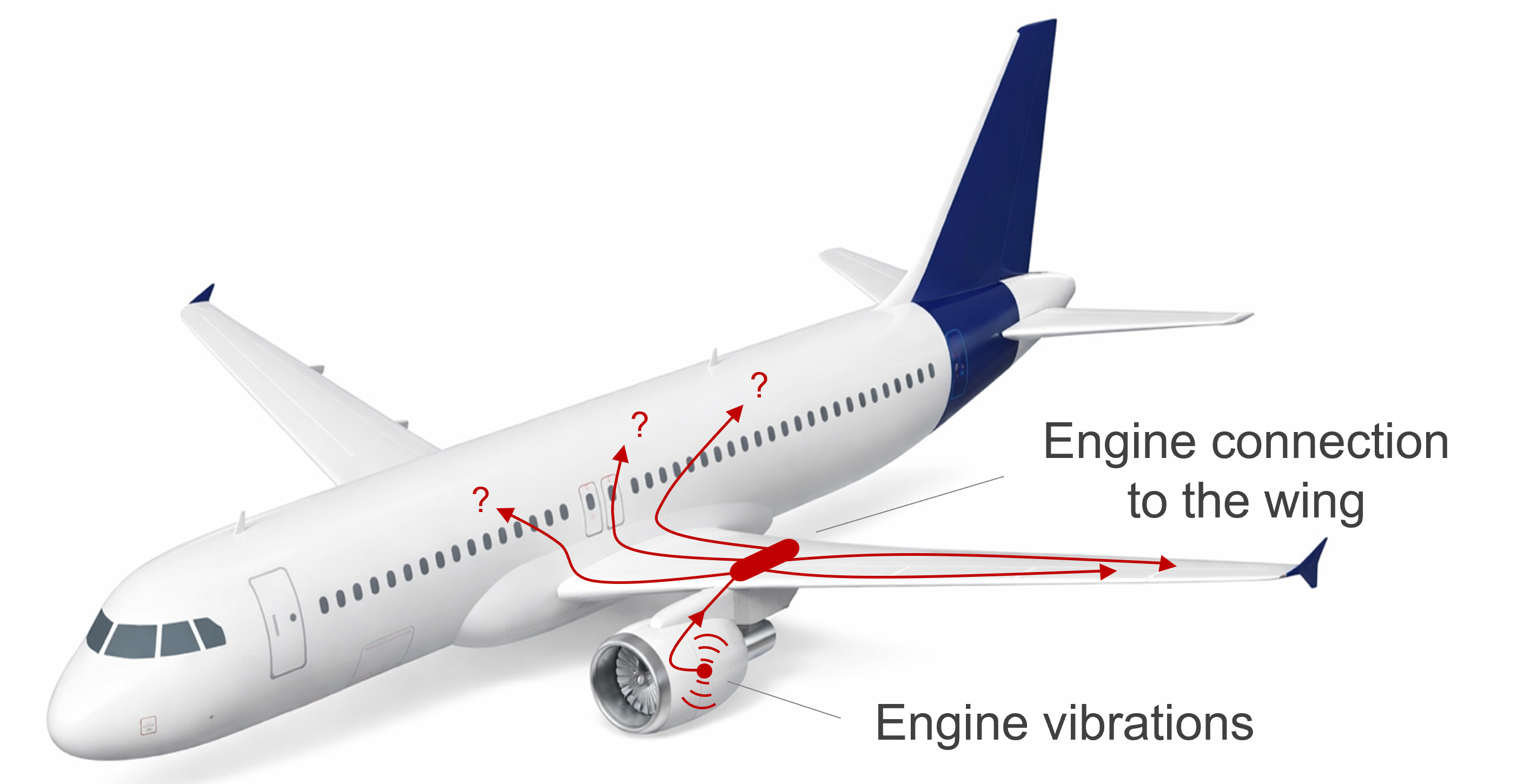
The propagation paths of vibrations can be determined using the kinetic energy of the oscillation. This can be easily illustrated using an aircraft as an example: one of the primary sources of vibration is the engine. Starting from its attachment point on the wing, vibrations are transmitted along the wing toward the wingtip and into the fuselage. However, once the vibrations reach the fuselage, it is no longer possible to specify the exact paths along which they propagate within the large fuselage structure.
Abstract transmission path of vibrations from the engine, propagating along the wing structure and into the cabin
To quantify the underlying pathways of vibration transmission, the structural intensity is computed. This parameter represents the localized mechanical energy flow within the structure and thus provides a physically meaningful visualization of elastic wave propagation.
The “compass” for vibrational energy
The structural intensity (STI) for a given structure is obtained within a dynamic response analysis using a finite‑element (FE) model as the product of the mechanical stresses present inside the structure and its vibration velocity.
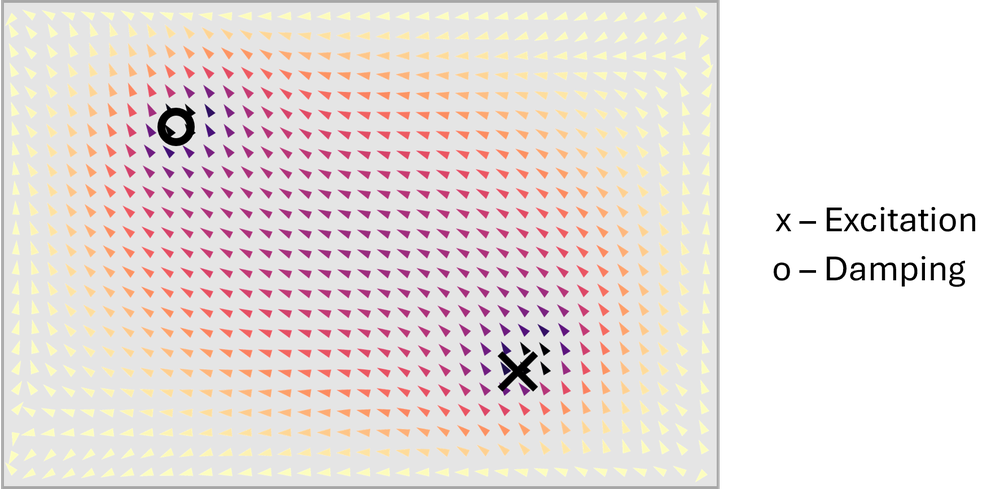
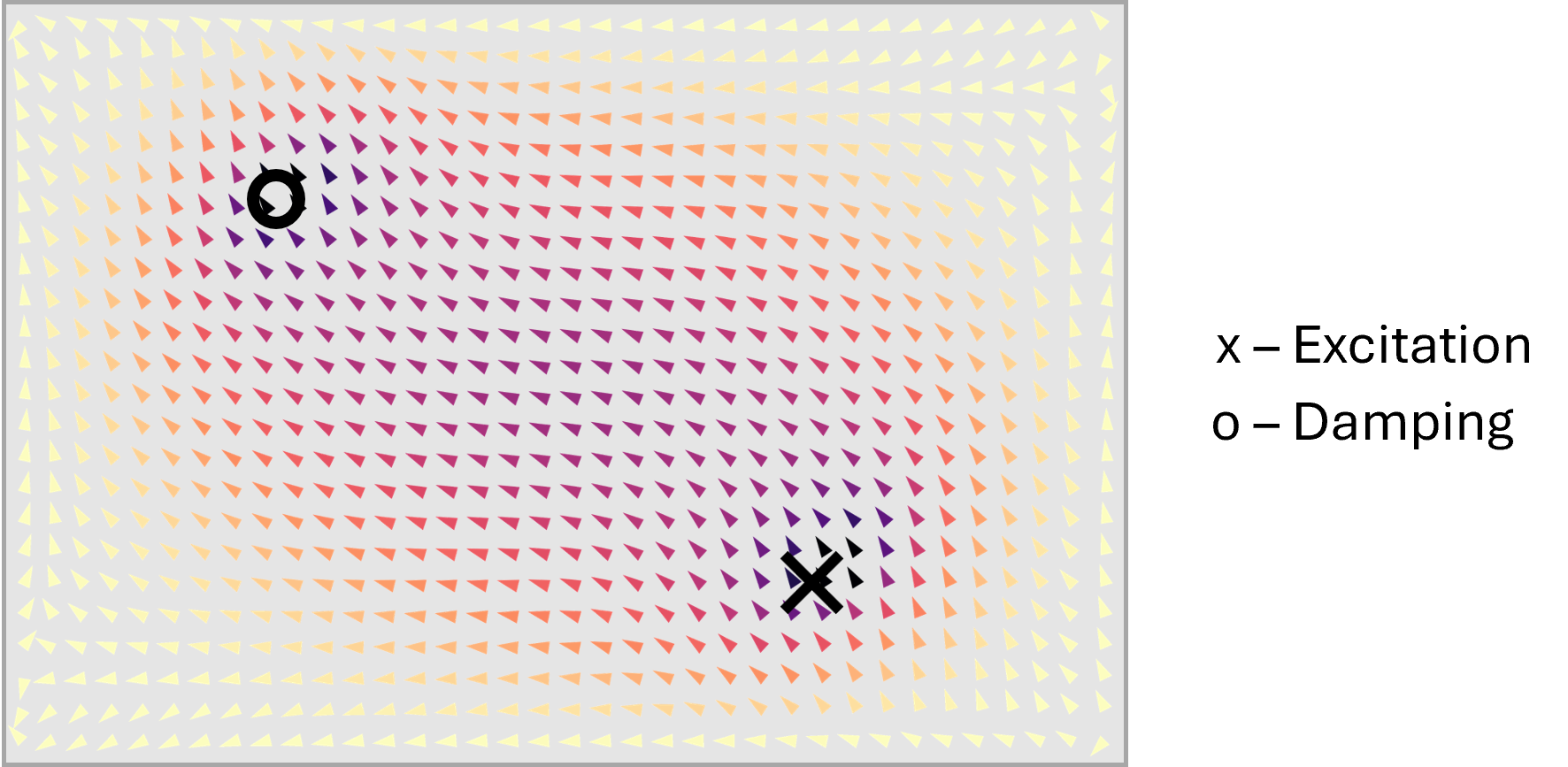
STI may be regarded as a directional indicator for vibrational energy: within each element of the FE model it forms a vector quantity that specifies both the magnitude and direction of the transport of kinetic energy. Whereas a conventional response analysis or vibration measurement only reveals how strongly a point vibrates, STI provides information about the direction and magnitude of the energy flux at that point in the structure. By computing this quantity at multiple locations within a defined region of the structure, a vector field emerges that represents the energy flow. This is most easily visualized for a plate‑like structure in which a force excites vibrations at one point while a damper attenuates them at another. Between these two points, a vector field develops that corresponds to the path of vibrational energy at a single frequency.
Vector field of the vibrational energy propagation at 85 Hz (Excitation, Energy Dissipation)
In computer‑aided simulation (Finite Element Method, FEM), this quantity can be computed relatively easily because all required information on vibration responses and internal stresses is available. In experimental settings, however, the situation is different: measurement systems such as laser Doppler vibrometers or accelerometers can only capture the motion of the surface. As a result, the crucial internal stresses within the material cannot be quantified.
The hybrid approach: integrating the advantages of numerical simulation and experimental measurement
To enable the visualization of energy transport in experimental investigations, a hybrid method has been developed. The underlying concept is to combine real measurement data with mathematical formulations originating from numerical simulation.
Measurement: First, the response of a structure (e.g., a thin walled plate) to a given excitation (e.g., at the location of a vibration source) is sampled at many points using a measurement system, in order to obtain a detailed representation of the surface velocity (vibrational motion).
Reconstruction: Virtual elements are defined between the measurement points. These elements are assembled computationally into a virtual mesh, which forms the basis for the subsequent calculation procedure and incorporates kinematic assumptions commonly used in numerical simulation.
Computation: Using so called shape functions and assuming a constitutive material law for the investigated structure, the deformation of the virtual elements between the measurement points is computed, along with the internal stresses that arise within these virtual elements.
Structural intensity: The computed internal stresses of the virtual elements are then combined with the measured surface velocities. This yields the desired STI vectors for each virtual element.
Through this hybrid approach, and provided that the measurement points are sufficiently dense, the otherwise inaccessible internal stresses can be estimated with adequate accuracy—without requiring highly complex measurement techniques capable of probing the interior of the material.
Demonstration in the laboratory and on real aircraft fuselages
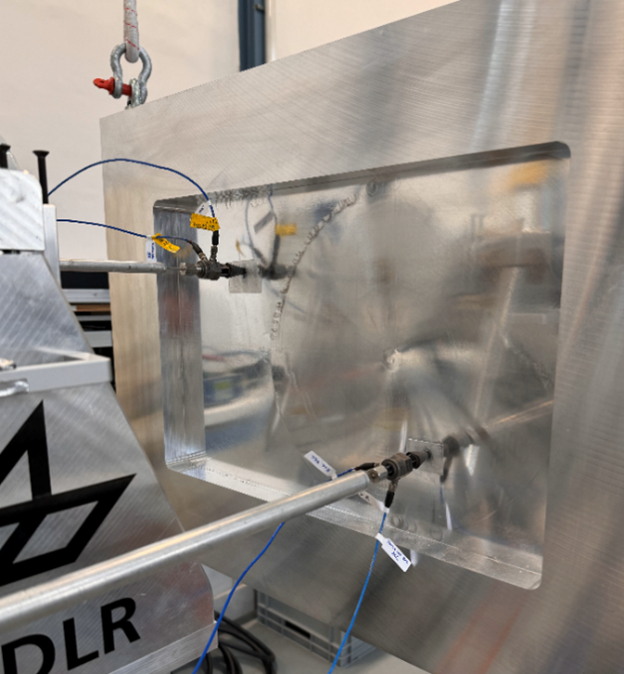
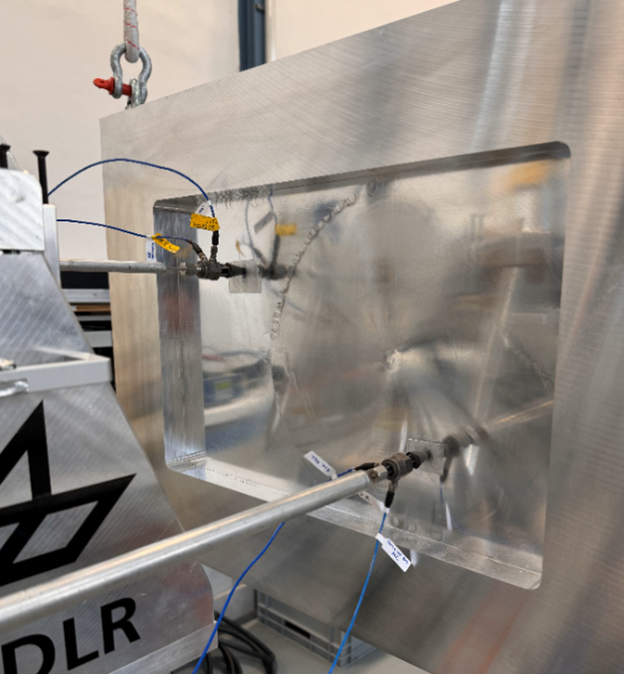
To demonstrate the applicability of the method and to quantify its accuracy, the researchers conducted experiments on a specially manufactured aluminum plate. The experiment was configured such that a flow of vibrational energy would establish itself between two discrete points on the plate. To achieve this, electrodynamic shakers were mounted at both points—small devices that can excite a structure in a controlled manner. This setup was also replicated in an FEM simulation, which served as the reference.
Experimental setup: laboratory structure with two attached electrodynamic shakers
The results are promising: a comparison between the measurement data evaluated using the hybrid method and a full numerical simulation showed that the direction of the energy flow could be determined with an accuracy of more than 95%. Even complex phenomena, such as small vortices in the energy flow, were reproduced with good accuracy by the measurements.
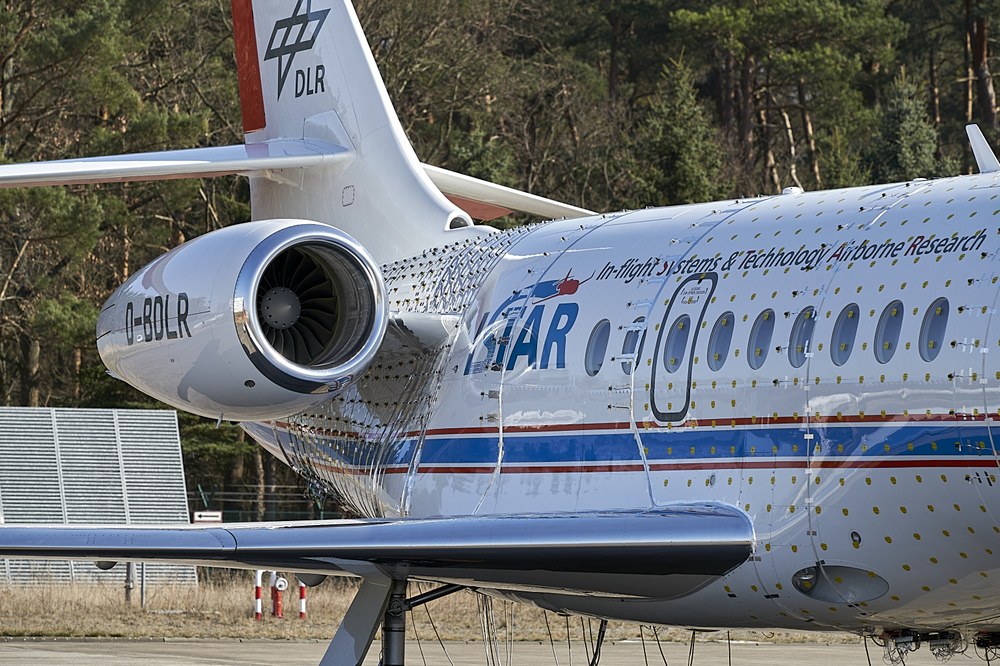
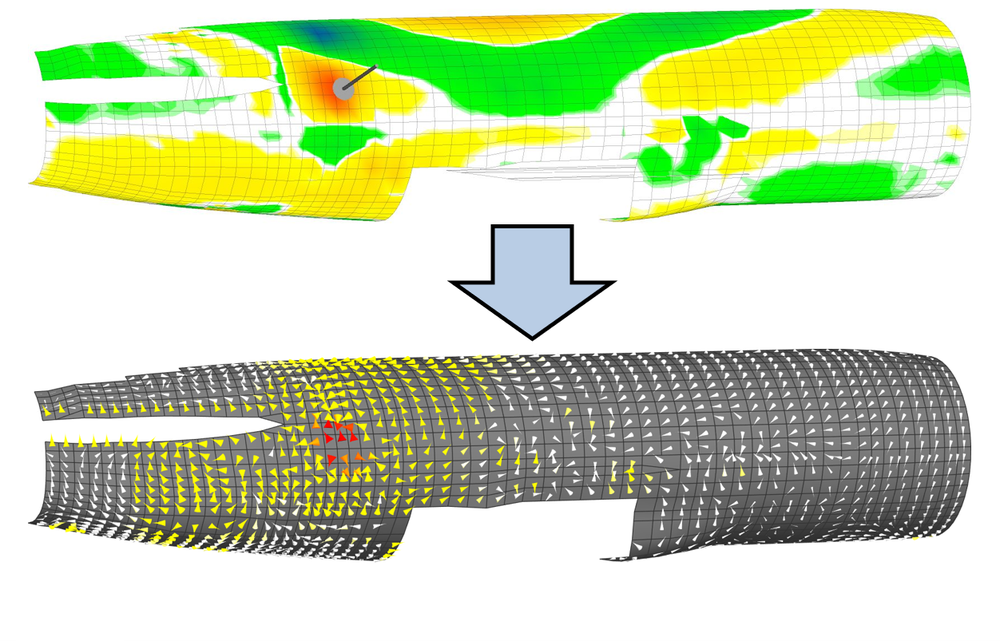
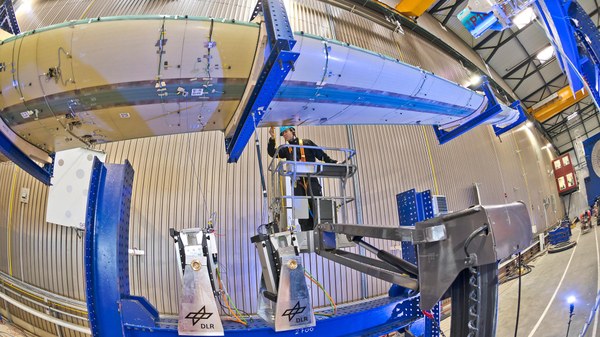
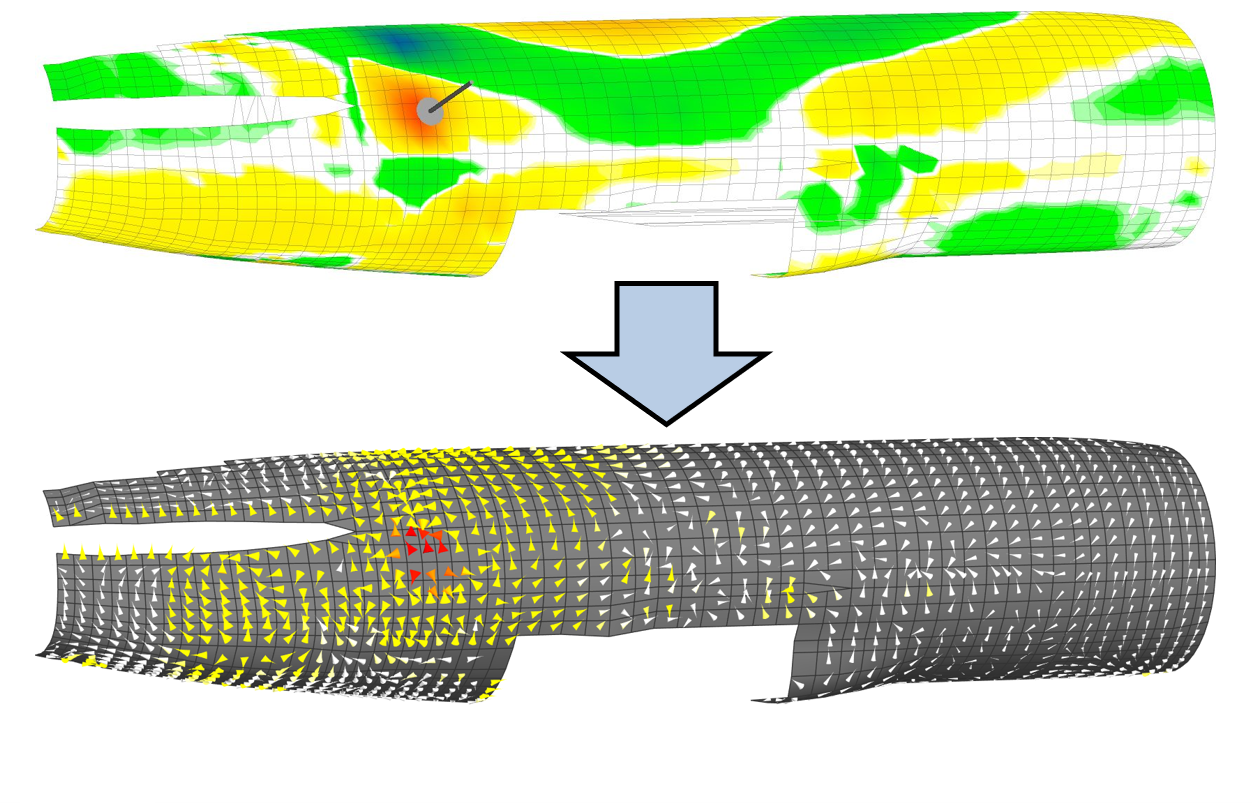
The target application of the method is the improvement of cabin comfort through the reduction of noise caused by vibrations. As part of measurement campaigns, vibration data were recorded on the DLR research aircraft ISTAR. These data have since been successfully evaluated using the hybrid method approach. For the experiment, one half of the fuselage was equipped with hundreds of accelerometers, and the structural vibrations resulting from shaker excitation at the engine were measured. Using the hybrid method, a vector field was computed from these vibrations that illustrates the propagation of vibrational energy.
ISTAR research aircraft with accelerometers installed on the fuselage
The practical significance of this research is considerable. By providing engineers with spatially resolved insight into vibrational energy flow, countermeasures, such as damping treatments (e.g., constrained layer damping), can be applied precisely at the points of highest effectiveness. This leads to reductions in both weight and material usage, an essential factor in lightweight aircraft and vehicle structures. The hybrid method thus constitutes a new analytical capability that supports the development of quieter, more efficient transportation systems