
DLR Award honours Dr Sven Jacobsen for his work at the research centre
The Maritime Safety and Security Lab in Bremen is celebrating an outstanding achievement: Dr Sven Jacobsen has been awarded the prestigious “DLR Exceptional Achievements in Science” prize in Category B for his pioneering scientific work. The honor recognizes the excellent achievements of the Bremen team in developing innovative algorithms for satellite-based monitoring of the world’s oceans.
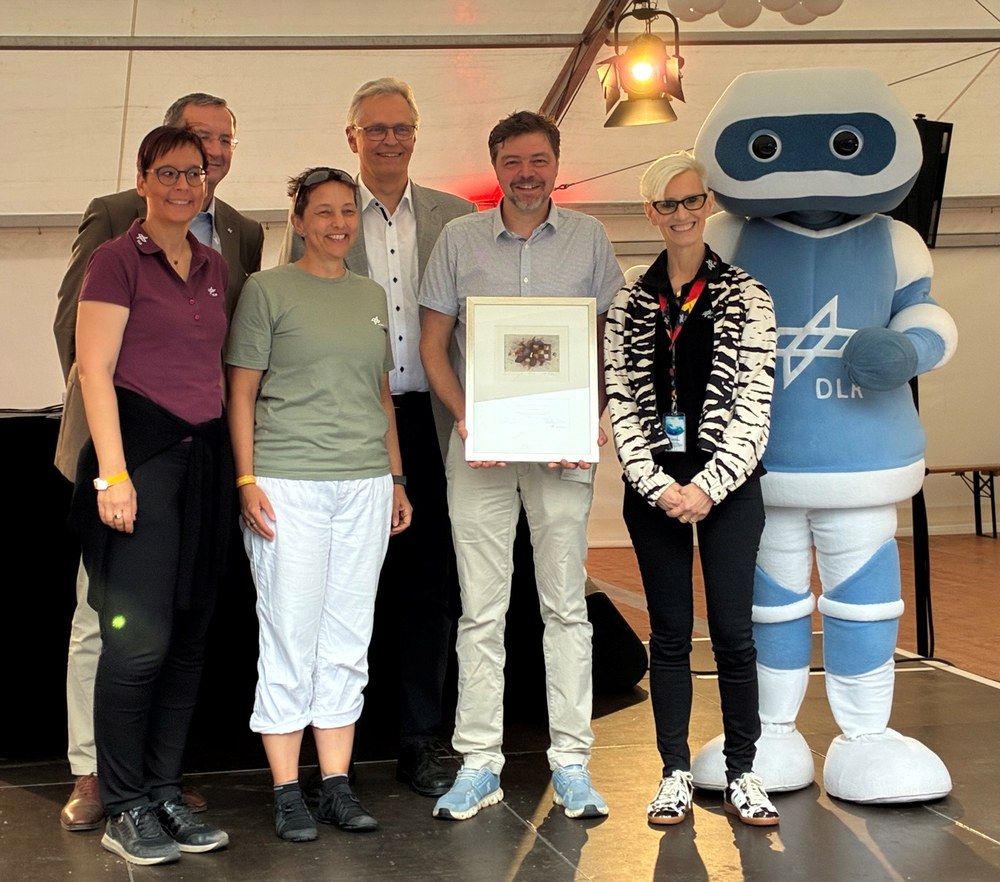


The award, presented by the Executive Board of the German Aerospace Center (DLR), is one of the organization’s highest scientific honors. Whilst Category A recognizes contributions to basic research, Category B is reserved for application-oriented work demonstrating exceptional commitment to project work. It is precisely in this field that the team led by Dr Sven Jacobsen at DLR’s Remote Sensing Technology Institute (IMF) has made a name for itself internationally in recent years.
Robust algorithms for a global maritime situational awareness
Work at the Maritime Safety and Security Lab in Bremen focuses on transforming raw data from Earth observation satellites – particularly SAR – into directly usable information. Using modern SAR-specific processing techniques and machine learning methods, the team is developing automated procedures that precisely capture the state of the seas and activities on the water.
The applications of the Bremen algorithms are of great societal relevance: national and international authorities and bodies such as the European Maritime Safety Agency (EMSA) or the Maritime Safety and Security Centre in Cuxhaven use such data to obtain a comprehensive maritime situational picture and make decisions on this basis. The information also provides the maritime economy with important operational data and contributes to international research into environmental and climate protection.
The practical relevance is evident in the lab’s wide range of applications. This ranges from AI-based detection of oil slicks on the high seas and the prediction of oil drift, through the automated near-real-time detection of ships, to product development for the next generation of the European Copernicus marine monitoring program. In addition to information on wind and sea state conditions, the sea ice situation can also be deduced from the SAR data. The results from the Bremen-based analysis software are used, for example, by the national ice service of the Bundesamt für Seeschifffahrt und Hydrographie (BSH) to produce daily ice charts. Just how valuable this data is in direct operational use on board was demonstrated not least by the successful support provided to the Antarctic Endurance22 expedition, during which navigation through pack ice was aided by SAR-based sea ice condition information. The German research vessel ‘Polarstern’ also regularly relies on ice information from Bremen for its navigation.
A bridge between cutting-edge research and practical application
“The art in our field lies in forging robust, operational services from highly complex theoretical models and algorithms, which must work flawlessly within seconds in an emergency,” explains award winner Dr Sven Jacobsen. The award recognizes the lab’s collaboration with numerous users, the successful translation of DLR research into practical technology, and highlights the strategic importance of the DLR site in Bremen, which has established itself as a key center of expertise for safety on the world’s oceans and the protection of the marine environment.
The prize was traditionally presented during the DLR Science BBQ ceremony, at which the DLR Executive Board honors outstanding members of the DLR.
The entire EOC warmly congratulates Sven Jacobsen and his team on this well-deserved success!