
Ozone Hole 2026: One of the Largest in Years
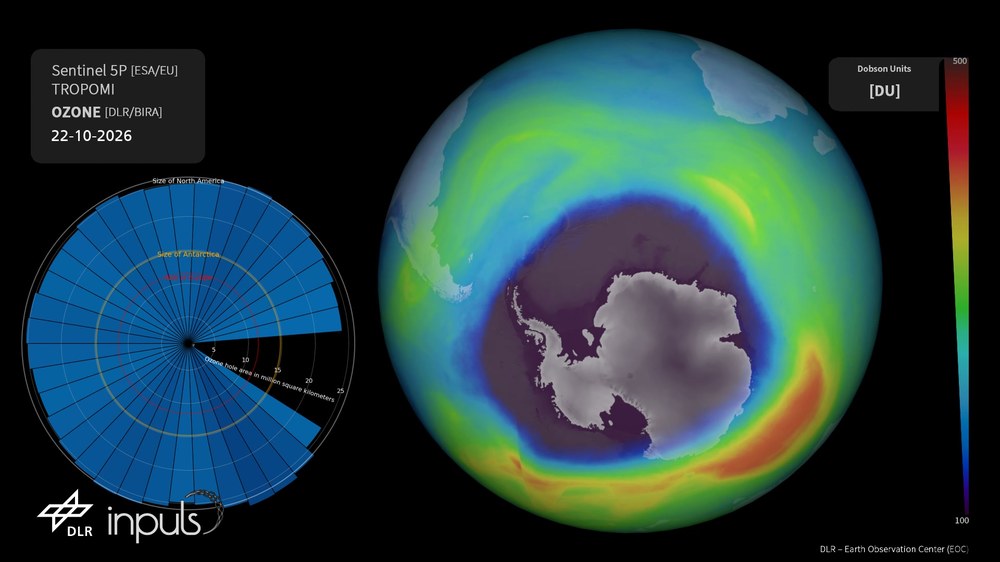
The ozone hole in 2025 was unusually small, as the World Meteorological Organization (WMO) reported just a few weeks ago in its Ozone Bulletin. The recovery of the ozone layer is indeed a major success of the Montreal Protocol. However, the current ozone hole season in 2026 presents a very different picture. This year, the ozone hole is one of the largest seen in many years.
Ozone Hole 2026: One of the Largest in Years
Your consent to the storage of data ('cookies') is required for the playback of this video on Quickchannel.com. You can view and change your current data storage settings at any time under privacy.
Measurements from the TROPOMI instrument aboard the European Space Agency’s (ESA) Sentinel-5P satellite show that the ozone hole in 2026 has reached a very large area of up to 27 million km² (as of September 20, 2026). Although this may initially seem alarming, it is caused by meteorological conditions, such as the size of the polar vortex and temperatures over Antarctica. These factors can vary considerably from year to year. Analyses of the data by the Copernicus Atmosphere Monitoring Service (CAMS) show that the total ozone loss is not as severe as might be feared. Ozone levels within the ozone hole have not fallen to exceptionally low values.
The development of the ozone layer has been monitored at the German Aerospace Center (DLR), at its Institute of Remote Sensing Methodology, since 1995. The ozone hole is an annual recurring phenomenon. It begins during the Southern Hemisphere’s spring, when the first sunlight reaches the edge of Antarctica (from late July to mid-August), and usually ends in early December. Around this time, the polar vortex – a circular wind system surrounding Antarctica – breaks down, allowing warmer, ozone-rich air from the mid-latitudes to mix with polar air masses and disperse the ozone hole. Ozone depletion is caused primarily by chlorofluorocarbons (CFCs), which are harmful to the climate and were released into the atmosphere by human activities over many decades. These substances were used mainly as propellants and refrigerants.
Links: