This ESA-funded project involves prototyping and developing of the Level-2 Ocean Processor for the upcoming ESA L-band SAR mission ROSE-L. The processor will provide ocean products including ocean surface vector stress, sea state and line-of-sight surface currents. The project team will support the integration into the algorithm development environment (CEM-PAL) and the ground segment. Furthermore, an approach for the calibration and validation will be defined.
DLR is leading the software engineering and integration of the ocean processor in this project. Moreover, DLR will develop the processor module for sea state retrieval, which is based on DLR’s SAR-SeaStaR algorithm. As ROSE-L data will not be available before its planned launch in 2029, DLR will also provide simulated and reconditioned data from other missions.
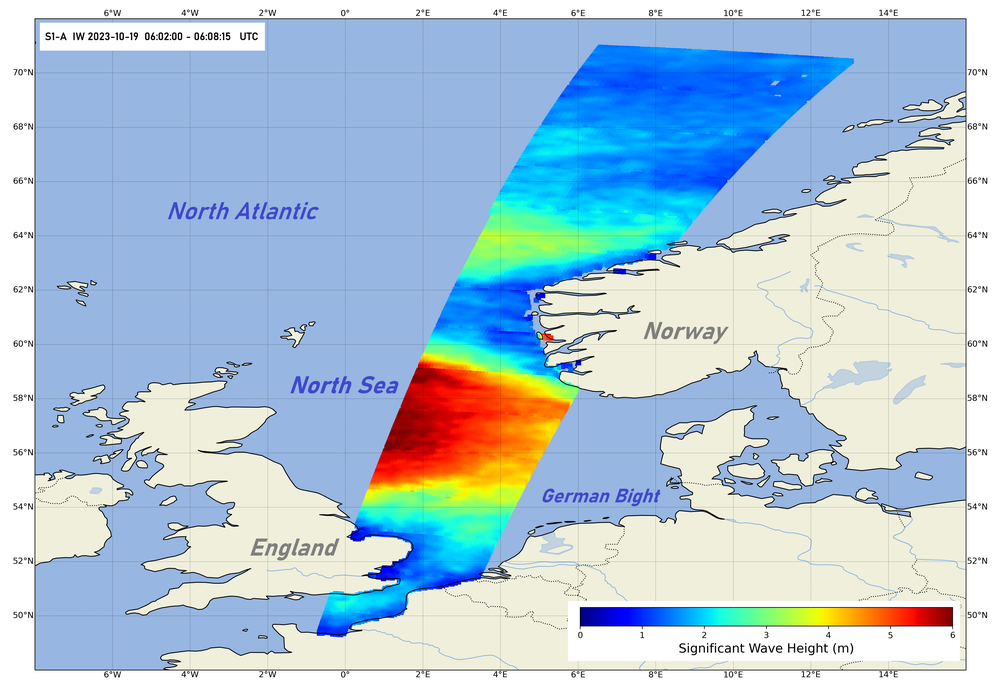
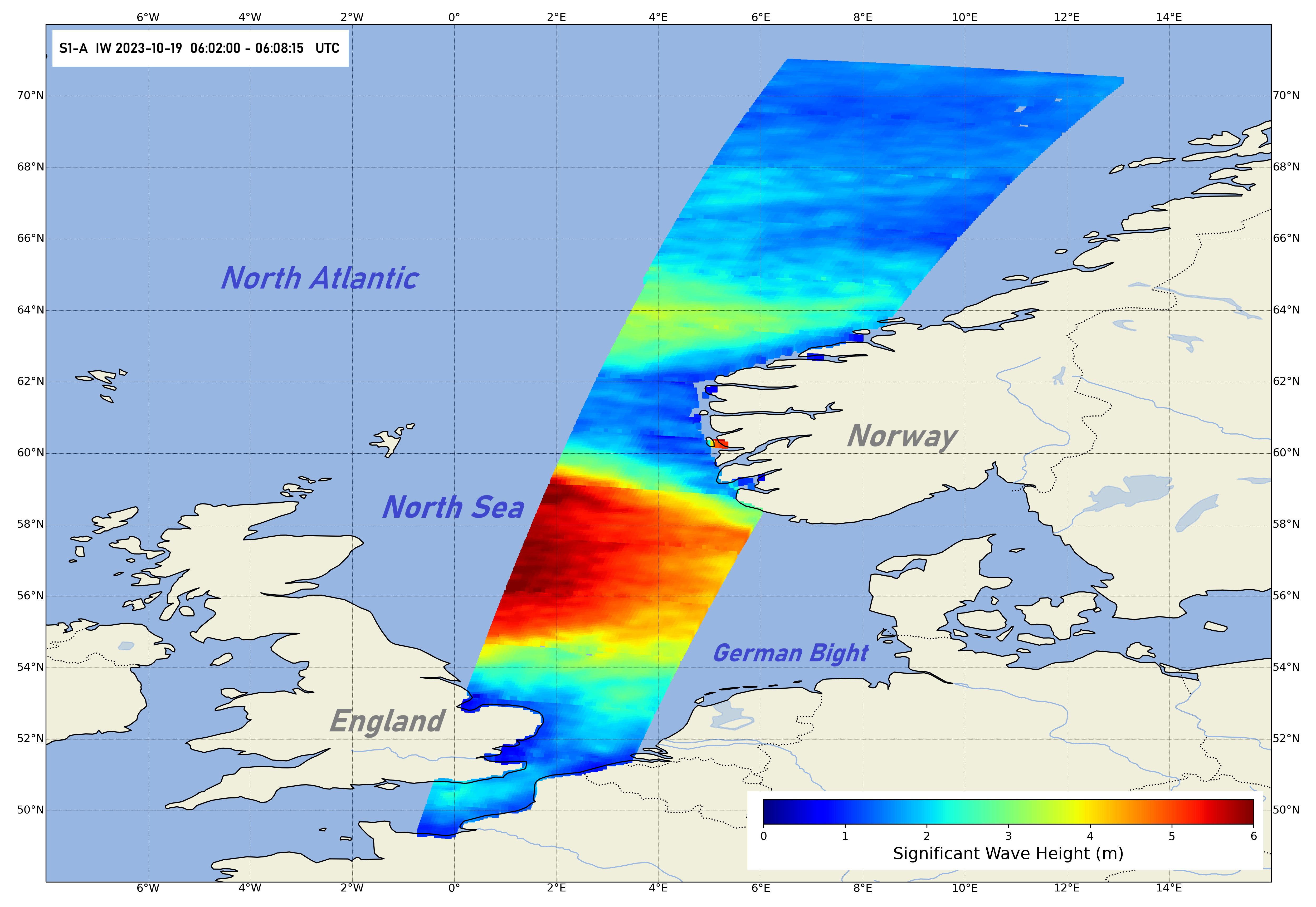
Example of sea state processing with SAR-SeaStaR
Example of processing the sea state during a strong storm in the North Sea in October 2023, which caused a series of damages and destruction in the coastal areas. Shown is the significant wave height estimated from SAR acquisitions of the ESA Copernicus Sentinel-1 satellite with DLR’s algorithm SAR-SeaStaR. The sea state module for the ROSE-L Level-2 Ocean Processor will be based on this algorithm.