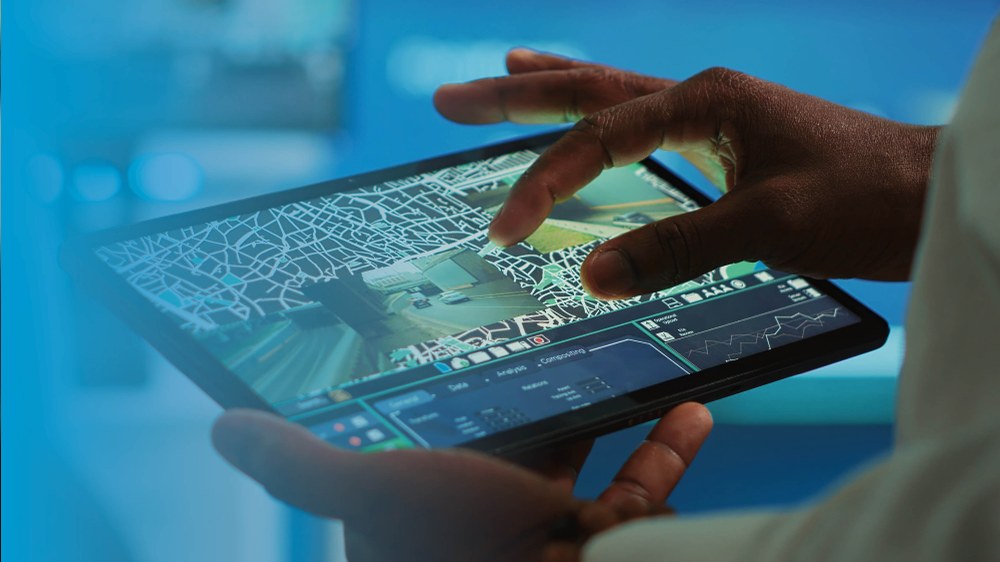
Effective situation monitoring in the event of a disaster
The RESITEK project (Resilient Technologies for Disaster Control) combines various technologies to ensure constant situation monitoring. This is intended to enable a user-oriented and optimised recording of situation pictures as well as effective mission planning and execution in the event of a disaster.
Credit:
Adobe Stock, DC Studio
Disaster events pose significant challenges to civil defense and disaster control, particularly regarding the availability of communication links, the collection and assessment of current data for situation assessment, and the accessibility of the disaster area despite destroyed infrastructure and the safe transport of goods to and from these areas.
The RESITEK project (Resilient Technologies for Disaster Control) combines the expertise and technologies of DLR from the fields of aviation, space, energy, transport, and security to integrate them into a comprehensive data and visualization system. This system is intended to enable continuous situational monitoring, which supports user-oriented and mission-optimized situational awareness, mission planning, and implementation in the event of a disaster.
The data and visualization system is designed to collect and analyse all relevant data to provide recommendations for action during normal operations and, in the event of a disaster, to make the emergency response of authorities and organizations with security tasks (BOS) as efficient and fast as possible.
Sixteen DLR institutes are researching how new technologies can support and improve existing systems and processes in civil and disaster protection during a disaster. Both individual technologies and the integration of various systems and information – for example, from satellites, drones, the monitoring of critical infrastructures, as well as ground-based or robotic exploration – will enable a faster and more comprehensive overview of the disaster area in the future.
The project will focus on the following topics:
Resilience of power grids (creation of isolated microgrids)
Mobility in special situations (use of electric vehicles for networks, escape, and accessibility)
Remote control and mission planning (including communication and navigation)
Space weather (effects on people and infrastructure)
Complex situational awareness (based on various operational vehicles)
Early involvement and testing with users offers the opportunity to adapt new technologies in line with requirements and thus creates the basis for their comprehensive acceptance. With this in mind a technical exercise with authorities and organizations with security tasks (BOS) in a realistic scenario in the Ahr Valley and in Braunschweig is being planned for 2026 as part of the research project.
This project is being led by the Institute of Flight Systems and the Institute of Robotics and Mechatronics.
Project
RESITEK
Duration
2024 – 2026
Fields of research
Aviation, Aerospace, Energy, Transport and Security