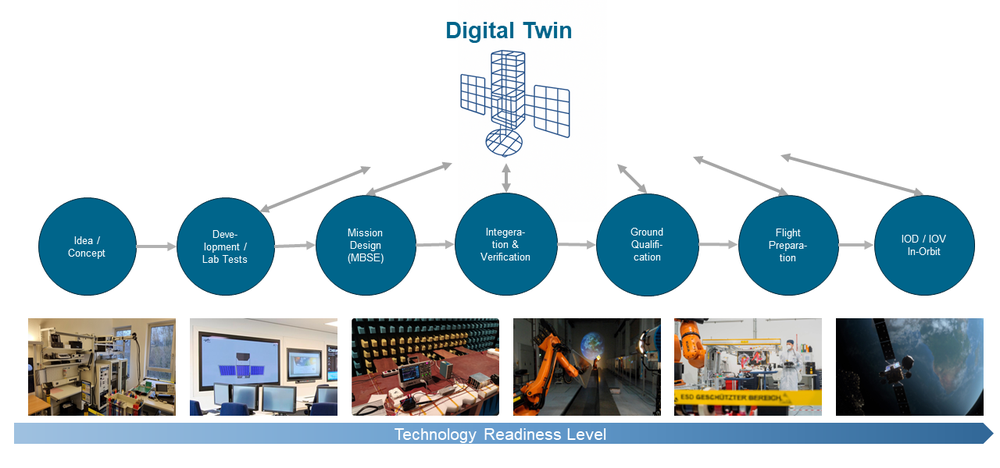
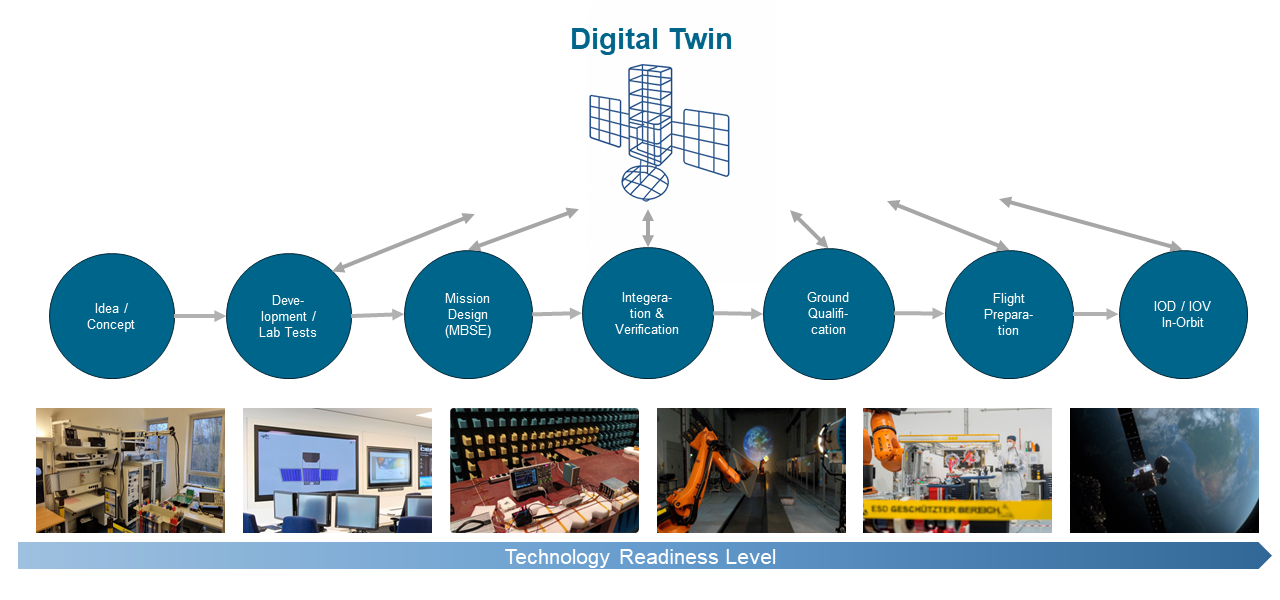
The development of modern space systems requires the interplay of different disciplines, tools, and technologies – from the initial system concept through development and integration to operations in orbit. A continuous digital connection between these processes offers the potential to make development workflows more efficient, reduce integration effort, and accelerate validation processes.
From-Idea-to-Orbit
This is where From-Idea-to-Orbit comes in: The approach connects engineering tools, contributions from different suppliers, and insights from operations into a continuous digital engineering process. The aim is to shorten the path from the initial idea to operations in orbit and make the development of space systems more flexible.
Digital Continuity Across the Entire Lifecycle
Our approach focuses on connecting Model-Based Systems Engineering (MBSE), simulations, and digital twins into an integrated engineering environment. System models provide a common foundation that enables different disciplines to collaborate and integrate their respective tools and simulations.
Digital twins enable engineers to investigate expected system behavior early in the development process and later compare it with results from physical testing and actual operations. This allows engineering decisions to be continuously validated, models to be refined using real-world data, and operational insights to be reused for future missions.
Another key focus is the integration of components and engineering data from different suppliers. Open interfaces, standardized data models, and interoperable software solutions aim to facilitate information exchange and enable continuous collaboration across organizational boundaries.
Digital Continuity in Space Systems Development
The development of modern space systems requires the interplay of different disciplines, tools, and technologies – from the initial system concept through development and integration to operations in orbit. A continuous digital connection between these processes offers the potential to make development workflows more efficient, reduce integration effort, and accelerate validation processes.
One specific application is the integration of modular satellite avionics. Through well-defined interfaces, components such as onboard computers, cameras, and specialized processing units can be flexibly combined into different system configurations. Digital models accompany these configurations and support their analysis and validation.
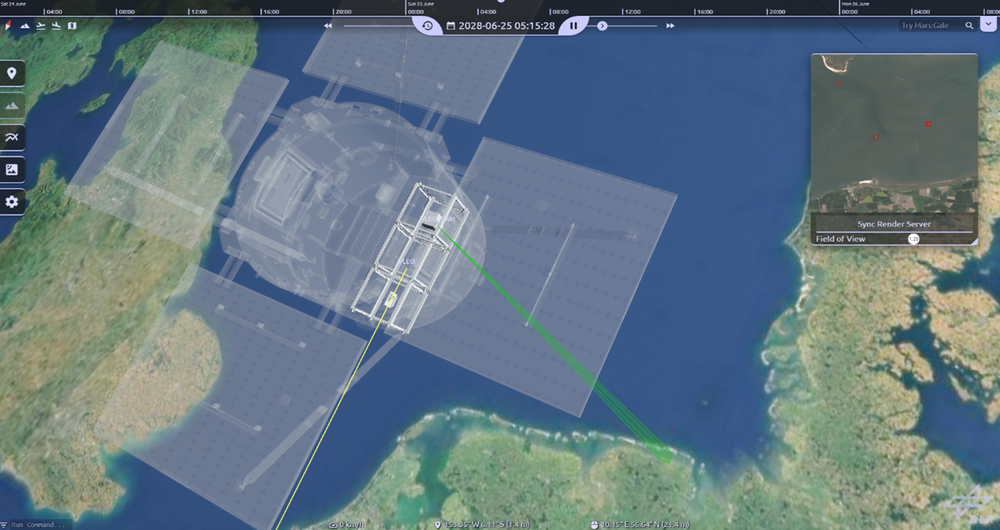
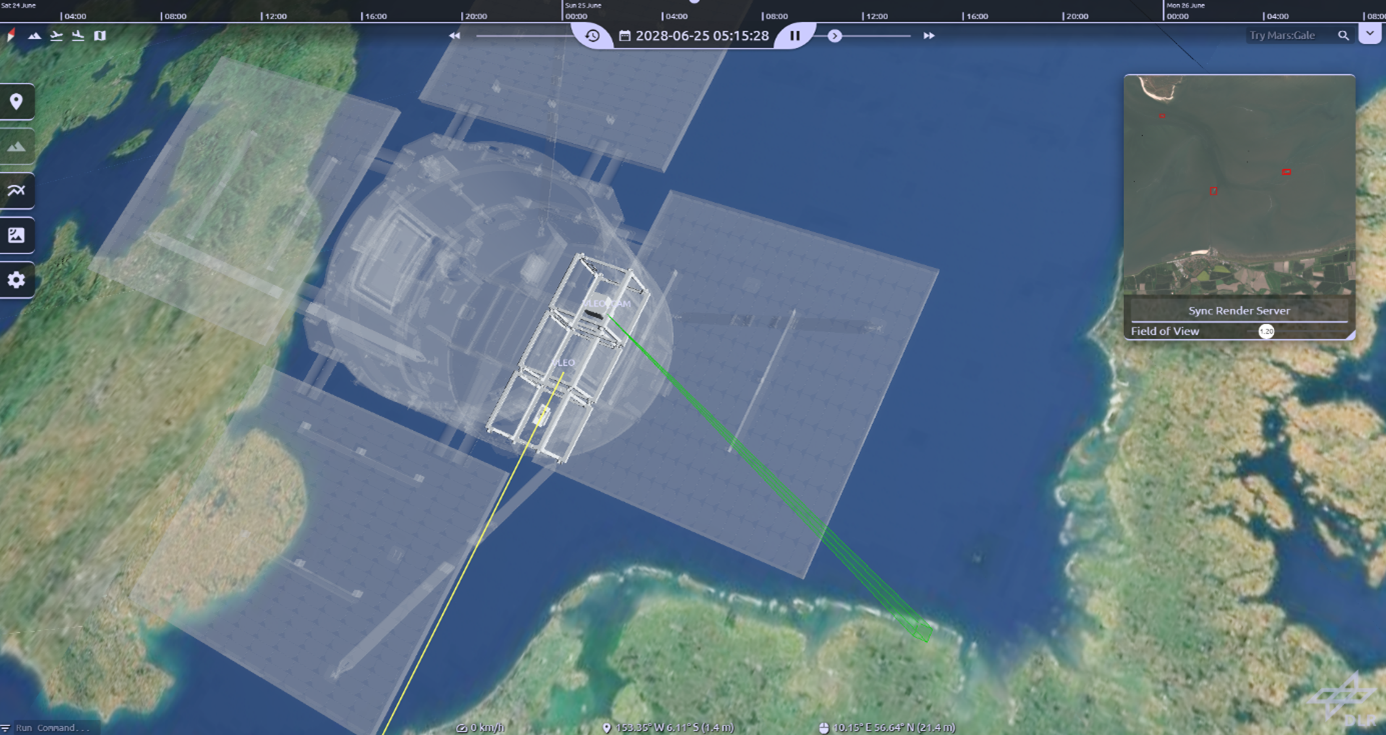
The From-Idea-to-Orbit demonstrator illustrates this approach using a satellite-based ship detection scenario. An algorithm is initially evaluated in a virtual mission environment and subsequently connected to physical hardware components. Changes to the avionics configuration are automatically detected and reflected in the digital twin. This demonstrates how digital engineering, hardware integration, and system testing can be more closely interconnected.
The approach offers a wide range of points of connection for technologies, tools, and use cases from industry and research, providing a foundation for the joint advancement of digital solutions for the space sector.
Demonstrator From-Idea-to-Orbit
Space systems are becoming increasingly complex, while development and testing cycles need to become faster. The interactive “From-Idea-To-Orbit” demonstrator shows how this can be achieved. It brings together model-based systems engineering, digital twins and modular avionics in a virtual mission environment. Using a ship-detection scenario, the demonstrator shows how algorithms and hardware are first tested in a virtual environment before being connected to and tested with real components. Here a satellite is in a digital verification environment, where algorithms can be tested entirely virtually using real data from orbit.