LetsROC
Co-simulation platform and certification process for validating human-machine interaction in remote operation centers
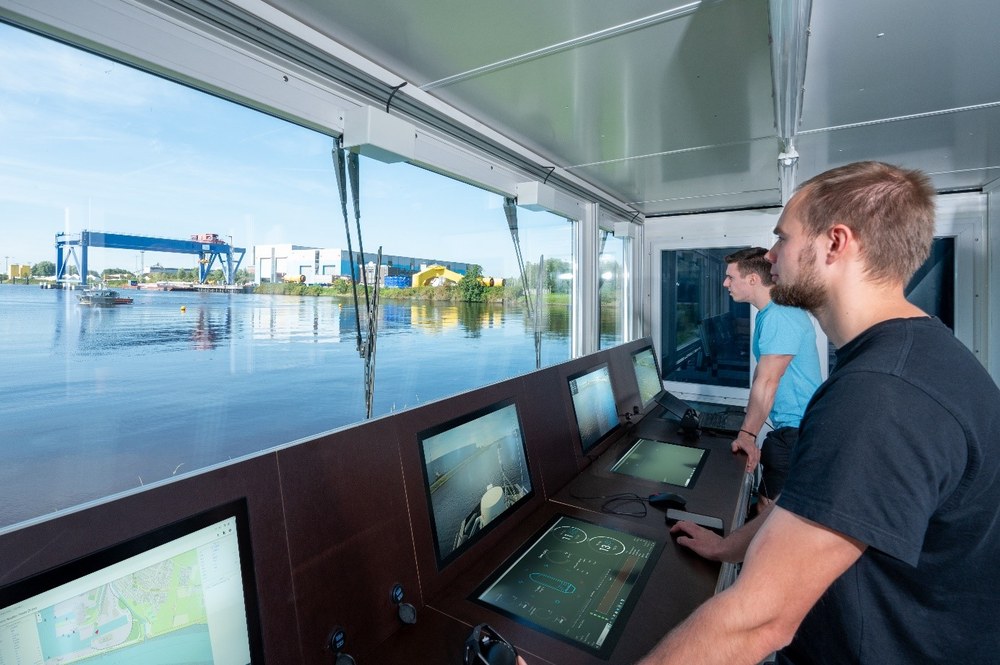

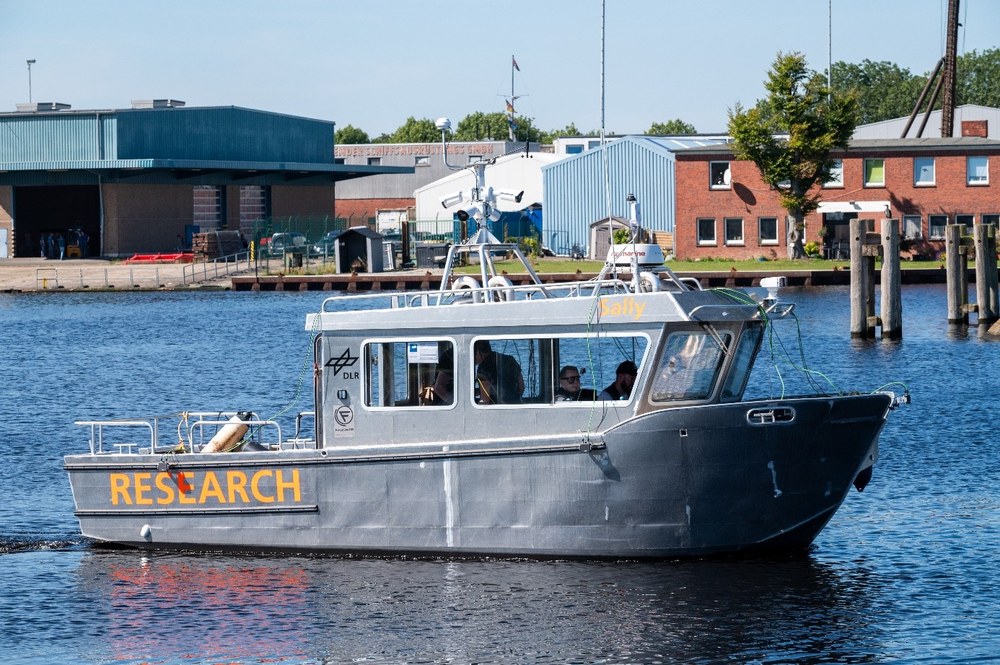
Advances in digitalization, automation, and artificial intelligence are making the introduction of autonomous maritime vessels increasingly realistic. They offer significant advantages, including the prevention of accidents, improved environmental and nature conservation, reduced operating costs, and a reduction in the workload on human crews. It is crucial that these new technologies are at least as safe as current systems—and ideally, significantly safer. As a safety measure and fallback, autonomous ships are monitored and, if necessary, controlled by remote operation centers (ROCs). To ensure the safety of the entire system, certification methods are needed that take into account the specific characteristics of autonomous ships and ROC operations.
The LetsROC project develops comprehensive concepts and solutions for human-machine interaction (HMI) in Remote Operation Centers (ROCs) for monitoring and controlling MASS fleets (Maritime Autonomous Surface Ships) in open seas and coastal waters. The goal is to make ship operations more efficient, safer, and more sustainable through optimized processes.
As part of the project, the DLR is responsible for developing a development and validation process based on virtual human models.
The models are used for two purposes:
- Static Analysis of ROC Prototypes: This involves formalizing mockups of the HMIs for the ROC. Subsequently, an automated evaluation can be performed to determine whether these prototypes comply with relevant human factors standards, such as ISO 9241-12, -16, -303, and -400.
- Dynamic Analysis of HMIs: Simulation is used to evaluate the workload and situational awareness of ROC users in various scenarios.
Based on this, a certification process will be developed that will allow ROC to be certified.
To this end, a co-simulation platform is being developed that includes interfaces to traffic simulations and enables virtual testing of the ROC-HMI in realistic scenarios.
The scientific objectives of the DLR are:
- Defining metrics for evaluating the human-machine interaction of ROC-MMI
- Developing the human models of ROC actors and implementing them in a co-simulation
- Formalizing the procedures for ROC actors in the defined scenarios
- Implementation of the defined metrics in human models for evaluating the ROC-HMI
Project start: September 1, 2025
Project end: April 30, 2028
Project partners: Airbus Defense and Space (Konsortialführer), Hochschule Bremen, Humatects GmbH, inTrim GmbH
Associate Partners: Reederei Scandlines Deutschland GmbH, Reederei Bernhard Schulte GmbH & Co KG, Bundesamt für Seeschifffahrt und Hydrographie