
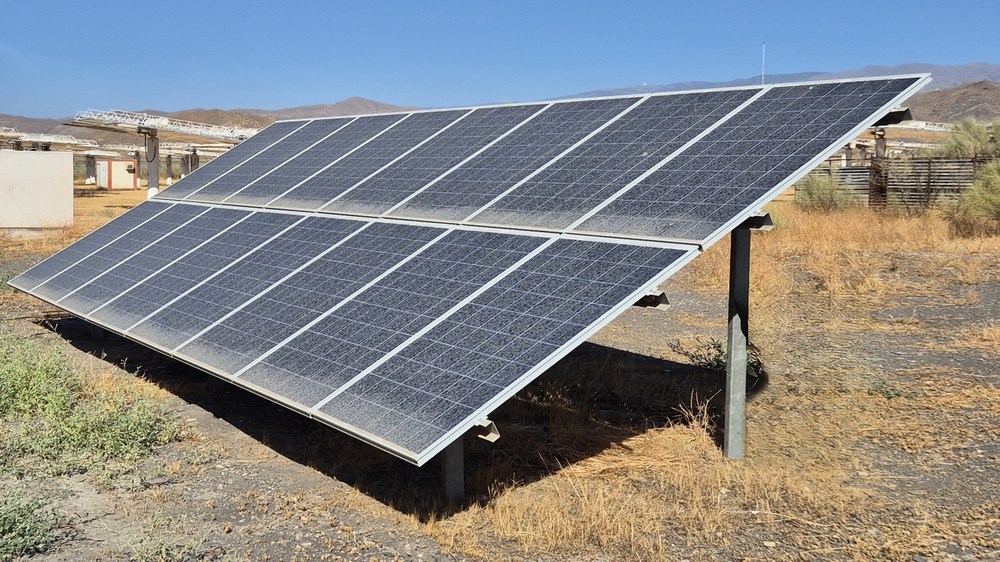
Soiling significantly reduces the efficiency of solar energy systems. Dust, pollen, bird droppings, leaves and other contaminants that adhere to photovoltaic (PV) modules or mirrors reduce the global electricity production of solar systems by about four to seven percent, despite regular cleaning of many power plants. The degree of soiling depends heavily on the location of the system, as well as its type and orientation. Even in Germany, an average reduction in yield of around two percent can be expected, as rain alone does not ensure complete cleaning.
The Institute of Solar Research is developing methods to determine and predict the soiling losses using measurement systems and models. Such measurements and predictions are crucial in determining how often and in what way collectors should be cleaned to maximise yield.
The German Aerospace Center (DLR) is part of international networks that deal with pollution analysis and optimisation of solar systems. These include, for example, SolarPACES (Task III and V) of the International Energy Agency (IEA), IEA PVPS (Task 13 and 16), PVQAT Task Group 12 and PV CAMPER. Together, they develop guidelines for measuring pollution, for example.

Soiling measurement
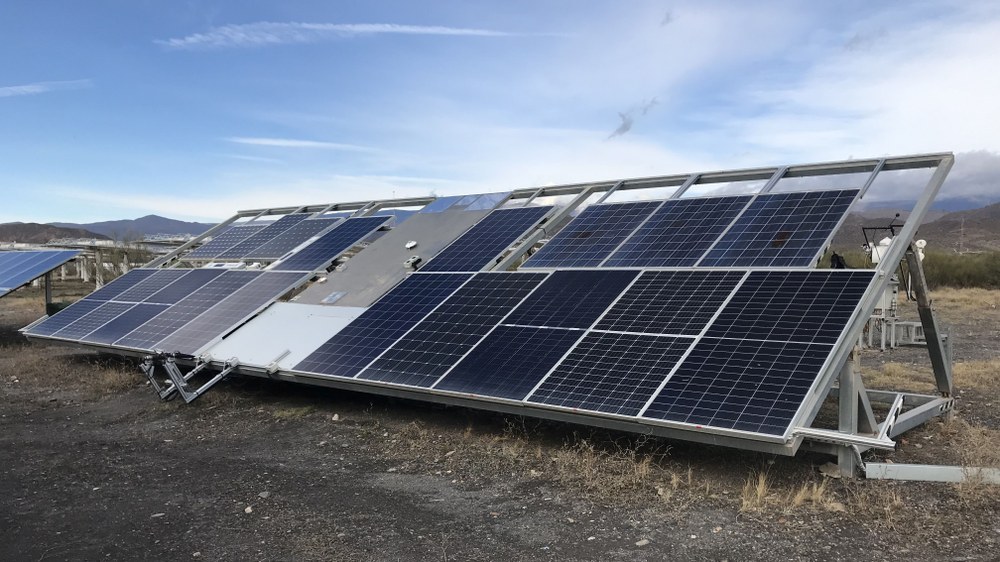
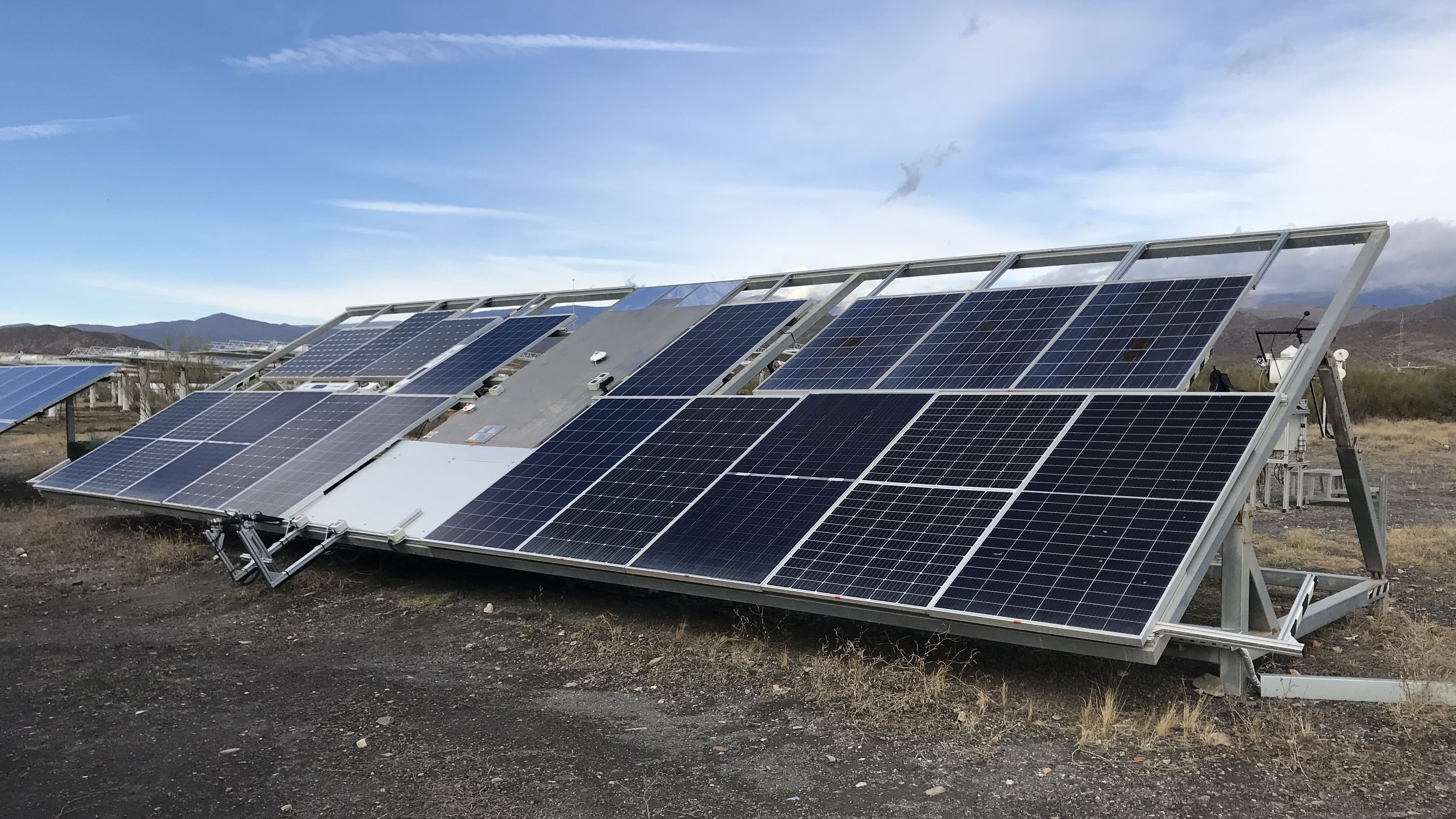
We develop and test methods and instruments, such as low-maintenance measurement systems using light sources, to accurately measure the soiling of solar installations. We use PV reference cells, PV modules and commercially available sensors to measure soiling. We have access to the PVot test bench for PV modules of different technologies at the Plataforma Solar de Almería of the Spanish research centre CIEMAT. Here, the I-V curves (current-voltage curves) and the power output of a cleaned and a soiled PV module of identical construction are measured to derive the reference value for soiling losses. We use the TraCS and T-TraCS instruments developed at the Institute of Solar Research to measure soiling losses on mirrors and entrance windows of thermal collectors. Laboratory and handheld instruments are also available to measure reflectance and transmittance.
Image-based measurement methods
We are also working on methods for image-based, area-wide measurement of soiling using drones, surveillance cameras or satellites. Knowing the local distribution of soiling in a solar installation can help optimise cleaning and enable more accurate performance modelling. The use of drones to measure soiling reduces the amount of labour required to operate the plant, while increasing the measurement coverage. In particular, drone-based soiling measurement can also improve infrared (IR) fault detection in PV power plants.
Soiling modelling and forecasting
We use a database of soiling and relevant meteorological parameters, such as aerosol concentration, wind, soil moisture, sand traps, dew and aerosol optical depth (AOD), built up over many years, to calculate soiling based on easily determined parameters. The purpose of the physical model is to be able to derive soiling levels from widely available meteorological data at sites without direct on-site measurements. By linking the model to numerical weather prediction models, soiling can be predicted.
Optimisation of cleaning
We develop cleaning strategies based on expected solar plant yields, cleaning costs and soiling measurement data and forecasts. We also extend power plant models to realistically account for soiling in yield calculations. Cleaning optimisation helps to improve the economics of solar power systems by enabling higher yields, reducing costs, increasing system availability and extending component life.