Energy meteorology
Weather conditions have a significant impact on the performance of solar power plants and solar installations. Accurate analysis of meteorological parameters and forecasting play a key role. The integration of meteorological data into the design and operation of solar power plants enables the efficient use of solar energy.
The Institute of Solar Research carries out comprehensive analyses to understand how weather conditions affect the performance of solar power plants and solar systems. Based on these findings, recommendations are developed to optimise the operation of the systems. The assessment of meteorological risks plays a crucial role in preparing for extreme weather conditions. In particular, solar radiation forecasts are crucial for the operation of solar power plants, grid management and efficient planning of energy consumption.
Research themes in focus
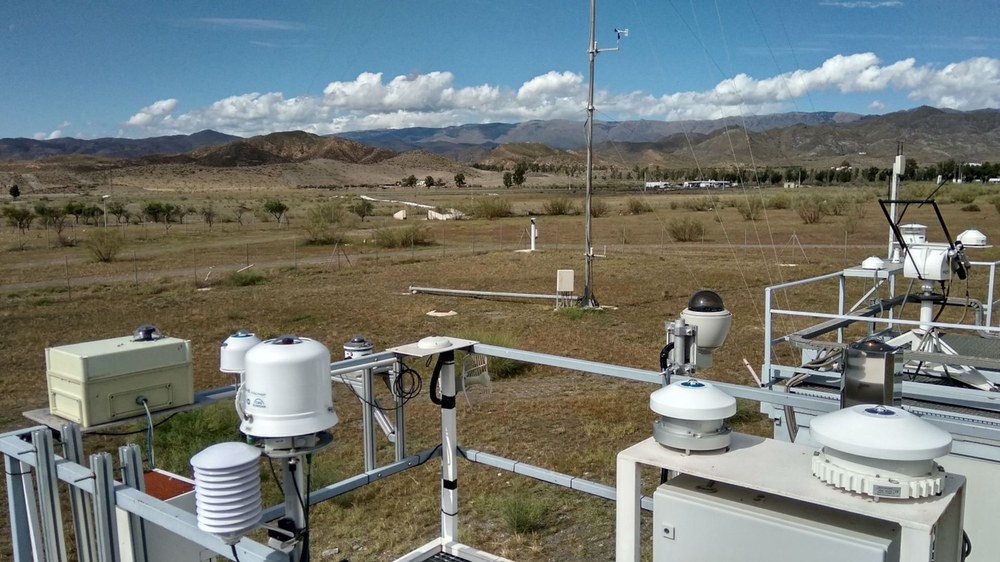
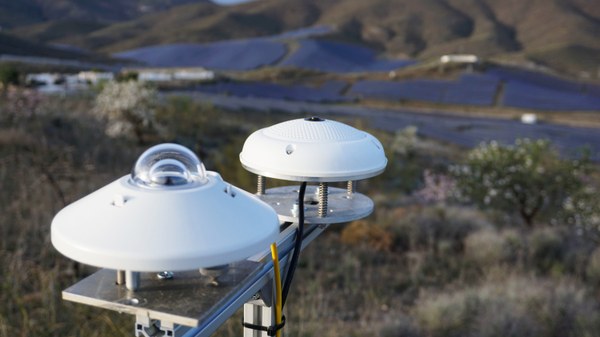
Solar radiation characterisation: The accuracy of solar radiation data is critical for resource analysis, yield forecasting and solar power plant control. The Institute develops robust measurement methods to minimise measurement errors.
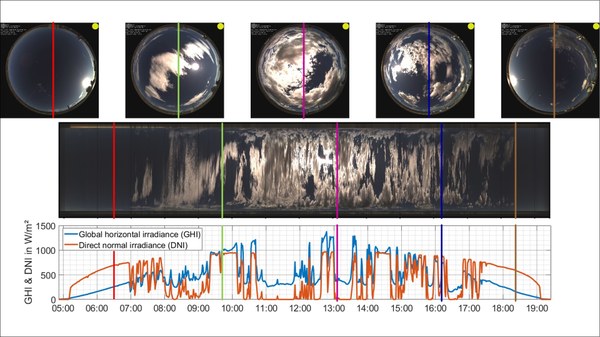
Radiation forecasting: Using artificial intelligence, cloud cameras or satellite imagery, researchers produce high-resolution short-term forecasts of solar radiation in time and space. The combination of different methods is also being explored.
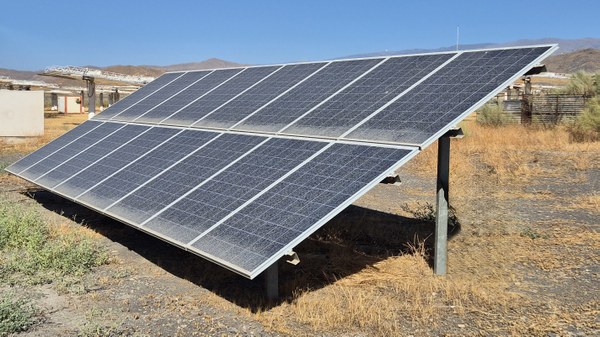
Soiling losses: Soiling can significantly reduce the efficiency of solar energy systems. The Institut researching low-maintenance soiling measurement systems, assessing sites for soiling and optimising cleaning strategies with soiling predictions. This increases yields.
Wind loads: Strong winds can damage solar installations. Researchers at the institute characterise wind conditions, determine collector vibrations and derive wind loads to ensure the safety and efficiency of solar installations.
Meteorological information for agrivoltaics: Combining agricultural activities with solar energy production offers environmental and economic benefits. The Institute measures and models the impact of agrivoltaic systems on the microclimate, taking into account extreme weather events and the influence of climate change.
Locations and collaborations
Researchers at the Institute of Solar Research operate meteorological measuring stations in Germany, Spain and several locations in the Middle East and North Africa. The stations are mainly located at the Institute's sites in Cologne, Jülich and at the Plataforma Solar de Almería (PSA) of the Spanish cooperation partner CIEMAT (METAS, PVot).
We cooperate with the DLR-Institute of Networked Energy Systems in the Eye2Sky forecasting network and are involved in various international programmes. Of particular relevance are the International Energy Agency's Photovoltaic Power Systems Task 16, its SolarPACES Task V and PVPS Task 13.
The Institute of Solar Research's ongoing research and collaborations are helping to address the challenges in the field of solar energy. Accurate meteorological knowledge is not only a necessity for research, but also a key to the sustainable development and efficient use of renewable energy.