
A combination of solar thermal, biomass and a heat pump
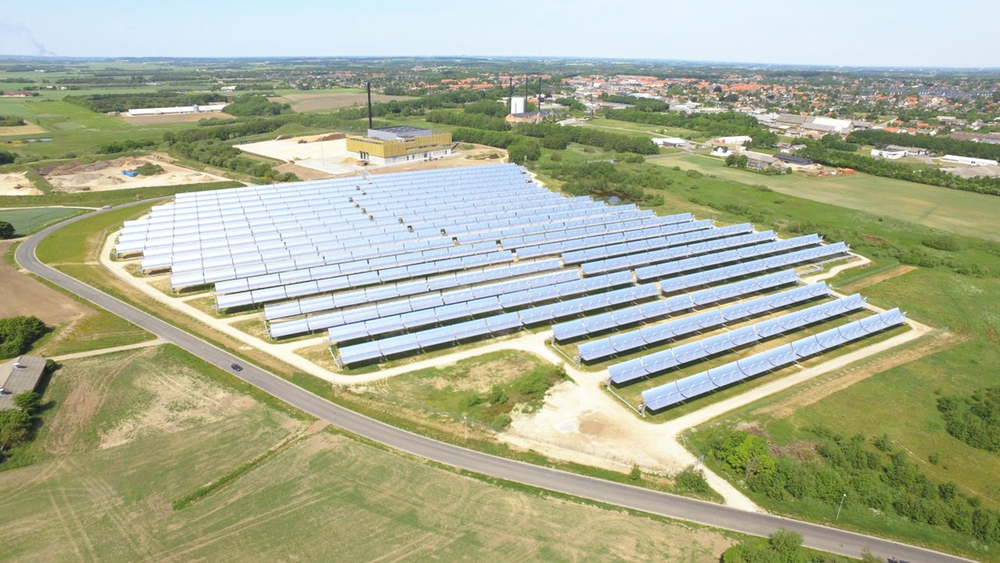

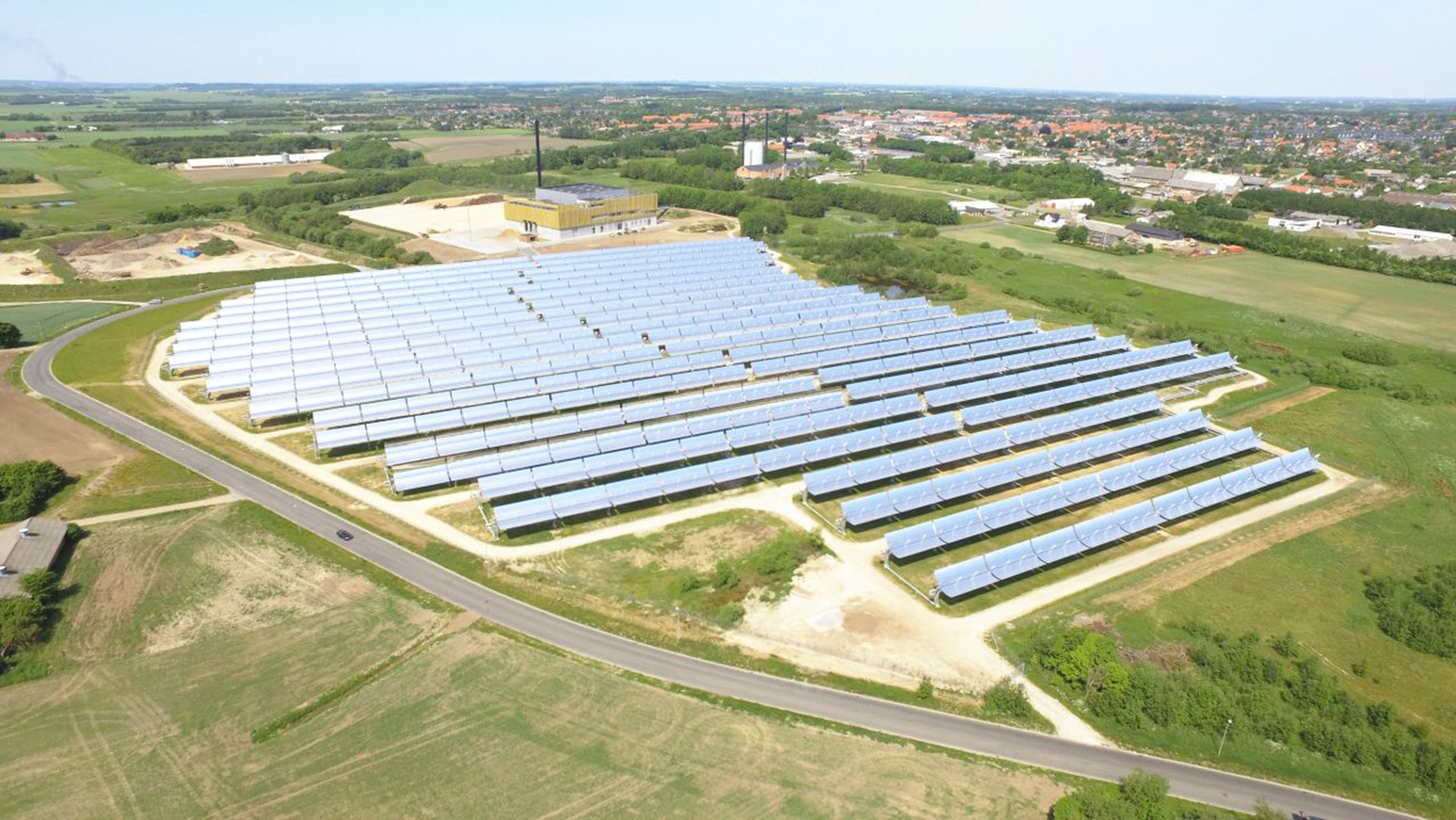
A practical example from Brønderslev shows how concentrated solar thermal energy, biomass and heat pumps can be successfully combined to form a hybrid energy system and integrated into a district heating network.
The first CSP system with an Organic Rankine Cycle (ORC) unit and biomass boiler was implemented in Denmark in 2011, marking an important step towards coupling renewable heat sources with electricity generation in the heating network.
Against the backdrop of expected future biomass shortages and rising fuel prices, the district heating company Brønderslev decided to implement a hybrid energy system that combines concentrated solar thermal energy, biomass and a heat pump. The aim is to reduce dependence on biomass while ensuring a high level of security of supply in the district heating network.
Plant concept and technology
The plant is based on parabolic trough collector technology and was developed by Aalborg CSP A/S. The solar thermal collector field has a total area of 27,000 square metres and achieves a peak thermal output of 16.6 megawatts. The collectors enable operating temperatures of up to 312 degrees Celsius, making them suitable for supplying high-temperature heat to an ORC system.
Multiple collectors are connected in series to achieve high flow velocities in the absorber tube. A special thermal oil is used as the heat transfer medium. The receivers are designed with a vacuum, which keeps heat losses very low even at high temperatures. This allows stable operation even at comparatively low solar irradiance and supports the efficient use of solar energy between periods of sunshine.
A key feature of the plant is the hybridisation of various renewable heat sources. In addition to the solar thermal plant, a biomass boiler is integrated into the overall system to cover the base and peak loads. In addition, a heat pump is used to utilise waste heat from the biomass process and convert it into usable district heating.
The heat generated by solar energy can be flexibly used directly into the district heating network or used to supply the ORC system. This multiple-use strategy increases system flexibility and helps to maximise overall efficiency.
Operational experience from the Brønderslev plant shows that concentrated solar thermal energy in combination with ORC technology, biomass and heat pumps can also be operated reliably in Northern European climate zones. The plant demonstrates that parabolic trough collectors can make a substantial contribution to sustainable heat and power supply not only in sunny regions but also in temperate climate zones.