
Analysis for recording pedestrian traffic in surveys
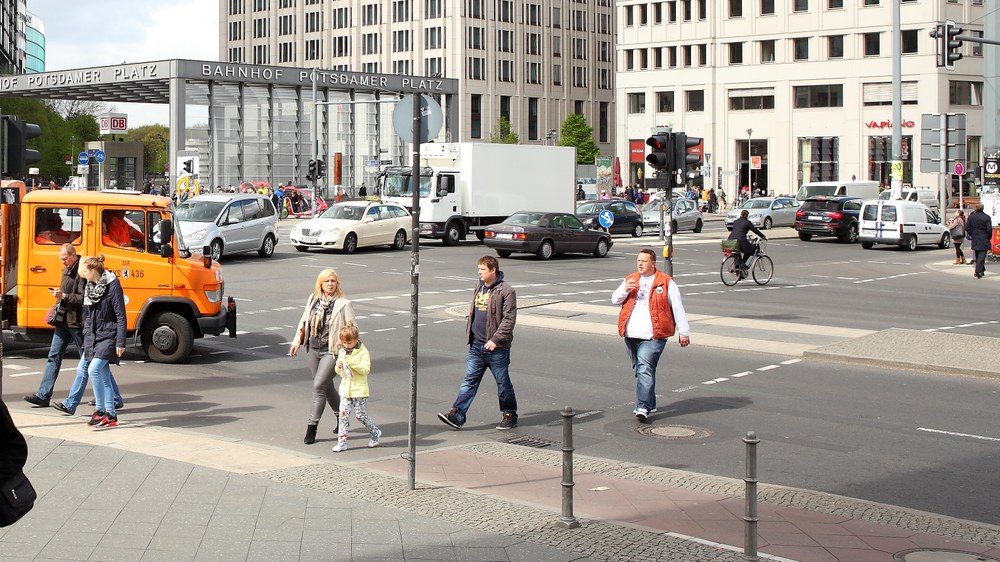

DLR (CC BY 3.0)
Everyday mobility on foot and its recording in mobility surveys
Walking is an important part of our everyday mobility, but this mode of transport is often only partially recorded. This under-recording occurs particularly in the case of journeys involving the use of several modes of transport (intermodal journeys). For example, participants may forget to record the distance they walked to their main mode of transport, or the study may only record the mode of transport used for the longest part of the journey.
In the project Weiterentwicklung von Nachhaltigkeitsindikatoren im Personenverkehr: Fußverkehr, Erreichbarkeit und Suffizienz (Further Development of Sustainability Indicators in Passenger Transport: Walking, Accessibility and Sufficiency), the DLR MovingLab was used to find answers to the following questions in a comparison with traditional survey methods and previously collected data:
- How often is walking forgotten in surveys based on journeys?
- How much does the proportion of intermodal journeys with walking stages and the distances covered increase when these are taken into account?
Realisation
In the project, 475 MovingLab test pool members tracked their everyday mobility for a period of at least three days. The recorded journeys had to be checked and any inaccuracies in the journey and mode determination corrected. Participants also answered questions about the quality of the recorded journeys (recognition of start and destination, route display, recognition of the means of transport used), with a focus on walking. As part of the analysis of the recorded journeys, intermodal journeys, i.e. journeys involving the use of several means of transport, were examined in particular.
Results
A comparative analysis of two route-based, two stage-based and two tracking-based data sets showed that the survey methodology has a decisive influence on the recording of pedestrian traffic. The proportion of pedestrian traffic (purely pedestrian journeys and intermodal journeys with a pedestrian stage) increases continuously in the analysed data sets, from route-based to stage-based to tracking-based surveys: the proportion of journeys with at least one pedestrian stage comprises one third of all journeys in surveys based on the route concept, just under half in stage-based surveys and around two thirds in tracking campaigns. A survey using a tracking app therefore appears to be well suited for a detailed investigation of pedestrian traffic. Nevertheless, tracking does not map walking stages before and after public transport use as reliably as initially expected. Software-related causes and the handling of the app (switching the app on and off during journeys) were identified as reasons for this. The study thus also provided important insights for future tracking surveys: raising participants' awareness of the need to leave the app switched on even when not in use, or adjusting the app's functionality to automatically activate the app when the smartphone is switched on, would improve the quality of the tracked journeys.
Campaign details
Runtime:
1 month
Methods:
Entry survey, data recording via GPS logger or data recording via MovingLab app, in-app survey suring and after the campaign
Projekt:
Weiterentwicklung von Nachhaltigkeitsindikatoren im Personenverkehr: Fußverkehr, Erreichbarkeit und Suffizienz