
Additive Repair Concept for Fibre-Reinforced Composite Structures

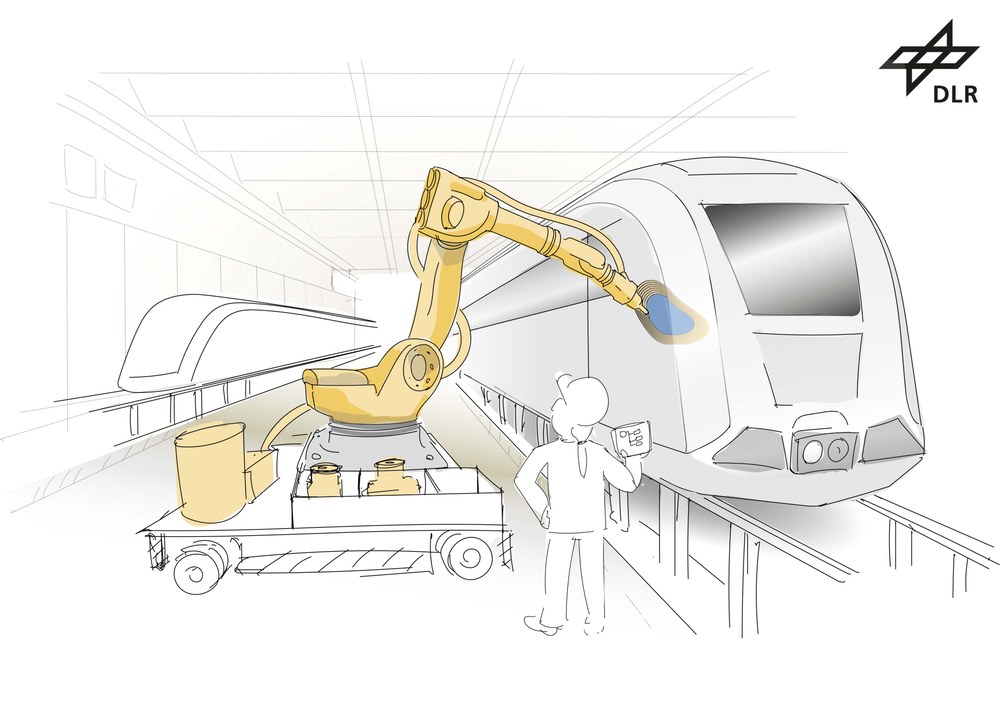
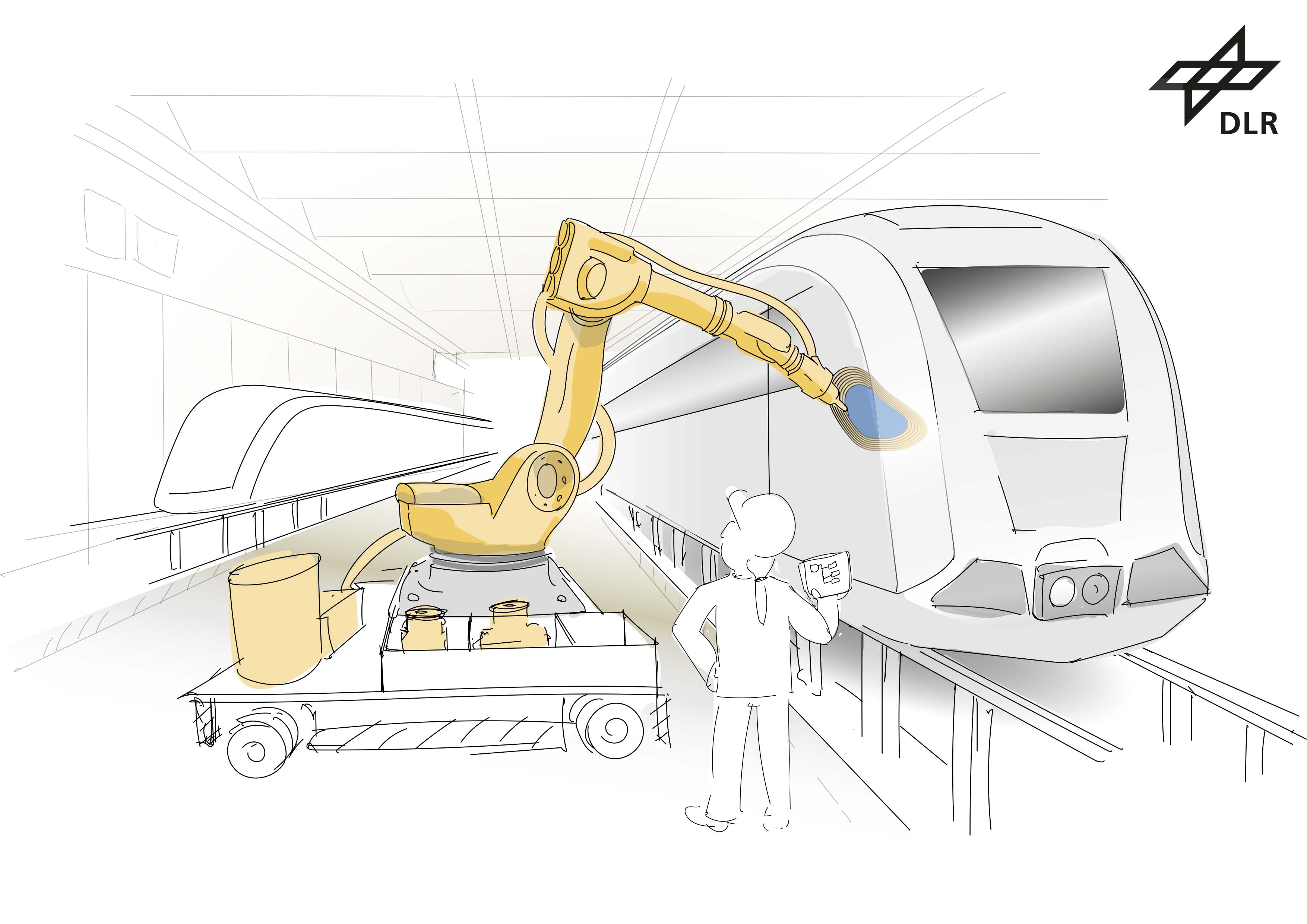
The repair of fibre-reinforced composite structures is currently a process that is often heavily reliant on manual labour, time-consuming and therefore costly. In the case of rail vehicles in particular, damage to fibre-reinforced components in the front section occurs frequently as a result of collisions with animals, accidents, vandalism and similar factors. Due to a shortage of qualified specialists, health concerns regarding the reaction resins typically used, and long curing times, in practice component replacement is often preferred to repair, particularly for components that are easy to dismantle. With additive repair, the Institute of Lightweight Systems is now presenting an approach that, in the future, will enable rapid and largely automated repair.
It all comes down to the bond
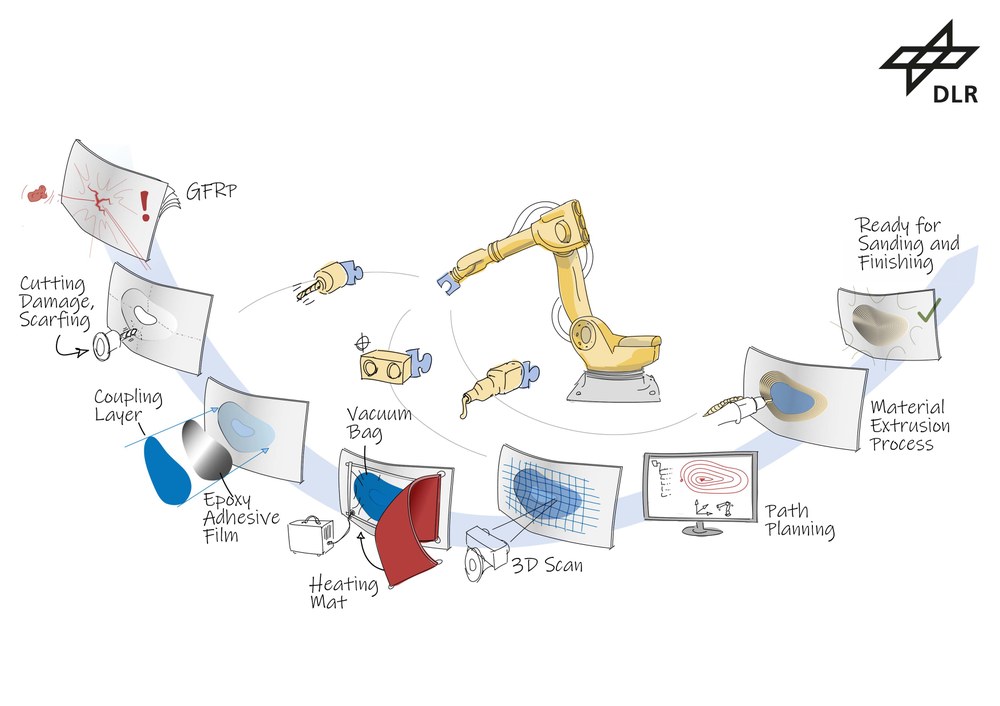
The central component of the additive repair process is the surface modification of the damaged substrate. As with conventional repair, the damaged area is first cut out and the surrounding laminate is scarfed. A bonding layer is then applied, which enables a strong bond between the thermosetting base material and the thermoplastic overlay. Here, our institute, in collaboration with NXT Technologies GmbH, has developed a robust and practical process: an epoxy resin adhesive film is placed on the sanded and cleaned surface. This ensures the bond with the polyamide-based Conexus film from NXT Technologies applied on top. The latter differs from commercially available films in its chemical modification, which enables a targeted bond between thermosetting and thermoplastic joining partners. Following vacuum curing for 30 minutes at 135 °C, a thermoplastic surface is thus created that allows welding to a printed polymer.
Subsequently, an optical surface scan and comparison with an undamaged component enable the target geometry of the repair patch to be determined, and the corresponding toolpath to be generated on this basis. A robotic system with an extrusion tool head ensures that free-form geometries are traced with high precision during the subsequent process. By using a thermoplastic material, the structural repair is completed immediately upon completion of the material extrusion process. Final steps, such as sanding and finishing, can follow straight away.
Proving it works: through exemplary process demonstrations
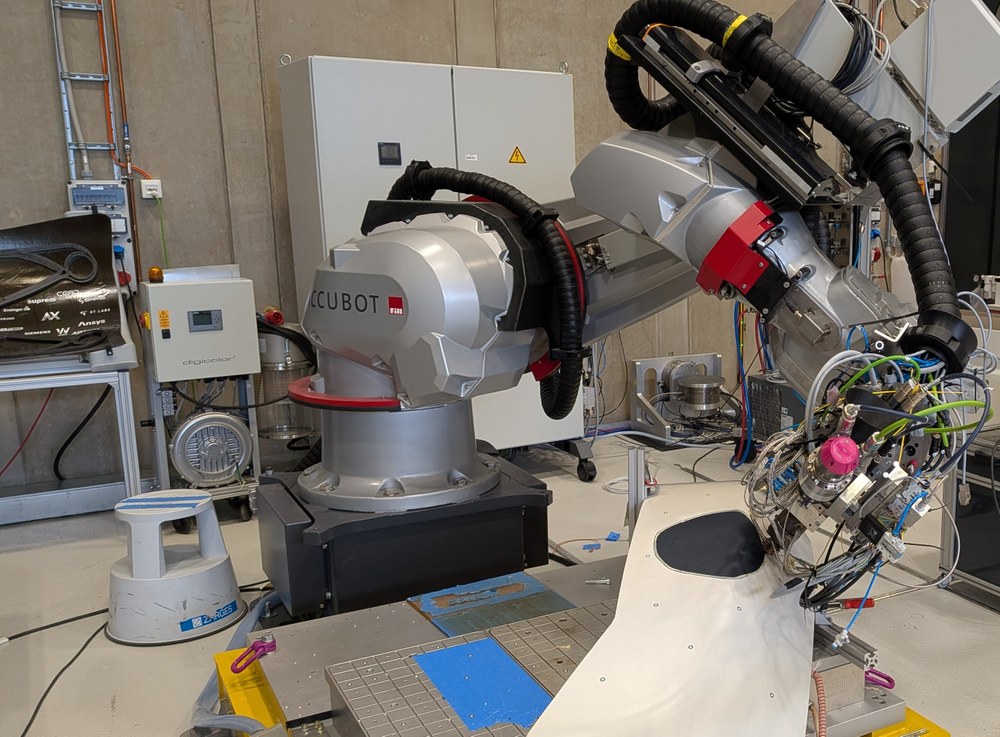
Researchers at our institute have carried out the described repair process several times on example fairing components from the rail vehicle sector. To do this, they cut out damages measuring approximately 50 mm in diameter from glass-fibre-reinforced polymer components, scarfed the surrounding laminate by coarse sanding, and modified the surface using a rail-compatible adhesive layer and the Conexus film. By using a commercially available vacuum bag and a heating mat, they demonstrated in this process step that the surface modification is suitable for workshop use without the need for highly specialised infrastructure (e.g. an autoclave). A six-axis robot with a single-screw extruder was used for the additive process. The material used was a polyamide blend containing 25 per cent glass fibre and featuring fire-retardant properties in accordance with DIN EN 45545-2, ensuring that the repair is suitable for rail applications in terms of strength, stiffness and fire behaviour. The extrusion process took around 30 minutes using a 2 mm diameter extrusion nozzle and a feed rate of up to 3,000 mm/min. The entire process chain was completed in around five hours. It is therefore more time-efficient than the curing time alone for conventional resin systems, which typically takes around eight hours.
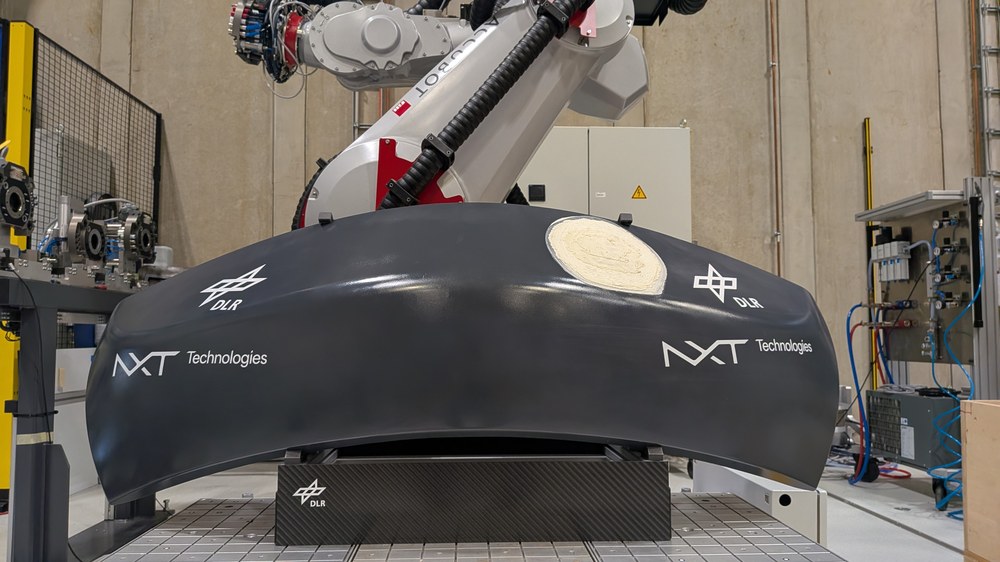

The exemplary process run also highlighted another exciting feature of the additive repair process chain: at no stage access to the rear of the damaged component was required. It is therefore conceivable in the future that, with the aid of a mobile robotic platform, component repairs could be carried out directly on the vehicle without dismantling the damaged component. Through further innovations such as automated scarfing or robotic sanding, a largely automated process chain for the repair of fibre-reinforced components could thus emerge in the future.
Parts of the process described also demonstrate further potential applications in the functionalisation of fibre-reinforced components: thanks to the additive process, which is carried out directly on the existing or modified surface, features such as assembly aids, bolt-on geometries, stiffeners and the like can be produced even in very small batch sizes.
Authors: Erik Johannsen, M.Sc., Dr.-Ing. Maximilian Jux