Remote Operation: An important building block from Braunschweig for the mobility of the future
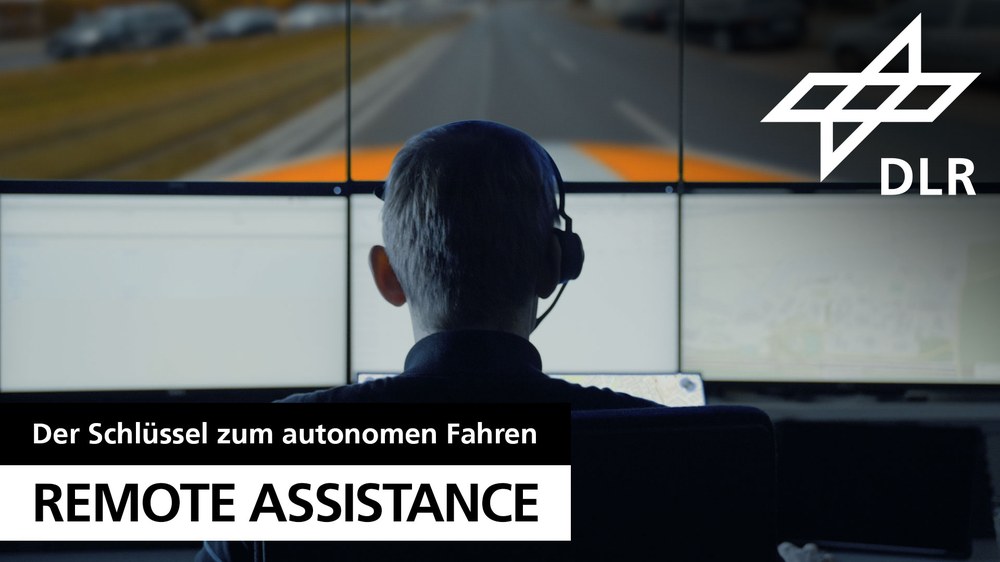
Video: Remote assistance as a type of technical supervision: the key to autonomous driving
Your consent to the storage of data ('cookies') is required for the playback of this video on Youtube.com. You can view and change your current data storage settings at any time under privacy.
- DLR is researching how autonomous and networked vehicles can be supported by technical supervision in the future. can already perform most tasks independently in the mobility of the future.
- The researchers are also investigating how a technical supervisor's workplace can be designed and testing it in the simulation and in real traffic.
- Focal points: Remote operation, automated driving, networking
Braunschweig is supplying an important building block for the mobility of the future: The Institute of Transportation Systems at the German Aerospace Center is conducting intensive research into how the concept of remote operation of automated and networked vehicles can be implemented and how the workplace for remote operation can be designed.
In the mobility of the future, autonomous and connected vehicles will already be able to perform most tasks independently. Nevertheless, situations occasionally arise in which the vehicles need human assistance. If they encounter a problem where they are at a loss, safety comes first. This often means pulling over to the side of the road and stopping. In order to get from there safely and quickly, the DLR Institute of Transportation Systems is researching the technical supervision of these vehicles from a distance. In unclear situations, the autonomous vehicle can then request support from a technical supervisor via a data connection.
The legal framework for the use of autonomous vehicles is in place - including in Germany. The "Autonomous Driving Act" came into force in July 2021 and was regulated in more detail in the "Autonomous Driving Ordinance". Remote operation and technical supervision - as formulated in the law - play a decisive role in the operation and liability of autonomous vehicles.
Equipped with monitors, user interfaces and headsets, several remote operators could sit together in a control centre in the future and guide autonomous vehicles through difficult situations. For example, if a delivery vehicle is parked in the second row, such a car will not drive over a solid line of its own accord, but will instead stop. Similar situations can arise in the context of roadworks that are not yet stored in the system and are therefore unknown to the automation system.
In numerous national and international projects at DLR, we are conducting very application-oriented research into what information remote operators will need at their workplace in the future in order to be able to support autonomous vehicles quickly and safely in situations that are unclear for automation and are testing the networking of automated research vehicles nd cooperation with technical supervision in our simulators and with our vehicles in the Test Bed Lower Saxony.