interACT – Interaction of automated vehicles with human road users
interACT – Interaction of automated vehicles with human road users
Automated vehicles must not only communicate quickly and comprehensibly with their drivers, but also with other road users. The EU project interACT is therefore researching interaction possibilities in order to develop a sensible, intuitive way of embedding automated driving in existing traffic.
Everyone communicates with each other in road traffic. Be it through flashing lights or hand signals or through acoustic signals or head movements. But what happens when we encounter an automated vehicle instead of another person?
This question is being addressed by a research team in the EU project interACT, which was launched in May 2017 and is coordinated by DLR. Over the next three years, the project will investigate the interaction of automated vehicles with other road users (e.g. vehicles, cyclists and pedestrians) in order to design a sensible, intuitive way of embedding automated driving into existing traffic. DLR is working on interACT with eight industry and research project participants from four countries. The aim is to come closer to the realisation of automated driving on our roads by increasing the safety and acceptance of these vehicles.
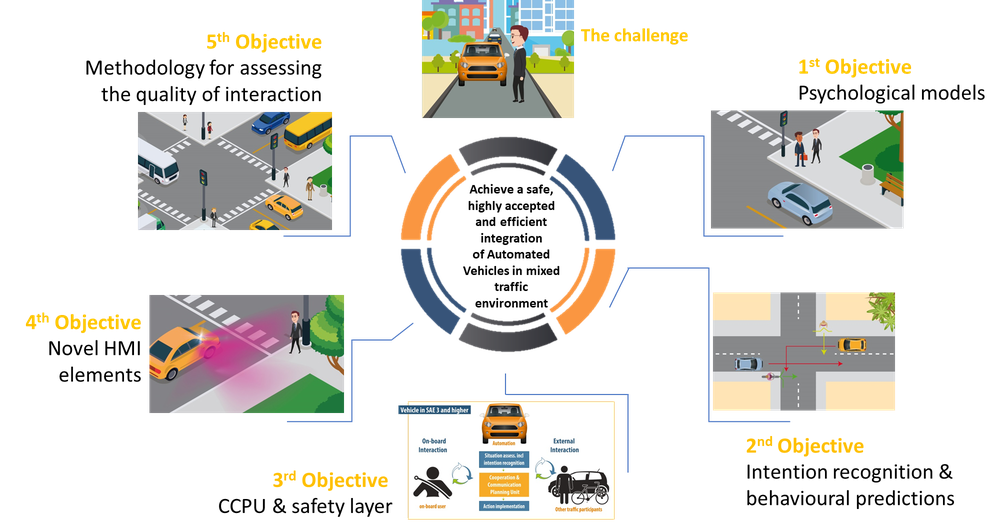
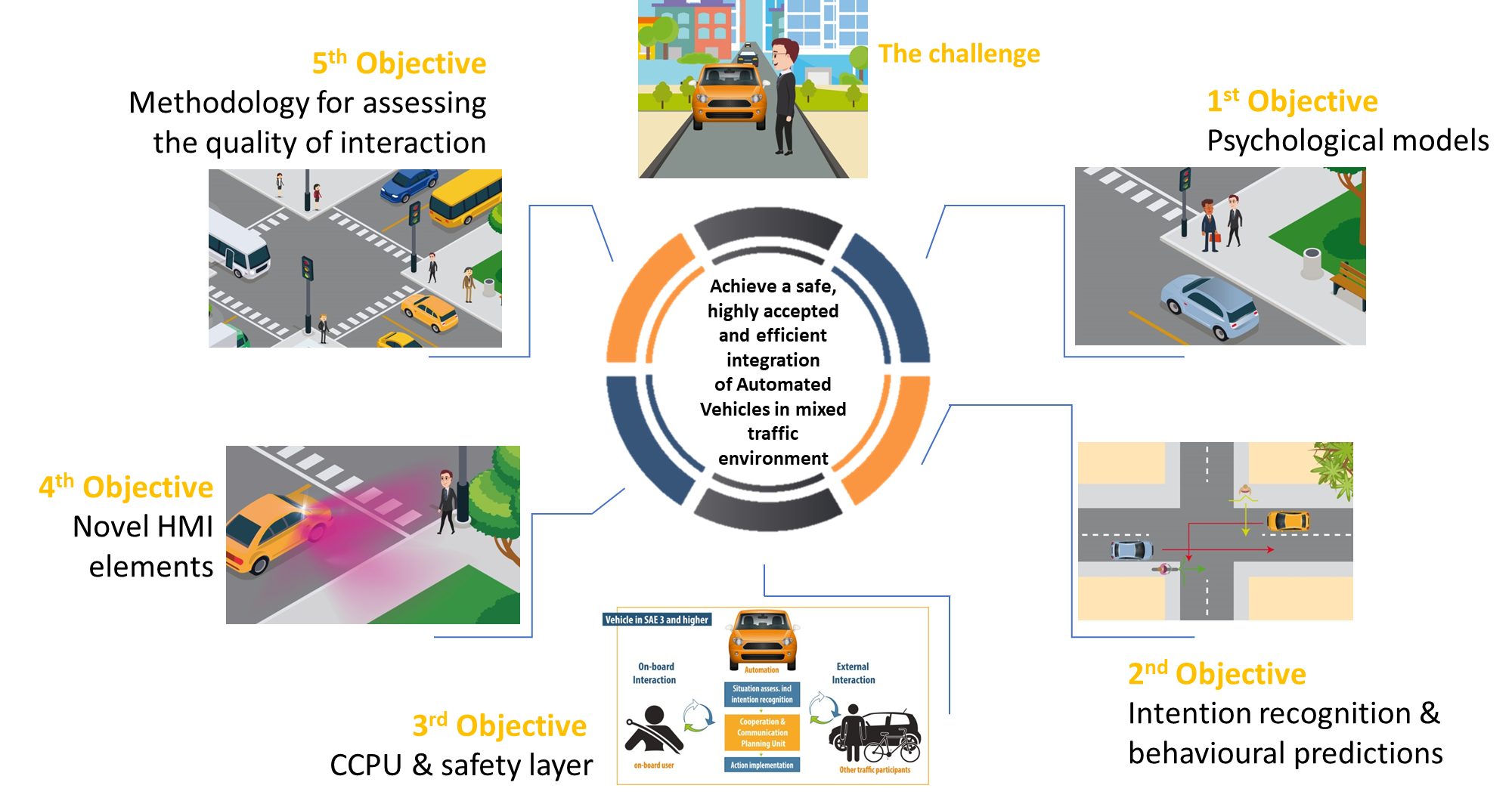
In the project, interaction is investigated both via selected manoeuvres and via explicit interaction design, such as displayed light signals or acoustics. interACT focuses on shared traffic environments in which road users are forced to cooperate with each other, such as zebra crossings, right-before-left intersections or car parks. Research is also being conducted into how people currently communicate with each other in traffic in order to develop software and hardware solutions on this basis that enable reliable and comprehensible interactions.
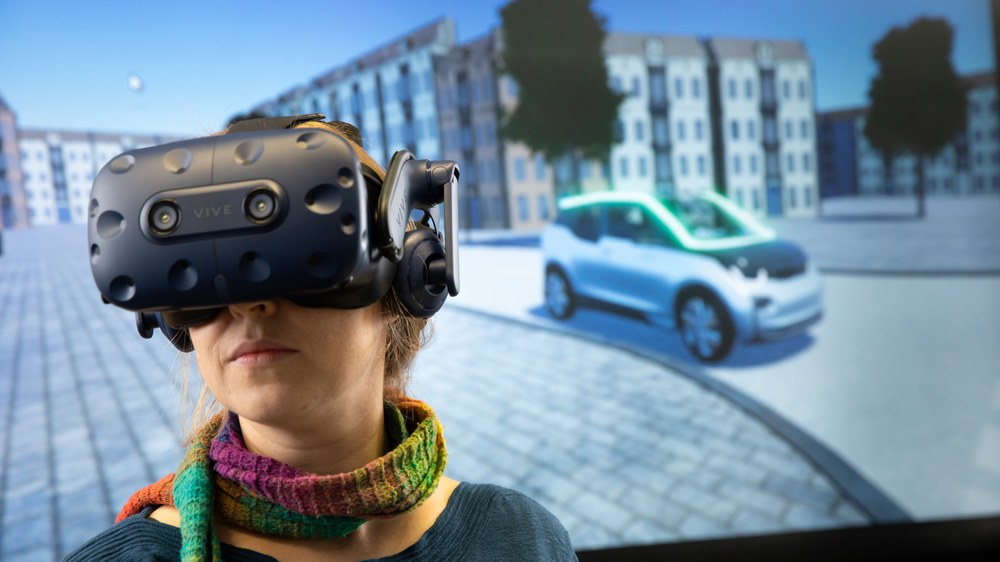
In detail, interACT will use socio-psychological studies to draw up a catalogue of communication requirements that current and future road users will have to meet. In addition, the project participants will research software algorithms and sensor solutions to predict behaviour and recognise intentions in traffic. These findings will be incorporated into a central software module for time-synchronised control of communication and cooperation in the automated vehicle. In the project, two vehicle demonstrators are being developed and tested and evaluated with the help of pedestrian simulators, driving simulators and test vehicles with regard to safety, acceptance and applicability for all road users.