Exploration of Electric Aircraft Concepts and Technologies
EXACT
EXACT project: aircraft concepts
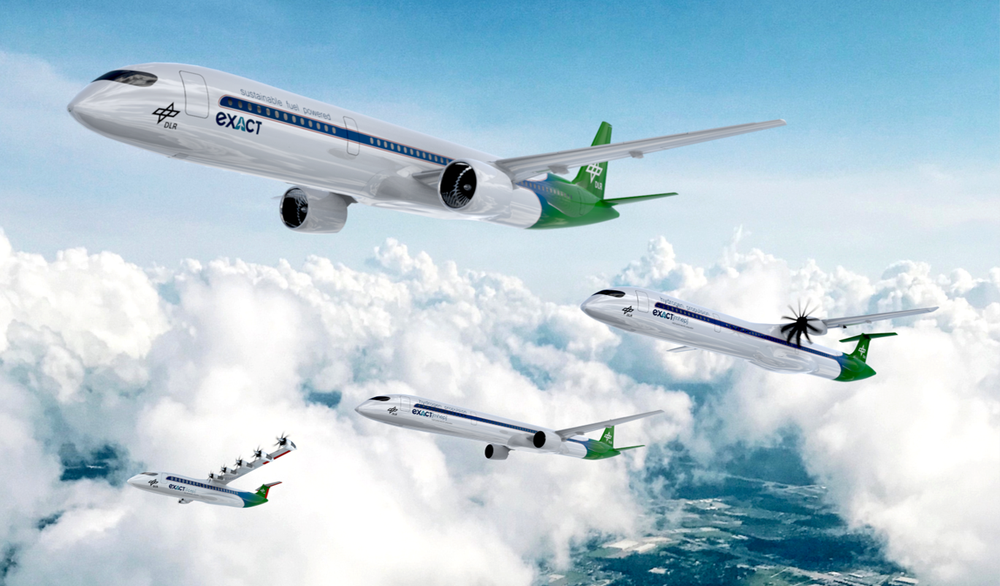
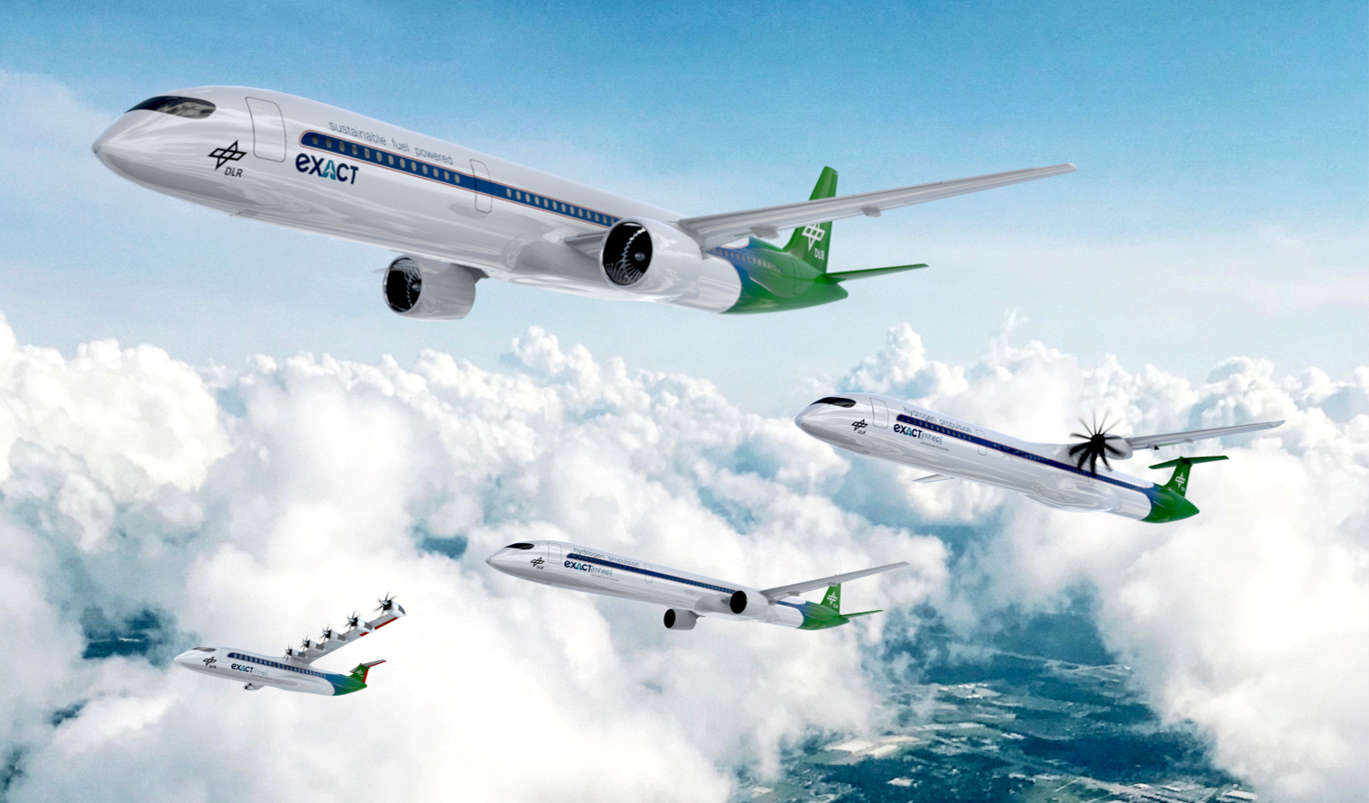
Several aircraft configurations are designed that are promising for an ecologically sustainable and economically viable future of aviation. From top to bottom: Conventional short-range turbofan concept with synthetic kerosene; Hydrogen powered Mild-Hybrid-Electric propulsion short-range concept with open propeller; Hydrogen powered Mild-Hybrid-Electric propulsion short-range concept with ducted fans; Regional Fuel-Cell powered distributed propulsion concept.
In EXACT, 20 DLR institutes jointly analyse and compare various technologies (hydrogen, batteries, sustainable aviation fuels, etc.) and digitally integrate them into future aircraft configurations. To identify the most promising aircraft concepts, we look at the aircraft’s overall climate impact during its entire life cycle. Therefore, amongst others global flight routes, energy sources, airport and energy infrastructure are subject of research.
EXACT in a nutshell
The Exploration of Electric Aircraft Concepts and Technologies (EXACT) project is the largest and most comprehensive sustainable aviation study undertaken by the German Aerospace Center (DLR). In EXACT, we want to find out how the climate impact of aviation can be drastically reduced while maintaining economic competitiveness. EXACT brings together the expertise of 20 institutes in the design of subcomponents, components, the whole aircraft and the air transport and energy system, enabling highly detailed aircraft design studies and their comprehensive assessment. This requires a large number of cross-sectoral disciplines and their effective cooperation.
Investigated aircraft concepts
Within EXACT, many aircraft configurations for approximately 250 passengers and a few smaller ones (regional class) have been pre-designed and narrowed down to a total of three aircraft:
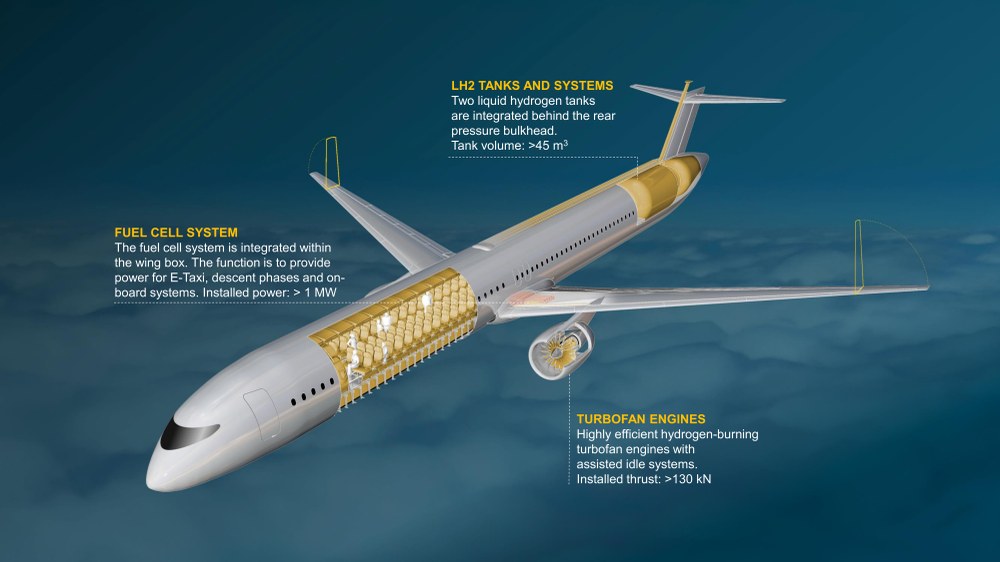
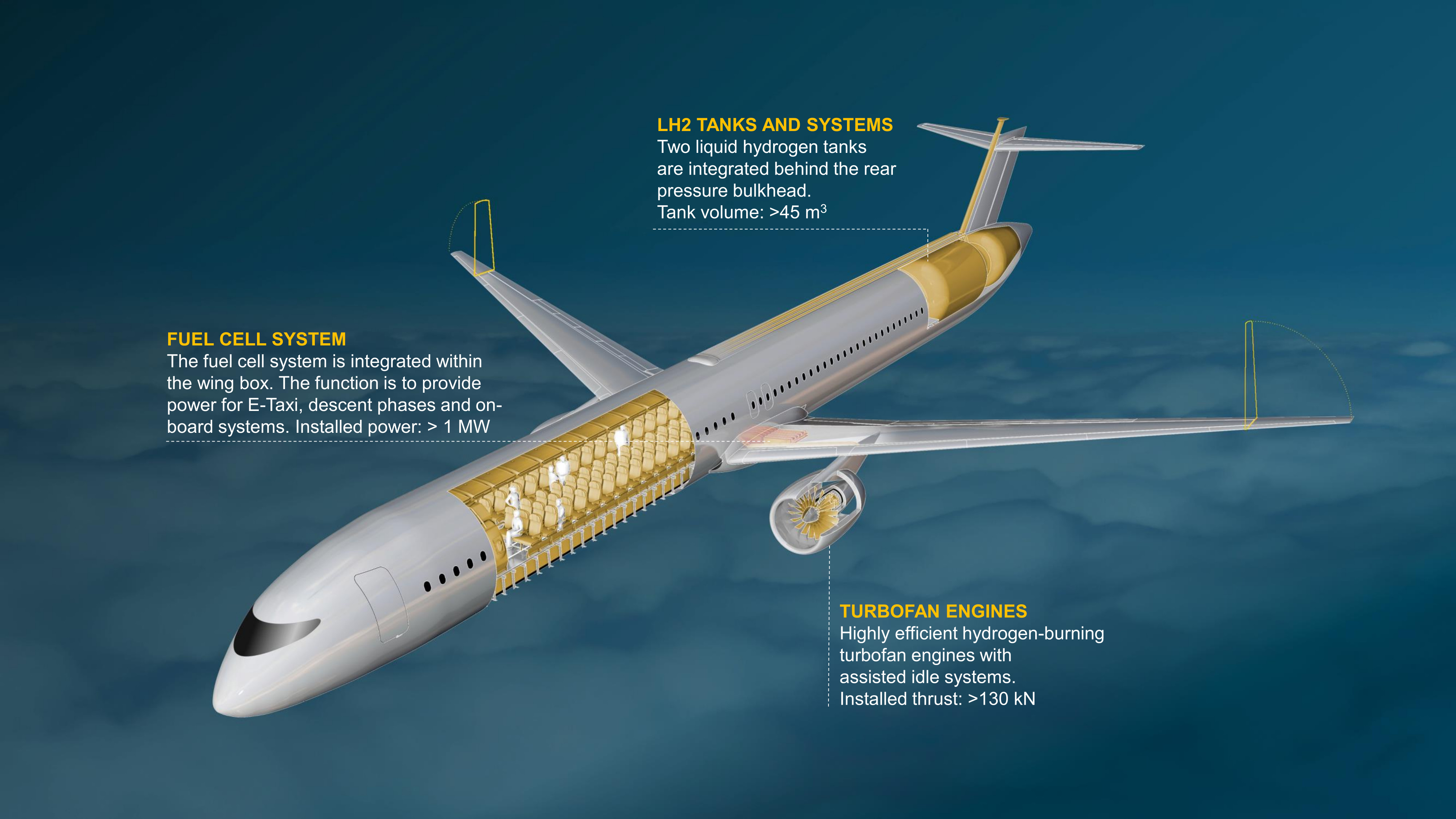
The Mild-Hybrid Electric Propulsion (MHEP) concept features two hydrogen-burning gas-turbines as the main power provider. During off-design segments of the mission (i.e. taxiing and descending), proton-exchange-membrane (PEM) fuel cells substitute the gas turbine. Furthermore, they supply power for the onboard systems.
The Plug-In Hybrid Electric Propulsion (PHEP) aircraft can be operated fully-battery-electrical on a range of up to 500 kilometres. It also features one big gas turbine to allow for an increased range.
The turboprop propulsion aircraft shows significant efficiency improvements compared to the conventional turbofan powered baseline concept for kerosene scenarios. This option presents a high-yield, low-risk solution, achieving promising climate impact reduction potentials compared to today’s most efficient short-medium-range aircraft.
Long-Range concepts are currently being explored as well.
Mild-Hybrid Electric Propulsion (MHEP) concept
The Mild-Hybrid Electric Propulsion (MHEP) concept features two hydrogen-burning gas-turbines as the main power provider. During off-design segments of the mission (i.e. taxiing and descending), proton-exchange-membrane (PEM) fuel cells substitute the gas turbine. Furthermore, they supply power for the onboard systems.
In this project, the DLR-Institute of Engineering Thermodynamics focusses on the system-level design and simulation of fuel cell systems, batteries and thermal management systems for the MHEP and PHEP aircraft concepts. Our research aims at integrating detailed simulation models of these components into the overall aircraft design workflow. This will enable the project to consider internal processes in fuel cell systems and batteries in detail while optimizing the overall aircraft performance.
Aim of the project
20 DLR institutes jointly analyse and compare various technologies (hydrogen, batteries, sustainable aviation fuels, etc.) and digitally integrate them into future aircraft configurations.
EXACT at a glance
Project
Exploration of Electric Aircraft Concepts and Technologies (EXACT)
Duration
1.1.2024 - 31.12.2026
Institute of Aerodynamics and Flow Technology
Institute of Aeroelasticity
Institute of Air Transport
Institute of Atmospheric Physics
Institute of Combustion Technology
Institute of Electrified Aero Engines
Institute of Engineering Thermodynamics
Institute of Flight Systems
Institute of Future Fuels
Institute of Lightweight Systems
Institute of Maintenance, Repair and Overhaul
Institute of Materials Research
Institute of Networked Energy Systems
Institute of Propulsion Technology
Institute of Software Methods for Product Virtualisation